The Route 52 Corridor: Why Buyers Keep Comparing These Two Towns
Drive west on Route 52 from Pawling and you'll pass through the heart of two Dutchess County communities that, on paper, look nearly identical. Similar price points. Similar commute times to New York City. Similar mix of colonial-style homes on wooded lots. And yet buyers who spend a weekend touring Beekman, NY and Hopewell Junction, NY almost always come away saying the same thing: these places feel different.
That difference matters when you're making a decision that will shape your daily life for the next decade. The Route 52 corridor draws buyers from Westchester, Brooklyn, and Manhattan who are done paying for square footage they don't use and want land, quiet, and a manageable commute. Both towns check those boxes. But which one checks your boxes depends on details that most listing searches don't surface.
This guide is built for buyers who are actively comparing the two. We'll get into lot sizes, school districts, commute realities, and the subtler question of community character — because that last one is often what closes the deal.
If you're already browsing homes for sale in Beekman NY and wondering whether Hopewell Junction deserves a look, the short answer is yes. But read on before you schedule your showings.
Lot Sizes, Land, and What Your Dollar Actually Buys
This is where the two towns diverge most clearly, and it's the first thing buyers notice when they start pulling comps.
Beekman: More Land Per Dollar
Beekman is a town, not a hamlet or village, and it functions like one. The zoning is predominantly low-density residential, and the lots reflect that. It's common to find beekman ny houses for sale on parcels ranging from one to five acres, sometimes more. A buyer with a $500,000 budget in Beekman can realistically expect a four-bedroom colonial or raised ranch on two or more acres with a detached garage and mature tree cover. That's not a stretch — it's a reasonable expectation based on what the market has consistently delivered.
The $400,000–$650,000 range is where most of the action is. At the lower end, you're looking at older homes that may need updating but sit on generous land. At the upper end, you'll find newer construction or fully renovated homes with modern kitchens, finished basements, and in-ground pools — still on substantial lots. The price-per-square-foot tends to run lower than Hopewell Junction, and the land premium is real.
Hopewell Junction: Tighter Lots, More Infrastructure
Hopewell Junction is a hamlet within the Town of East Fishkill, and that distinction shapes what buyers find. The area around Route 82 and Route 376 — the commercial and residential core — has more density. Subdivisions are more common, and lots in the half-acre to one-acre range are the norm rather than the exception. You're not going to find five-acre parcels in most of the established neighborhoods near the center of town.
That said, the trade-off is real infrastructure. Hopewell Junction has more retail, more services, and a more developed sense of civic convenience. For buyers who want land, Beekman wins. For buyers who want to feel like they're near things, Hopewell Junction edges ahead.
Within the same $400,000–$650,000 window, Hopewell Junction homes often come with slightly higher price-per-square-foot but more recent builds in planned communities — think Stormville Road-area developments or the neighborhoods off Route 82 that were built out in the late 1990s and 2000s. Finishes tend to be more consistent, and HOA structures are more common.
Schools, Districts, and What Families Need to Know
School district boundaries are one of the most consequential — and most misunderstood — factors in this corridor. Buyers sometimes assume that because two towns are adjacent, their schools are comparable or even shared. That's not the case here.
Beekman and the Webutuck and Pawling Districts
Beekman is served by multiple school districts depending on where exactly within the town a property sits. The Webutuck Central School District covers portions of Beekman, along with Amenia and Dover. It's a small, rural district with a tight-knit feel and smaller class sizes. The Pawling Central School District also serves parts of Beekman. Pawling has a strong community identity and a well-regarded athletic program. Neither district is large, and both reflect the rural character of the area.
Buyers with children should verify district assignment by address — not by town name — before making an offer. A half-mile difference in Beekman can mean a different school entirely.
Hopewell Junction and Wappingers Central
Most of Hopewell Junction falls within the Wappingers Central School District, one of the largest and most established districts in Dutchess County. Wappingers serves tens of thousands of students across multiple elementary schools, middle schools, and two high schools — John Jay High School and Roy C. Ketcham High School. The district has a broader range of programs, more extracurricular offerings, and more resources by virtue of its size.
For families who prioritize program variety and district stability, Wappingers is often the deciding factor in favor of Hopewell Junction. For families who want smaller classrooms and a more personal school experience, Beekman's district options may feel like a better fit.
Neither district is objectively superior — they serve different needs. What matters is which model fits your family's priorities.
Commute Reality: Metro-North, Highways, and Daily Life
Both towns market themselves as commuter-friendly, and both deliver — but not equally, and not in the same way. If your job requires you in Manhattan three to five days a week, this section deserves careful attention.
The Station Question
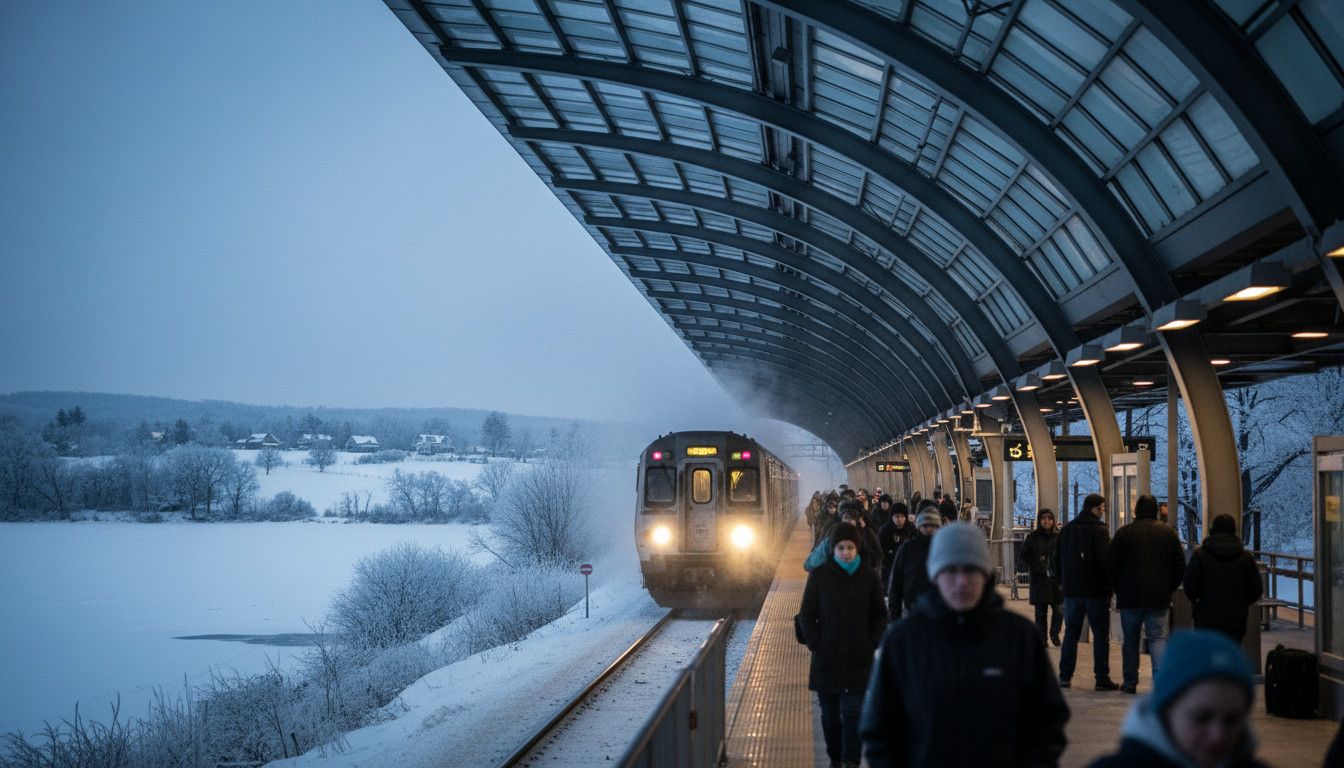
Neither Beekman nor Hopewell Junction has its own Metro-North station. Buyers in both towns drive to a station, and which station they choose shapes their entire commute experience.
From Beekman, the most natural option is the Pawling station on the Harlem Line. It's a manageable drive — typically 10 to 15 minutes from most parts of town — and Pawling offers a genuine small-town station experience with parking. The Harlem Line runs express trains during peak hours, and Grand Central Terminal is roughly 90 minutes from Pawling under normal conditions. That's on the longer end for Metro-North, but it's consistent and predictable.
From Hopewell Junction, buyers typically drive to Poughkeepsie on the Hudson Line, which is a longer drive — often 20 to 30 minutes depending on where in the hamlet you're starting. Poughkeepsie is a major station with more frequent service and more parking options, and the Hudson Line has its own rhythm and ridership culture. Some Hopewell Junction buyers also use the Beacon station, which is closer for certain parts of East Fishkill.
If you're searching houses for sale on Beekman Road Hopewell Junction NY specifically, you're looking at properties that straddle the geographic line between these two communities — and your station choice may genuinely depend on which side of that road your driveway sits on. It's worth mapping the actual drive before you fall in love with a listing.
Highway Access
Route 52 connects both towns and feeds into the Taconic State Parkway, which is the primary highway artery for drivers heading south toward Westchester or the city. The Taconic is efficient when it's moving and miserable when it's not — and peak-hour congestion between Brewster and Yorktown Heights is a real variable. Buyers who drive to work rather than train should factor in a realistic commute window, not a best-case scenario.
Interstate 84 is also accessible from Hopewell Junction, giving drivers more routing flexibility. Beekman buyers heading to I-84 have a slightly longer surface road drive to reach it.
Community Feel: Rural Quiet vs. Walkable Convenience
This is the section where data gives way to character, and character is harder to quantify but easier to feel.
Beekman: Intentional Quiet
Beekman is a town where people move when they've decided they want space between themselves and the rest of the world. That's not a criticism — it's a feature for the right buyer. The town has no real commercial center. There's no main street with coffee shops and boutiques. What Beekman has is land, privacy, and a community that values both.
Local anchors include the Beekman area's proximity to the Harlem Valley Rail Trail, which runs through the region and draws cyclists and hikers year-round. The surrounding landscape — rolling hills, horse properties, farm stands along the back roads — gives the area a character that feels genuinely rural rather than suburban-rural. If you've been telling yourself you want to wake up to birds and not traffic, Beekman is where that actually happens.
The trade-off is that you will drive for almost everything. Groceries, restaurants, hardware stores — none of it is walkable, and most of it requires a 15-to-20-minute trip at minimum. For buyers who are used to urban convenience, this adjustment is real. For buyers who are actively seeking distance from that world, it's the point.
Hopewell Junction: Connected Without Being Crowded
Hopewell Junction occupies a middle ground that a lot of buyers find genuinely appealing. It's not a city, and it's not trying to be. But it has a functioning commercial corridor along Route 82 and Route 376 — supermarkets, pharmacies, local restaurants, medical offices, and the kind of everyday infrastructure that makes life easier without requiring a trip to a larger city.
The Hopewell Junction area also has a more developed sense of neighborhood in parts of it. Subdivisions with cul-de-sacs, neighbors who know each other, Little League fields, and a community calendar that actually has things on it. The East Fishkill Recreation Department runs programs that give families a social infrastructure that Beekman, by virtue of its lower density, simply can't replicate at the same scale.
For buyers with young children who want their kids to have nearby friends and organized activities without driving 45 minutes, Hopewell Junction often wins this comparison on feel alone.
How to Search Smarter Across Both Markets
One of the practical challenges buyers face in this corridor is that Beekman and Hopewell Junction don't behave like a single market, even though they function like one for many buyers. Listings are indexed under different towns, different zip codes, and sometimes different counties depending on how the data is structured. A search for homes in one town won't automatically surface what's available a mile away in the other.
That's where having the right search tool matters. Opulist is built specifically for buyers who are comparing adjacent markets — you can filter across both Beekman and Hopewell Junction simultaneously, set lot size minimums, and sort by school district without toggling between separate searches. Buyers in this corridor use it to get a real picture of what's available across both towns in a single view, which makes the comparison we've been walking through in this article much easier to act on.
If you find a listing that fits your criteria and want to move quickly, the Opulist team includes in-house agents through Opulence Realty Group and in-house mortgage lending through Opulence Home Equity — so the process from offer to close can stay under one roof. In a market where well-priced homes on good lots move fast, that kind of coordination matters more than buyers often expect until they're in the middle of a transaction.
The bottom line is this: Beekman and Hopewell Junction are both legitimate answers to the question of where to buy in Dutchess County. They're not interchangeable. Beekman gives you more land and more quiet at a lower price per acre. Hopewell Junction gives you more community infrastructure and slightly easier access to the broader region. Neither is the wrong choice — but one is probably a better fit for the life you're actually planning to live. Figure out which tradeoff you can live with, and then go find the house.