
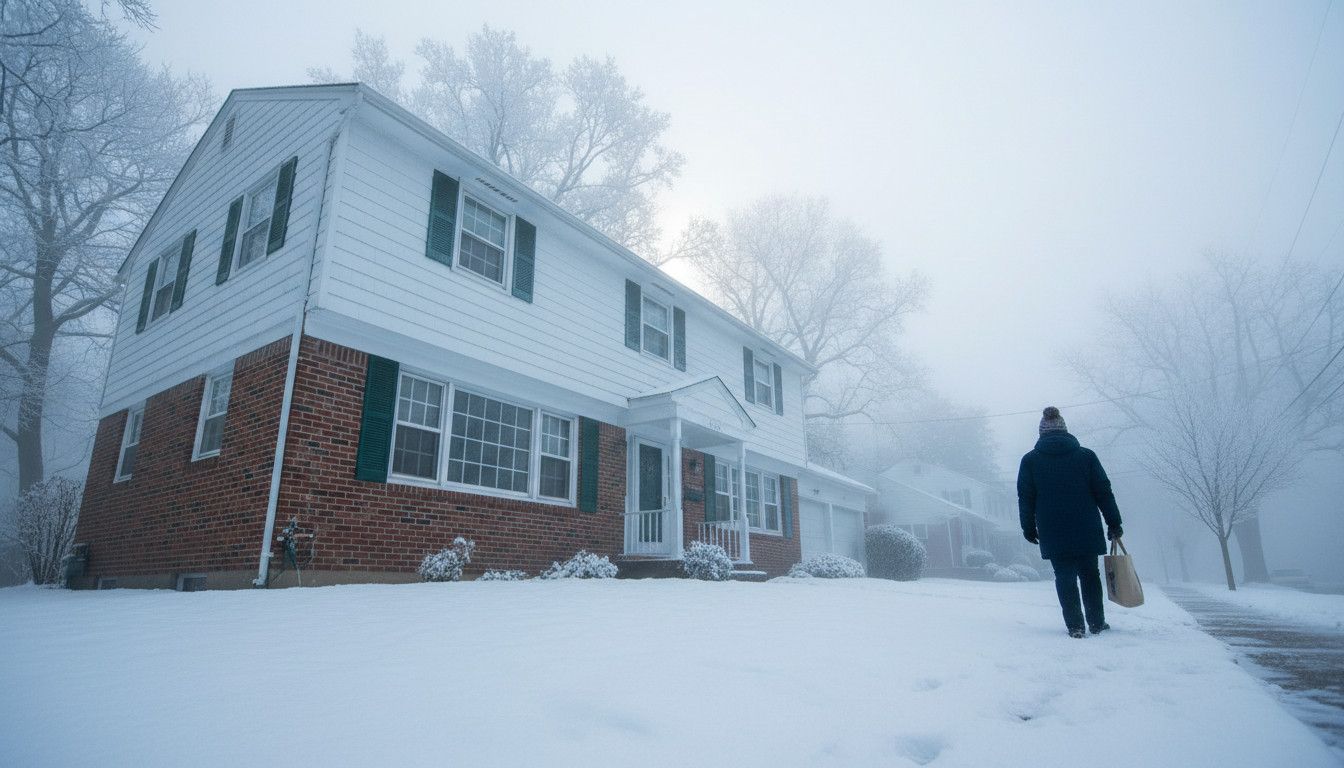
What Makes Viceroy Its Own Thing
If you've spent any real time researching north massapequa real estate, you've probably noticed that not all blocks are created equal. The Viceroy section — a cluster of streets in the northeastern pocket of North Massapequa — has developed a sub-market identity that goes well beyond neighborhood pride. Locals don't just call it Viceroy because it sounds distinguished. They call it that because the homes, the lots, the street design, and the buyer demand all behave differently here than they do two blocks over.
Understanding that distinction is the difference between overpaying for a home that happens to be nearby and strategically acquiring one of the more durable assets on the North Massapequa residential market. The Viceroy section sits within the broader North Massapequa, NY market but operates with its own supply-demand dynamics, its own buyer pool, and its own pricing logic. That's what this breakdown is about.
Street Layout, Lot Sizes, and Why They Matter to Buyers
One of the first things buyers notice when they start seriously looking at homes for sale in Viceroy North Massapequa is the spatial generosity of the section. Lot sizes here tend to run deeper and wider than what you'll find in adjacent parts of North Massapequa, with many parcels pushing 7,000 to 8,500 square feet — and some corner and interior lots exceeding that. On Long Island, where a 6,000-square-foot lot is often marketed as spacious, that difference is meaningful.
Cul-de-Sacs and Reduced Through Traffic
The street layout reinforces the premium. Several Viceroy streets terminate in cul-de-sacs or dead ends, which dramatically reduces cut-through traffic. For buyers with children, that's not a minor amenity — it's a daily quality-of-life factor. For buyers thinking about resale, it's a feature that holds value across market cycles because it's structural. You can't retrofit a cul-de-sac onto a through street.
Lot Depth and Usable Outdoor Space
Lot depth in the Viceroy section also tends to translate into genuinely usable backyard space — not just a strip of grass behind a fence. Many properties here have enough room for a pool, a patio, and a lawn without any of those elements feeling compromised. That matters in a post-pandemic market where outdoor living has permanently shifted buyer expectations on Long Island.
Home Styles and Construction Eras Typical to the Section
The Viceroy section was largely developed in the late 1950s through the mid-1960s, which puts it squarely in the era of Long Island's postwar residential expansion. The dominant home styles reflect that period: solid, well-proportioned ranches, expanded Capes, and split-levels that were built with real materials — concrete block foundations, hardwood floors under the carpet, plaster walls — before the cost-cutting that defined later decades of construction.
Ranches
The ranch homes here are typically three-bedroom, one-and-a-half to two-bath configurations on single-level footprints. Many have been extended over the decades — a fourth bedroom added, a family room pushed out the back, a garage converted or expanded. What you're evaluating when you look at a Viceroy ranch isn't just the original structure but the quality of those additions, which varies considerably from home to home.
Expanded Capes and Split-Levels
The expanded Capes in the section often offer four bedrooms across two floors, with the upper level providing a surprising amount of usable space once dormers have been added — which most have been by now. Split-levels, meanwhile, tend to offer the most flexible floor plans: a living-dining level, a lower family room with direct garage access, and an upper bedroom floor that gives genuine separation between living and sleeping areas. For buyers coming from smaller homes, the split-level layout often delivers more functional square footage than the floor plan suggests on paper.
Construction quality across all three styles is generally above what you'd find in sections of North Massapequa developed later, and that durability shows up in how these homes hold up structurally over time — and how buyers perceive them during walkthroughs.
The Price Premium: What Buyers Actually Pay to Be Here
Let's be direct about what the Viceroy section costs. Homes here consistently trade above the broader north massapequa real estate median, and that premium is not a fluke of a single hot season — it's a persistent feature of the sub-market. Depending on the year and the specific condition of the home, Viceroy properties have commanded premiums ranging from roughly 8% to 15% above comparable homes in adjacent North Massapequa sections.
That premium is driven by a combination of factors that are difficult to replicate elsewhere: the lot sizes, the street character, the school district performance, and the LIRR access. When you're evaluating whether a Viceroy home is priced fairly, the relevant comparison set isn't all of North Massapequa — it's other Viceroy homes and the closest competing sections. Buyers who don't understand this end up either overpaying relative to the section or walking away from fair deals because they're benchmarking against the wrong data.
School District as a Value Driver
The Massapequa Union Free School District is consistently rated among the stronger districts in Nassau County, with high school graduation rates and state assessment scores that hold up well against neighboring districts. For buyers with school-age children, that's not an abstract benefit — it's a direct input into the home's long-term value. Districts with strong reputations sustain demand even when broader markets soften, and Massapequa has demonstrated that resilience repeatedly.
LIRR Access as a Value Driver
The Massapequa LIRR station on the Long Beach Branch puts Manhattan within roughly 50 to 60 minutes by rail, and from most Viceroy streets, you're looking at a sub-10-minute drive or a manageable bike ride to the platform. For commuters, that's a significant quality-of-life factor. For buyers who work remotely but value optionality, it's a hedge. Either way, proximity to a functioning commuter rail line is one of the most durable value anchors in Long Island residential real estate, and the Viceroy section is well-positioned relative to it.
When you're looking at homes for sale in Viceroy North Massapequa and trying to assess whether the ask is justified, these two factors — school district strength and LIRR proximity — are the structural underpinnings of the premium. They're not going away.
The Buyer Profile: Move-Up, Repeat, and Hyper-Local
The Viceroy section skews heavily toward experienced buyers. First-timers occasionally land here, but the dominant buyer profile is the move-up buyer: someone who already owns in North Massapequa or a neighboring community, knows the market well, and has made a deliberate decision to target this specific section. These are buyers who have done the research, understand the premium, and are prepared to move quickly when the right home appears.
That buyer profile has real implications for how the market behaves. Because so many Viceroy buyers are hyper-local and repeat participants, inventory gets absorbed quickly. A well-priced, well-presented home in the section rarely sits. Multiple-offer situations are common, and the buyers competing aren't easily spooked by escalation clauses or tight contingency timelines — they've been through the process before.
This is also a market where financing sophistication matters. At Opulist, our in-house lending arm — Opulence Home Equity — works alongside our agents to make sure buyers are fully underwritten before they compete, not just pre-qualified. In a sub-market where sellers are choosing between experienced buyers, showing up with a fully underwritten approval rather than a pre-qualification letter is a meaningful competitive advantage. It signals to the seller that your financing is real, not conditional on a lender still reviewing your file.
How to Search Smarter in This Sub-Market
Here's the practical challenge with Viceroy: most major listing platforms don't recognize it as a searchable neighborhood. You can search North Massapequa all day and get results that span sections with meaningfully different characteristics — different lot sizes, different street layouts, different price dynamics. The Viceroy section gets lumped in with everything else, which means buyers who don't know the specific street names are effectively searching blind.
The smarter approach is to search by street, by lot size filter, and by year built — and to work with agents who know which addresses fall within the section's boundaries. On Opulist's North Massapequa listings page, you can filter results with enough granularity to isolate the characteristics that define the Viceroy section, rather than wading through every split-level in the broader zip code. Our agents at Opulence Realty Group also maintain off-market awareness in this section — homeowners who are considering selling but haven't listed yet — which matters in a sub-market where public inventory moves as fast as this one does.
The Viceroy section rewards buyers who treat it as what it actually is: a distinct sub-market with its own rules, its own pricing logic, and its own buyer culture. Approach it that way, come prepared with financing that's ready to perform, and you'll be positioned to compete. Come in treating it like any other North Massapequa search, and you'll spend a lot of time losing to buyers who understood the difference.