Same Budget, Different World
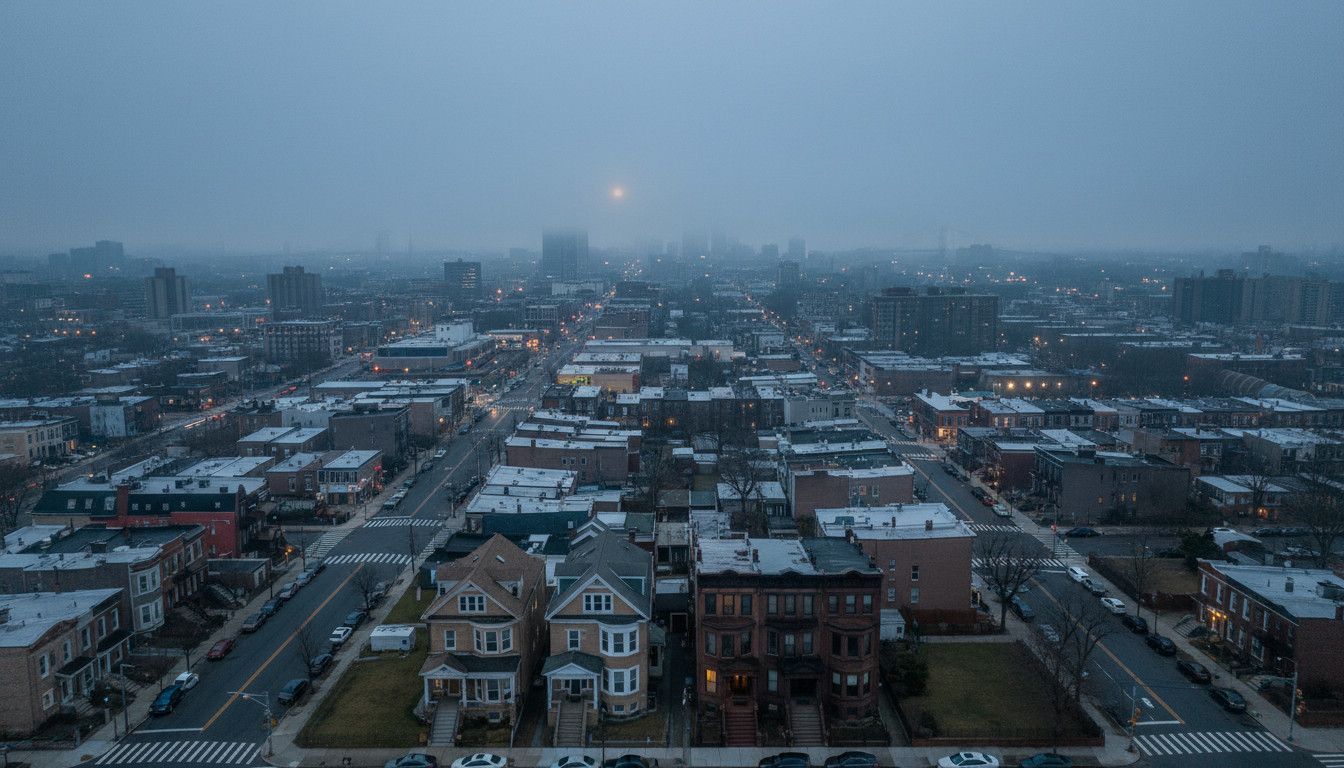
Drive five minutes in almost any direction from the Newburgh-Beacon Bridge and you'll cross between two towns that look similar on paper but feel genuinely different on the ground. New Windsor and Newburgh share a zip code border, a Hudson Valley address, and a price range that attracts the same pool of buyers — people priced out of Westchester, tired of renting in the Hudson Valley's tighter markets, or simply ready to trade square footage for commute time. But once you start walking neighborhoods, attending open houses, and running the actual numbers, the differences add up fast.
If you've been searching homes for sale in New Windsor NY and occasionally toggling over to Newburgh listings to compare, you already know the feeling: the numbers look close, but something feels off when you try to line them up side by side. That's not a glitch in your search — it's a real distinction worth unpacking before you make an offer. This piece does exactly that, without cheerleading for either town.
What Your Dollar Actually Buys
Let's start with the number that drives most decisions: price. Real estate in New Windsor has been trading in the $350,000–$400,000 range for median single-family homes, reflecting a market that has appreciated steadily without the volatility you see in some neighboring communities. You're typically getting a move-in-ready colonial or split-level on a quarter-acre lot, with updated kitchens being increasingly common as sellers prep for a competitive buyer pool.
Newburgh's median sits lower — roughly $280,000–$330,000 — and that spread is real. On a $350,000 budget, Newburgh opens up more square footage and, in some cases, more architectural character. The city has genuine Victorian-era stock that New Windsor simply doesn't have. A three-story Queen Anne with original millwork that would cost $700,000 to restore in Hudson or Kingston can still be found in Newburgh's East End for a fraction of that.
Here's the credibility detail that most listicles skip: Newburgh's lower entry point frequently comes with higher renovation costs. The 10–15% price discount between towns is often consumed — and sometimes exceeded — by deferred maintenance, aging mechanicals, and the cost of bringing older city infrastructure up to modern standards. Buyers who run a clean purchase price comparison without factoring in a realistic renovation budget sometimes find themselves financially stretched within 18 months of closing. That's not a knock on Newburgh; it's a math problem worth solving before you fall in love with a listing.
New Windsor's inventory skews newer and more suburban in character. You'll find more ranch homes and colonials built between the 1960s and 1990s, with fewer surprises behind the walls. The tradeoff is that the homes are less distinctive. If you want a house that photographs well and requires minimal immediate investment, New Windsor tends to deliver. If you want character and are willing to budget for it, Newburgh can reward that patience.
At Opulist, our agents work both markets regularly and we'd be the first to tell you: the right answer depends entirely on your renovation tolerance and your true all-in budget — not just your purchase price ceiling.
Schools, Safety, and Day-to-Day Life
For buyers with children, school district boundaries often matter as much as the listing price. This is one area where the two towns diverge clearly, and it's worth stating plainly rather than hedging.
New Windsor is served primarily by the Cornwall Central School District and, in some areas, the Newburgh Enlarged City School District (NECSD) — so your specific parcel address matters. Cornwall Central consistently earns higher ratings on state assessments and has a stronger reputation among buyers who are prioritizing school quality. If you're searching houses for sale in New Windsor NY with school district as a filter, make sure you're confirming the actual district assignment for each property, not assuming based on the town name alone.
Newburgh falls almost entirely within NECSD, which serves a large, diverse, and historically underfunded urban district. Test scores and graduation rates have lagged state averages, though the district has made incremental progress in recent years. Families committed to public schooling as their primary option often weigh this heavily. Families who are open to private or charter alternatives, or who don't have school-age children, may find it a non-issue.
On safety, the picture is similarly nuanced. New Windsor's crime rates are consistent with suburban Orange County norms — relatively low, with the occasional property crime that comes with any community. Newburgh's crime statistics are higher, particularly in the city's core neighborhoods, though the East End and waterfront areas have seen meaningful improvement as investment has followed revitalization. The honest answer is that Newburgh is not uniformly unsafe, but it is not uniformly safe either — and the block you're on matters more than the city average.
Day-to-day walkability is limited in both towns by Hudson Valley standards, though for different reasons. New Windsor is suburban in layout — you'll need a car for most errands. Newburgh's grid-based street plan and denser commercial corridors make it more walkable in theory, but the practical experience depends heavily on which neighborhood you're in and what you're trying to access. The Newburgh waterfront has become a genuine destination, with restaurants and a ferry connection to Beacon that adds real lifestyle value.
Commuter Math
If you're buying in this corridor because you need to get to New York City or the mid-Hudson employment centers, commute math is probably your most important variable. Let's run it honestly.
Metro-North access is the key factor, and neither town has a station. The closest Metro-North stop on the Port Jervis Line is Salisbury Mills–Cornwall, which is roughly a 10–15 minute drive from most of New Windsor. From Newburgh, you're looking at a similar or slightly longer drive to that station, or a drive to Beacon — which sits across the Hudson and offers the more frequent and faster Hudson Line service into Grand Central.
The Beacon station is the practical commuter hub for this area. From New Windsor, you're looking at roughly 20–25 minutes to Beacon, depending on traffic and your specific address. From Newburgh, the Newburgh-Beacon Ferry (seasonal, running spring through fall) offers a genuinely pleasant alternative — you drive to the Newburgh waterfront, take the ferry across, and walk or shuttle to the Beacon station. Off-season, you're driving the bridge, which adds time. Budget 25–35 minutes from most Newburgh addresses to Beacon station, accounting for ferry or bridge variability.
Once you're on the Hudson Line from Beacon, you're looking at roughly 80–90 minutes to Grand Central on a standard express. That's a real commute — not a casual one — but it's one that thousands of Hudson Valley residents make work with the right schedule and remote flexibility.
For drivers, both towns offer solid highway access. I-84 runs through the area and connects to I-87 (the New York State Thruway) nearby, making both towns reasonable for anyone commuting to Newburgh, Middletown, Poughkeepsie, or even White Plains by car. New Windsor's position near the I-84/I-87 interchange gives it a slight edge for multi-directional drivers.
Community Character and What's Coming
This is where the two towns diverge most sharply, and where personal values tend to drive the final decision more than any spreadsheet.
New Windsor is established suburban Hudson Valley. It's the kind of town where the infrastructure works, the neighbors have been there for decades, and the biggest community debates tend to involve zoning variances and school budgets. That's not a criticism — stability has real value, especially for buyers who've spent years in chaotic rental markets. New Windsor has a quiet civic identity anchored around its Revolutionary War history (the New Windsor Cantonment, where Washington's army wintered, is a legitimate historical site worth visiting), its proximity to Storm King Art Center, and its generally functional suburban services.
What New Windsor doesn't have is momentum. It's not a town in transformation. If you're the kind of buyer who gets excited about being early to a neighborhood, New Windsor isn't that story right now.
Newburgh is that story — with all the risk and reward that comes with it. The city has been in various stages of revitalization for two decades, and the honest assessment is that it's further along than it was but not yet arrived. The waterfront has genuinely transformed. Liberty Street and the surrounding blocks have attracted independent restaurants, galleries, and creative businesses that have given Newburgh a cultural identity it lacked ten years ago. The East End Historic District contains some of the most architecturally significant residential stock in the Hudson Valley.
Investment is following. The Newburgh Armory redevelopment, ongoing streetscape improvements, and continued interest from New York City buyers and investors have created real upward pressure on values in select neighborhoods. Buyers who got in on the East End five years ago have seen meaningful appreciation. Whether that trajectory continues — and how evenly it spreads across the city — is the open question.
The risk in Newburgh is real: revitalization is uneven, some blocks remain genuinely distressed, and the timeline for broader improvement is uncertain. The opportunity is also real: if you buy the right property in the right neighborhood at today's prices and the trajectory holds, Newburgh could outperform New Windsor on appreciation over the next decade. That's not a guarantee — it's a bet, and buyers should understand it as such.
How to Decide
After walking both markets with buyers at every price point, here's the framework we'd offer:
Choose New Windsor if: You have school-age children and public school quality is non-negotiable. You want a move-in-ready home with predictable near-term costs. You value suburban stability over neighborhood transformation. Your commute pattern favors I-84/I-87 access over Metro-North frequency. You want to minimize variables in your first few years of ownership.
Choose Newburgh if: You don't have school-age children, or you're open to private and charter alternatives. You have a realistic renovation budget on top of your purchase price — not just theoretical flexibility, but actual reserves. You're drawn to architectural character and urban texture. You're excited by the idea of being part of a neighborhood's evolution. You can tolerate some uncertainty in exchange for potential upside.
The buyers who get into trouble are the ones who choose Newburgh for the price alone, without accounting for renovation costs, or who choose New Windsor without realizing that parts of it fall within NECSD boundaries. Both mistakes are avoidable with the right research.
A growing number of buyers cross-shopping these two towns are using Opulist to run side-by-side searches filtered by commute radius, school district assignment, and price range simultaneously — which cuts through a lot of the confusion that comes from toggling between separate listing searches. Because Opulist combines the resources of Opulence Realty Group (a licensed brokerage with in-house agents who know both markets) and Opulence Home Equity (a licensed mortgage lender and broker offering both forward and reverse mortgage products), buyers working with us can get a realistic picture of their true purchasing power — renovation financing included — before they fall in love with a listing that doesn't actually fit their budget.
Both towns are worth your time. Neither one is the obvious answer. The right choice is the one that matches your actual life — your commute, your family, your risk tolerance, and your honest renovation budget — not just the listing price that caught your eye on a Saturday morning scroll.