
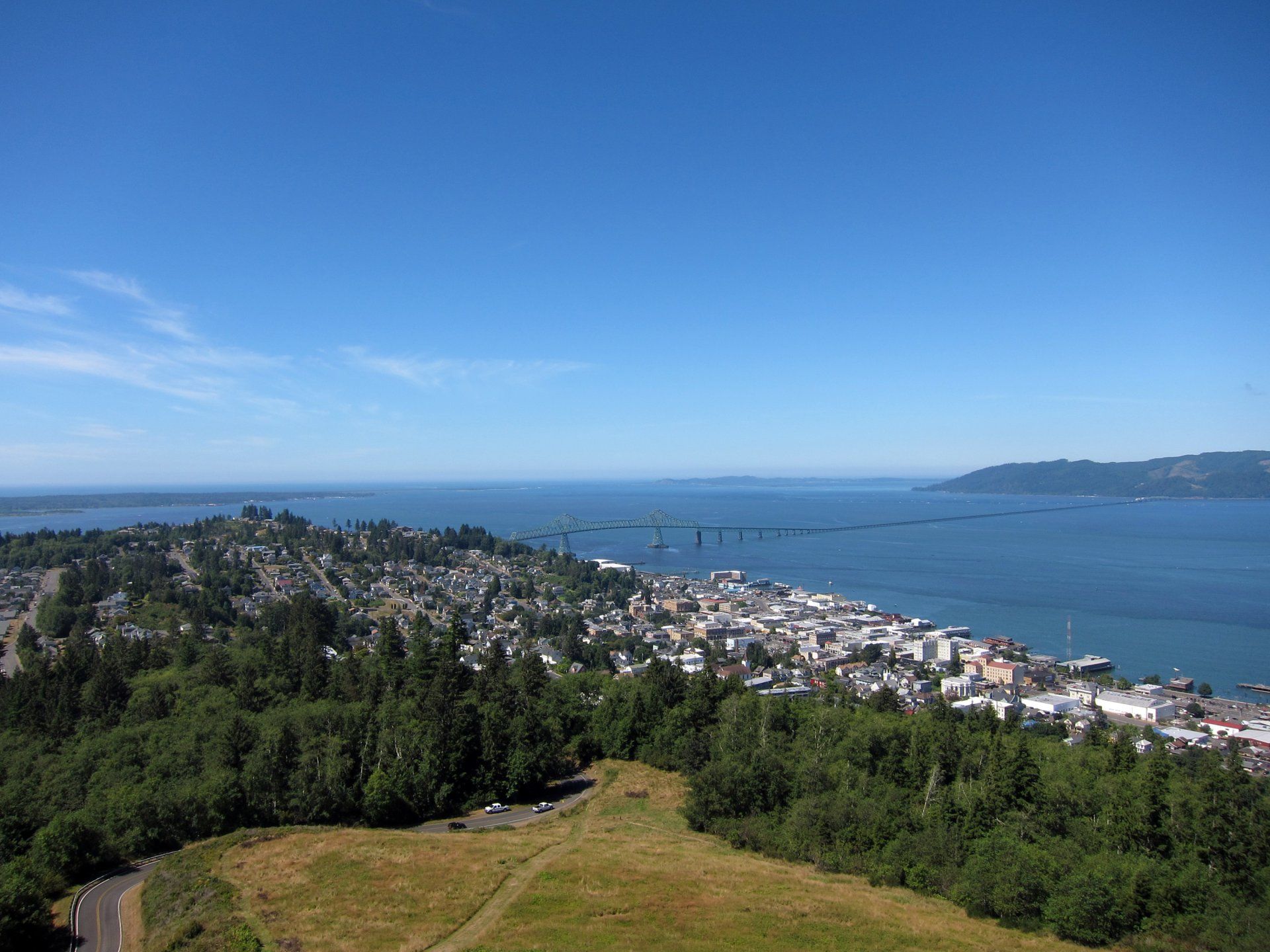
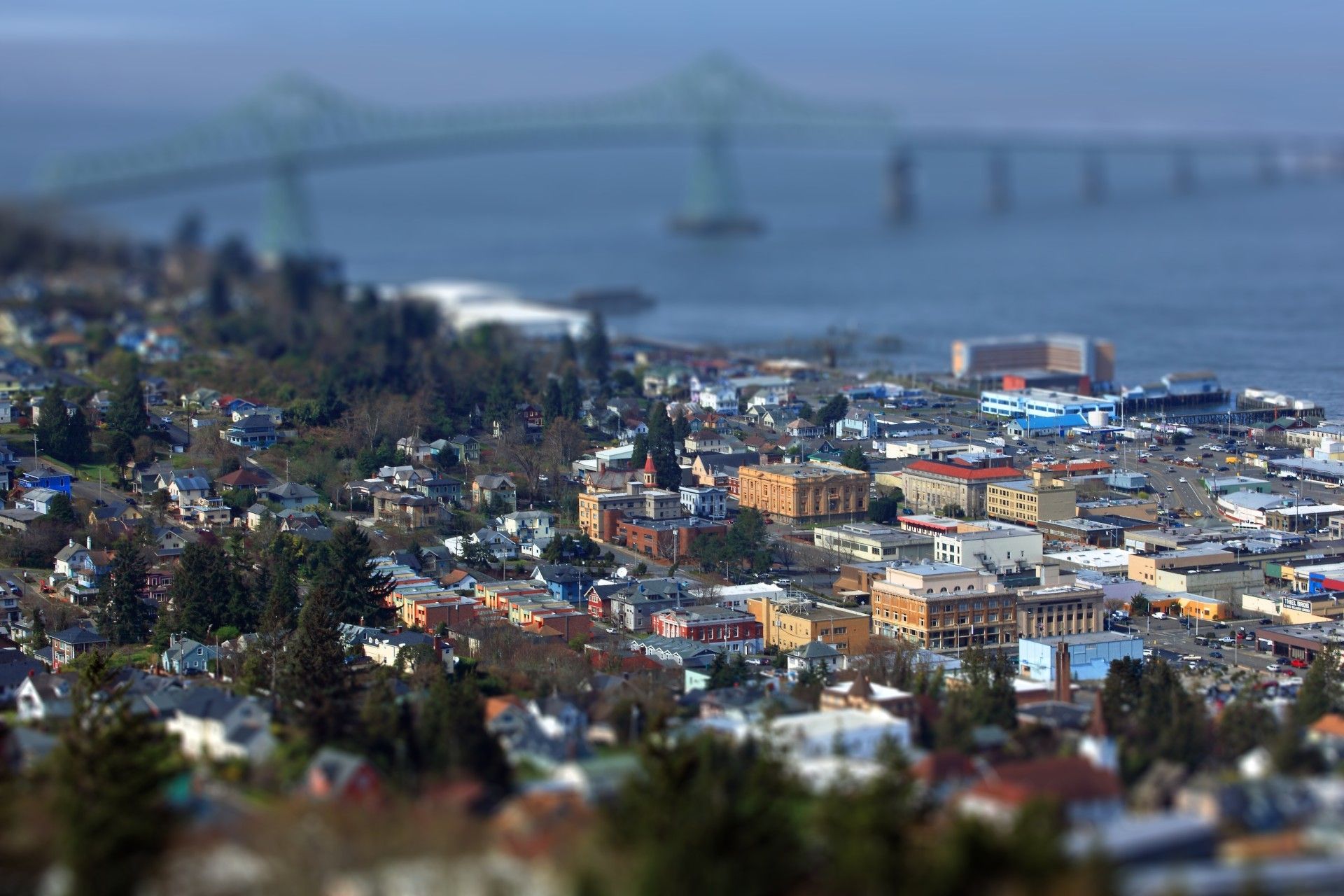
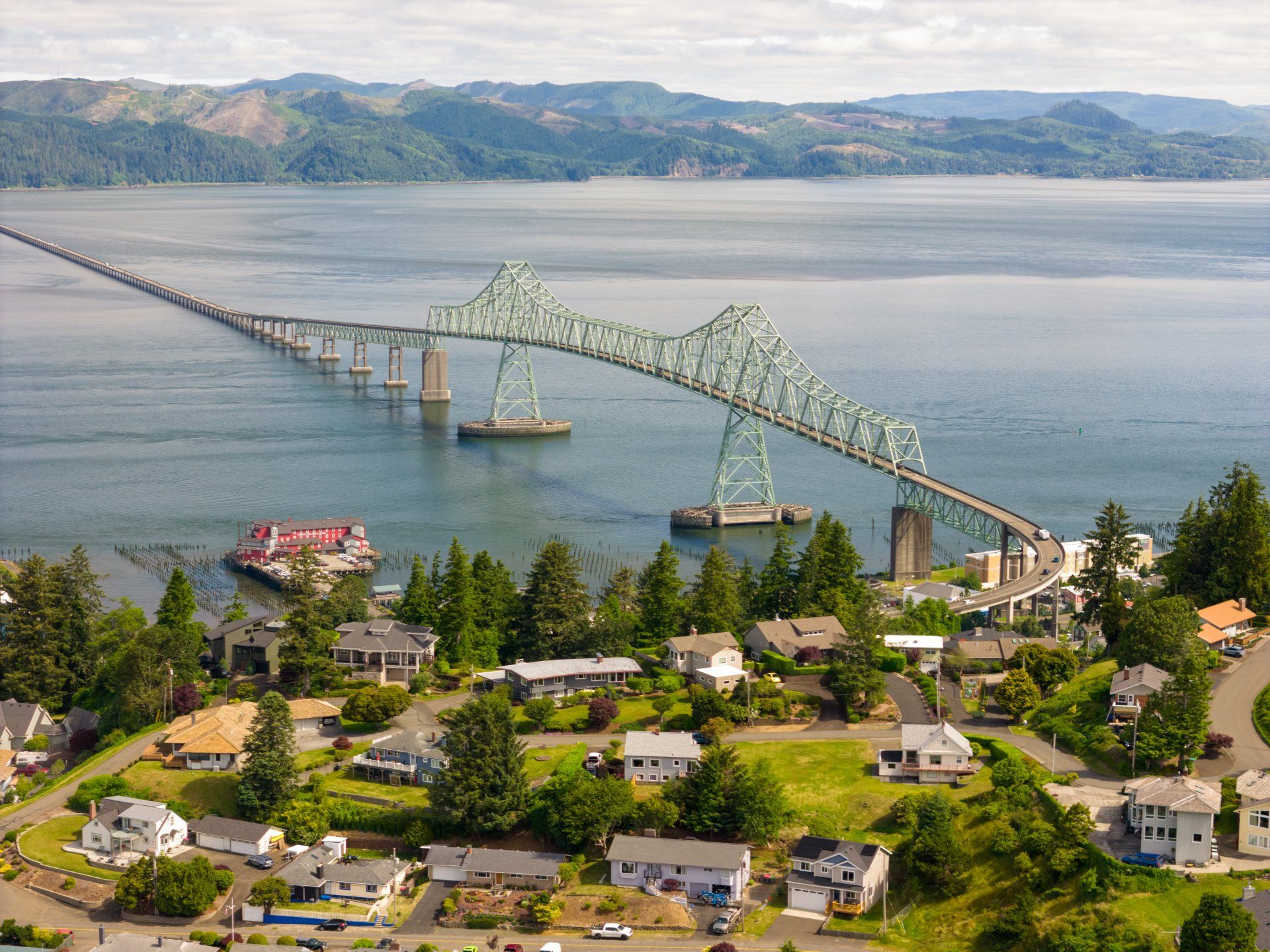
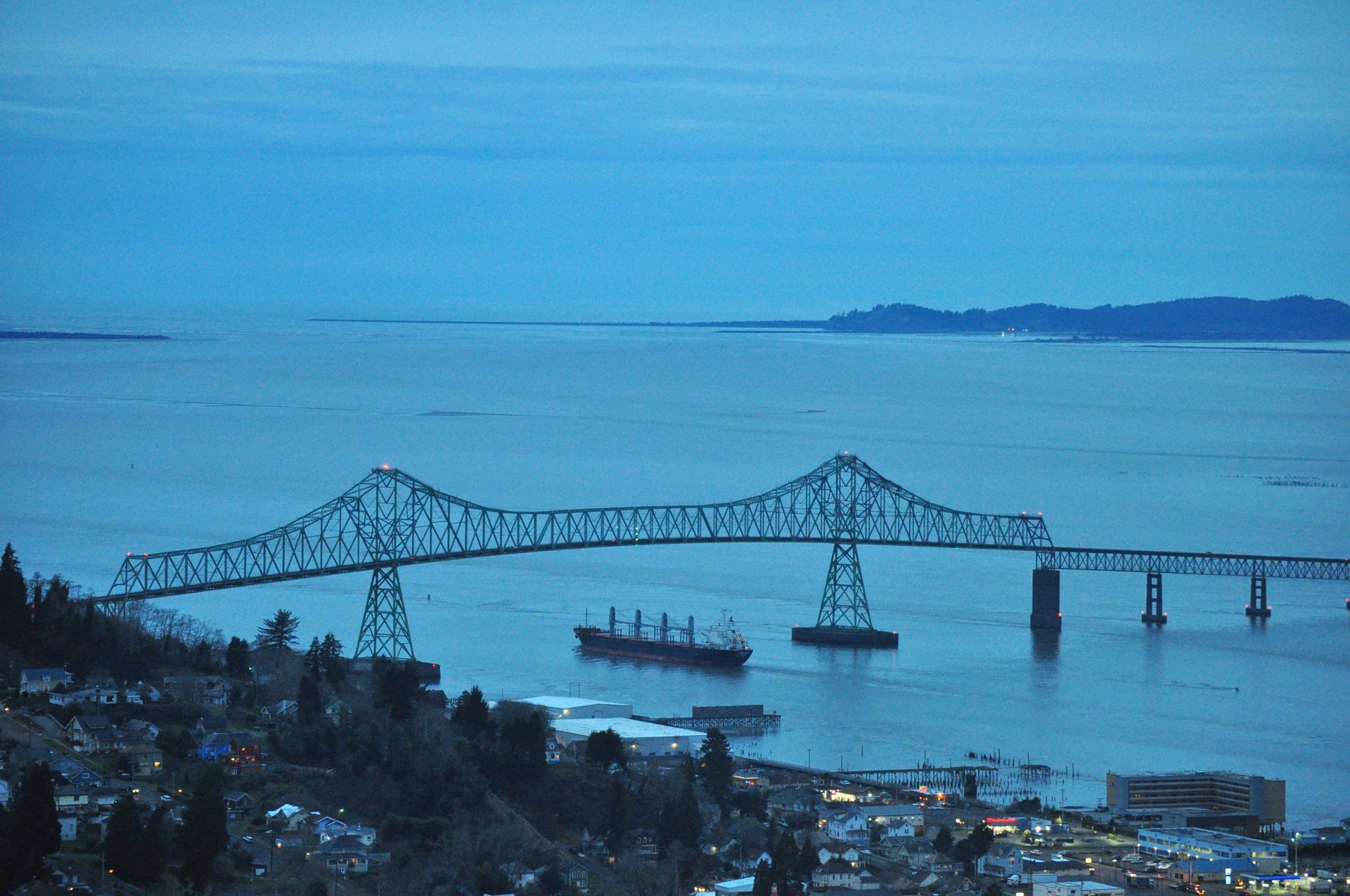
Founded in 1811 at the mouth of the Columbia River, Astoria holds the distinction of being the oldest American settlement west of the Rocky Mountains — a fact that sets it apart from every other city on the Oregon Coast. Established as a fur trading post by John Jacob Astor's Pacific Fur Company, the city has grown into a place where Pacific Northwest history is not just preserved but lived. The Astoria–Megler Bridge, one of the longest continuous truss bridges in North America, connects the city directly to Washington State across the Columbia, giving residents a geographic and economic reach that smaller coastal towns simply cannot match. The Astoria School District serves families throughout the area, and the city's hillside Victorian neighborhoods, working waterfront, and proximity to both the Pacific Ocean and the Columbia River create a lifestyle that is genuinely difficult to replicate elsewhere. For those exploring astoria homes for sale, the range of historic craftsman houses and newer construction offers real variety. With growing interest from remote workers, artists, and investors, Astoria's combination of deep history, dramatic scenery, and authentic character makes it one of Oregon's most compelling places to put down roots.
Welcome to Astoria
Community Profile
Perched at the mouth of the Columbia River in Clatsop County, this storied Pacific Northwest city of 10,109 residents offers a community profile that is as layered and compelling as its Victorian hillside streetscapes. With a median age of 40.3 years — just slightly above the national figure — Astoria strikes a comfortable balance between established households and younger arrivals drawn by the coast's undeniable pull. That balance shows up in the age spread: nearly 21.3% of residents are 65 or older, lending the community a seasoned, civically engaged character, while a lively cohort in their 20s and 30s keeps the energy fresh.
Households here earn a median income of $68,007, and a notable 32% of families bring in six figures or more — a sign that professional opportunity exists even in a small coastal city. More than half of families are dual-income households, and the average commute of just 21.8 minutes means residents spend far less time in traffic than most Americans. For those exploring houses for sale in Astoria, the median home value of $445,148 reflects the genuine desirability of this location — a premium over the national median, but one backed by irreplaceable scenery and a tight housing inventory of roughly 4,463 total units. Renters considering apartment rentals in Astoria will find a median rent of $1,239, modest by Pacific Coast standards. Rounding out the picture, 10.5% of residents are veterans, and the community's 15.7% Hispanic/Latino population adds meaningful cultural depth to this historic port town.
Things to Do
Outdoor Recreation
Astoria sits at one of the most dramatic confluences in the American West, where the Columbia River meets the Pacific Ocean, and the outdoor opportunities here reflect that grandeur. Fort Stevens State Park, just a short drive from town, offers miles of trails, a historic military installation, and the rusting wreck of the Peter Iredale — one of the most photographed shipwrecks on the Oregon Coast. Hikers and cyclists flock to the Astoria Riverwalk, a multi-mile path tracing the Columbia's southern bank, where you can watch massive cargo ships glide past with surprising closeness. For panoramic views that stretch into Washington State, the climb up the Astoria Column on Coxcomb Hill rewards visitors with a 360-degree sweep of river, ocean, and forested hills.
Arts & Culture
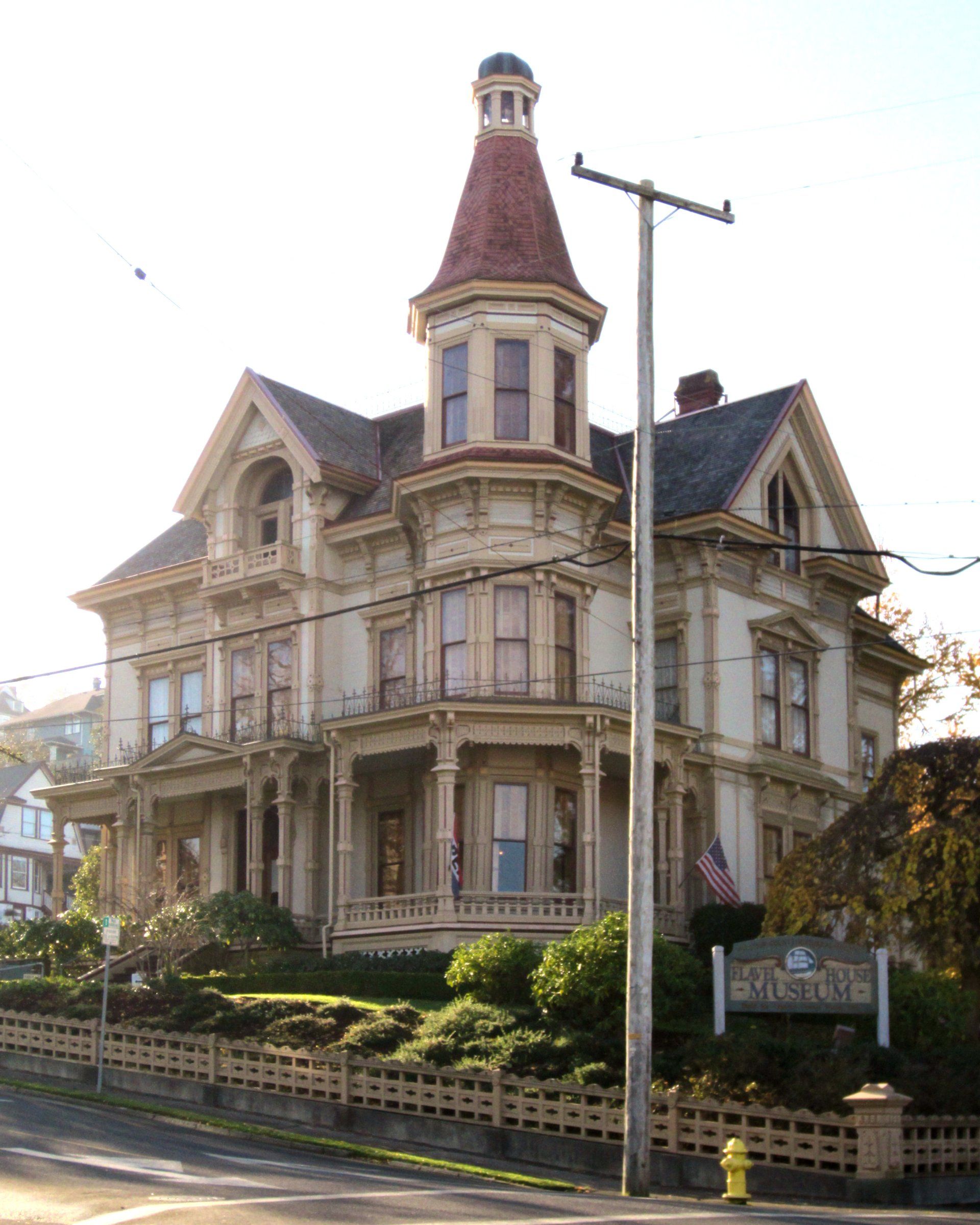
Astoria has quietly become one of Oregon's most culturally rich small cities. The Columbia River Maritime Museum is a world-class institution chronicling the treacherous history of the Columbia River Bar — the so-called "Graveyard of the Pacific" — through stunning exhibits and a retired Coast Guard lightship. The Flavel House Museum, a stunning Queen Anne mansion downtown, offers a window into the gilded life of 19th-century Astoria. The city's arts scene pulses through venues like the Astoria Visual Arts gallery and the beautifully restored Liberty Theatre, which hosts live performances year-round.
Dining & Shopping
Downtown Astoria's Commercial Street corridor is lined with independent boutiques, antique shops, and locally owned restaurants that reflect the city's eclectic, creative character. The dining scene leans heavily on fresh Pacific seafood, craft beer, and farm-to-table sensibility. The Astoria Sunday Market, running seasonally from May through October, draws vendors, artisans, and food producers from across the North Coast region and is a beloved community gathering point.
Family Activities & Annual Events
Families will find plenty to explore, from tide-pooling along the coast to visiting Fort Clatsop — the Lewis and Clark National Historical Park site where the Corps of Discovery wintered in 1805–06. The annual Astoria Regatta, one of Oregon's oldest festivals, fills late summer with boat races, parades, and waterfront celebrations. Whether you're drawn here by astoria homes for sale or simply passing through, the city's layered history and natural beauty make it a place that rewards slow, curious exploration.
History
From Fur Trade Outpost to Victorian Riverfront City
Astoria holds a singular place in American history as the oldest American settlement west of the Rocky Mountains, established in 1811 when John Jacob Astor's Pacific Fur Company built Fort Astoria at the mouth of the Columbia River. That founding moment — a calculated commercial bet on the Pacific Northwest's resource wealth — set the template for everything that followed. The town that grew around the fort was incorporated in 1876 and named in Astor's honor, a legacy Washington Irving immortalized in his 1836 book Astoria.
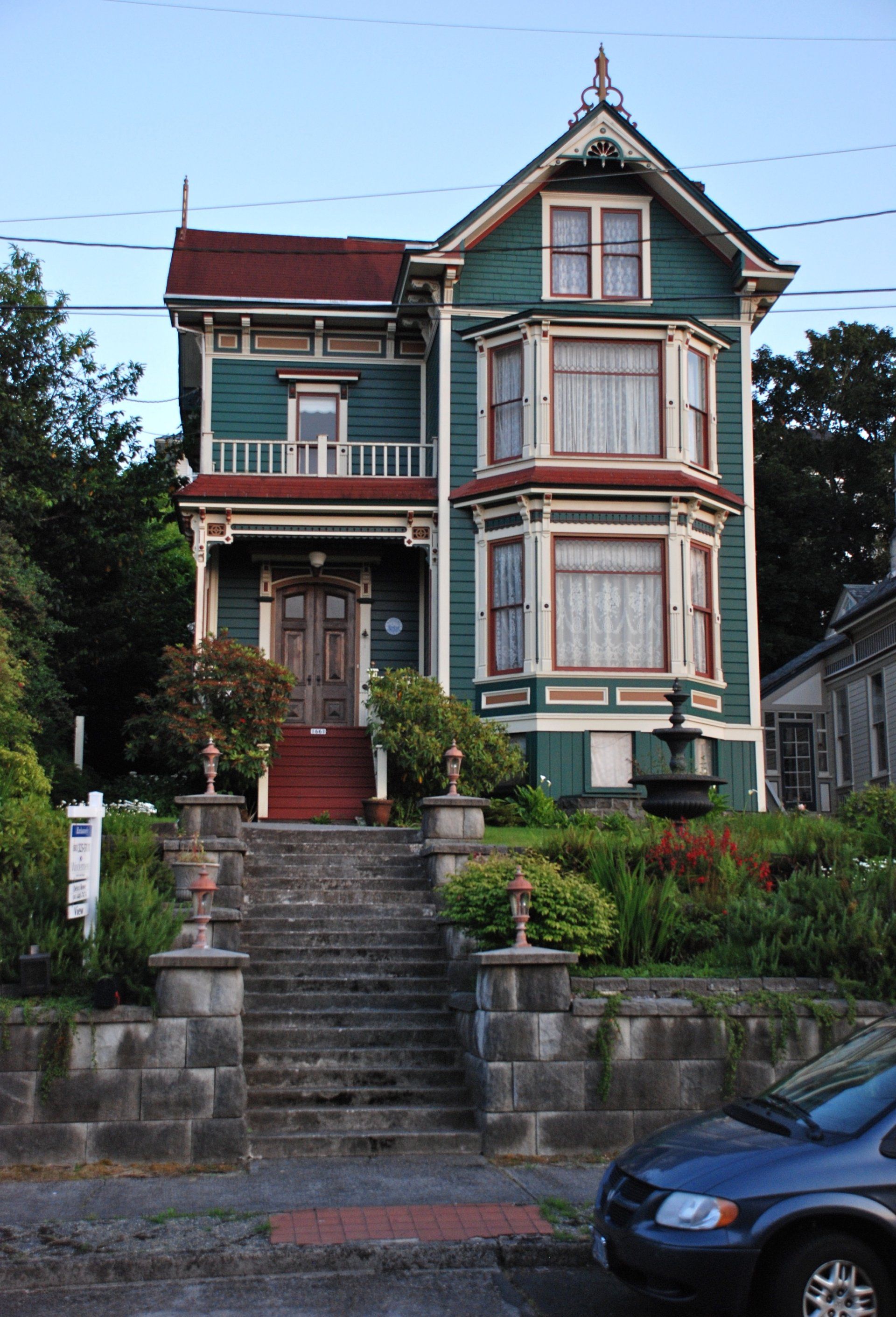
Through the late 19th century, the city boomed on the strength of salmon canning and timber, industries that drew waves of Scandinavian, Finnish, and Chinese immigrants and left a lasting imprint on the city's cultural identity. The canneries lining the Columbia waterfront generated enough prosperity to fill Astoria's hillsides with Victorian and Craftsman homes — the same houses that define the most sought-after neighborhoods today and drive considerable interest in astoria homes for sale among buyers drawn to historic architecture.
The collapse of the cannery industry through the mid-20th century left Astoria economically quieter but architecturally intact. Unlike many Pacific Northwest cities that bulldozed their Victorian stock during postwar urban renewal, Astoria largely preserved its 19th-century streetscapes. That restraint proved prescient. Today, those hillside neighborhoods — with their painted ladies, river views, and walkable character — form the backbone of the local housing market. The waterfront, once industrial, has been steadily reimagined for tourism and residential use, attracting buyers and renters alike and expanding the range of houses for sale in Astoria from lovingly restored Victorians to contemporary infill development.
Weather
A Maritime Climate Shaped by the Pacific
Astoria, Oregon experiences a marine west coast climate — one of the most distinctive weather patterns in the Pacific Northwest. Positioned at the mouth of the Columbia River where it meets the Pacific Ocean, the city is defined by mild temperatures year-round, persistent cloud cover, and generous rainfall that keeps the surrounding landscape a lush, deep green in every season.
Summers are comfortably cool rather than hot, with daytime highs typically ranging from the mid-60s to low 70s°F, while nights drop into the low 50s. The ocean moderates any heat that builds inland, and thick morning fog is a signature feature of the warmer months. Winters are mild but wet, with daytime temperatures generally hovering in the mid-40s to low 50s°F and lows rarely dipping below freezing. Snow is uncommon, though the surrounding hills occasionally see a dusting.
Precipitation is the defining characteristic of Astoria's weather. The city receives roughly 65 to 70 inches of rain annually, with the heaviest rainfall concentrated between October and March. The combination of Pacific moisture and the Coast Range to the south funnels weather systems directly into the region.
For those exploring astoria homes for sale, these conditions have real practical implications. Heating costs are a year-round consideration rather than a purely seasonal one, and homes benefit from quality insulation, vapor barriers, and well-maintained roofing. Outdoor living spaces are most enjoyable in the dry summer window, and buyers should pay close attention to drainage, siding condition, and any signs of moisture intrusion during inspections.
Astoria Market Analytics
Can I Afford Astoria?
Weather