
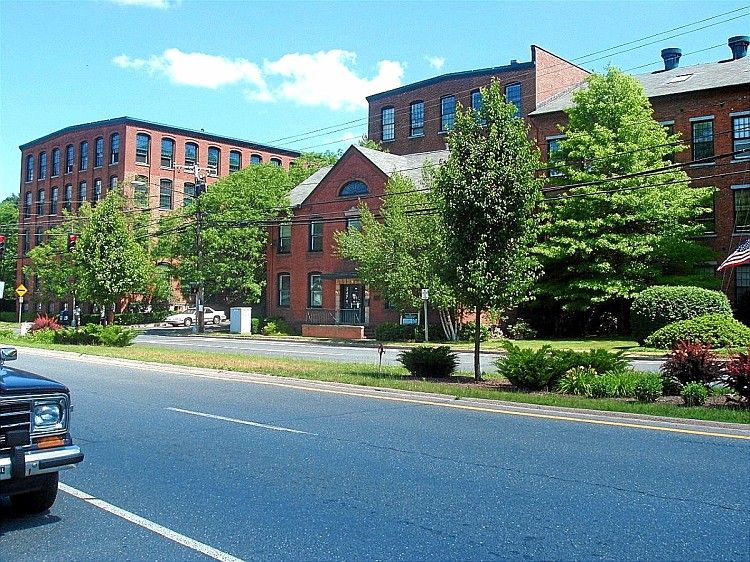
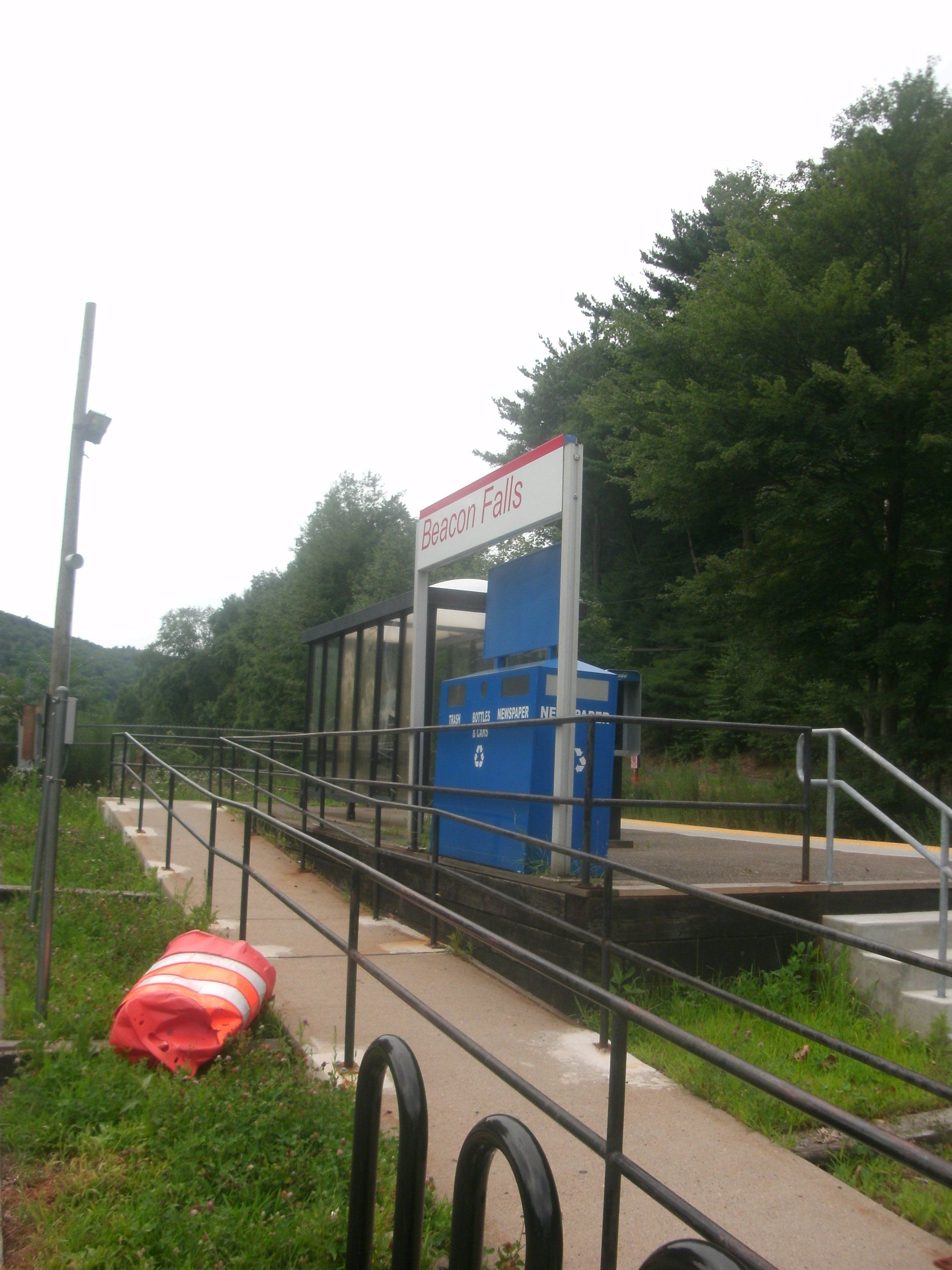
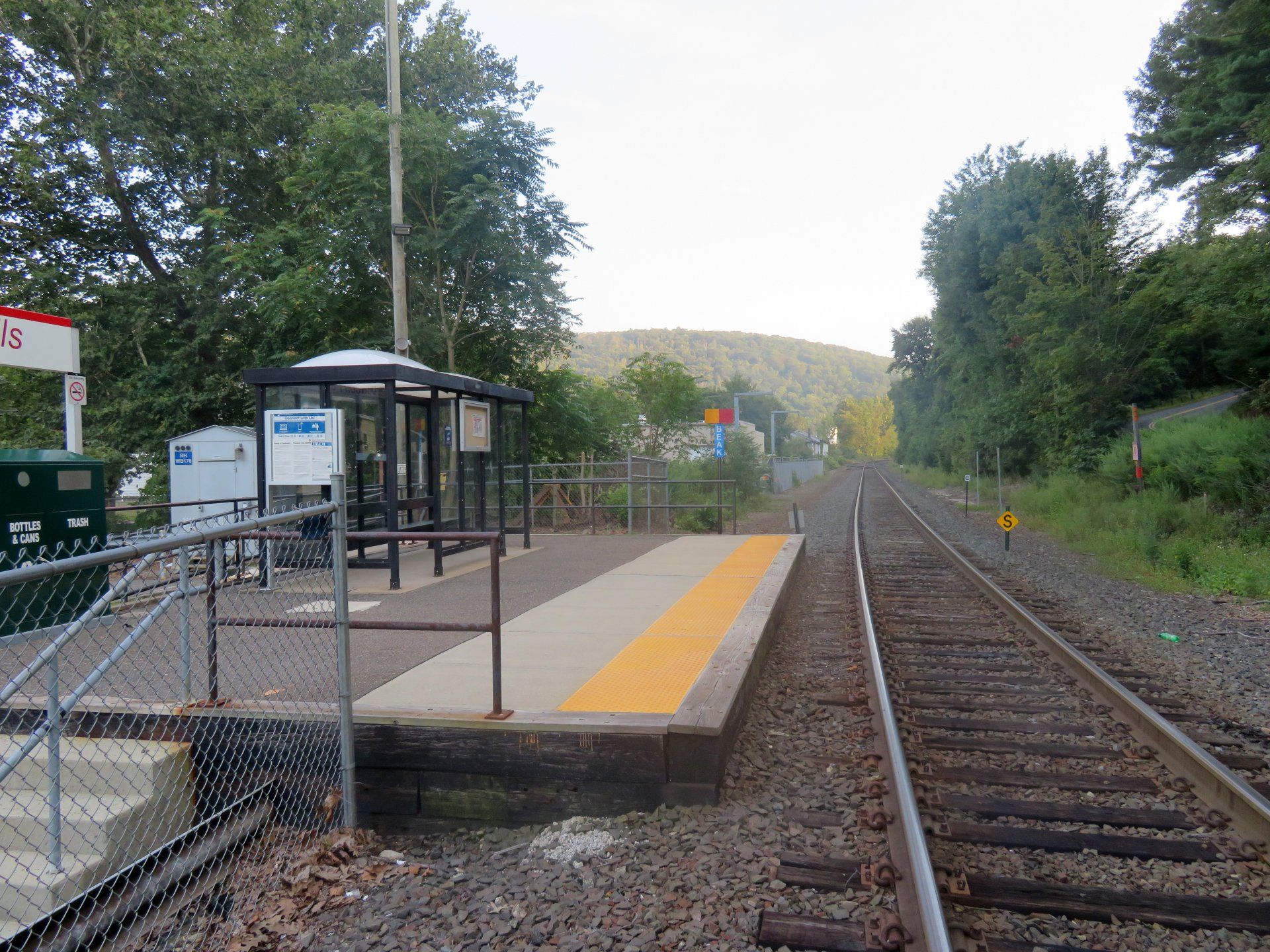
Incorporated in 1871 from portions of Bethany, Oxford, Naugatuck, and Seymour, Beacon Falls, Connecticut sits along the Naugatuck River in western New Haven County — a compact 9.8-square-mile town with a population of approximately 6,000 and a median household income of $98,042. What sets Beacon Falls apart from its neighbors is a rare combination: a deeply layered industrial heritage preserved in landmarks like the Home Woolen Company Complex and the Depot Street Bridge — both listed on the National Register of Historic Places — alongside a quiet, small-town character that larger Naugatuck Valley communities have long since traded away. The town's brick mill buildings, once home to the Beacon Falls Rubber Shoe Company and the forerunner of the iconic Keds sneaker, now anchor a residential conversion called Beacon Mill Village, giving the streetscape a texture few towns this size can match. Commuters benefit directly from the Beacon Falls Metro-North station on the Waterbury Branch line, keeping New Haven and beyond within reach. For buyers seeking affordability, history, and genuine small-town scale without sacrificing connectivity, Beacon Falls is increasingly difficult to overlook.
Welcome to Beacon Falls
Community Profile
Tucked into the Naugatuck Valley at a comfortable 589 residents per square mile, Beacon Falls strikes a balance that many homebuyers spend years searching for — genuine small-town density without the isolation of truly rural living. That figure places it well below the congestion of larger Connecticut cities, meaning neighbors are close enough to foster community but land is still spacious enough to breathe. As part of the Waterbury-Shelton metropolitan area, residents enjoy meaningful regional connectivity — access to employment centers, healthcare, and cultural amenities — while returning each evening to a borough that feels genuinely removed from the urban grind.
What makes Beacon Falls particularly compelling is the way its character reflects the broader Naugatuck Valley tradition: a working community with deep roots, a strong sense of place, and a housing market that tends to reward buyers who arrive before the wider market catches on. Connecticut's Naugatuck Valley corridor has historically offered some of the most accessible homeownership opportunities in the state, and Beacon Falls — with its mix of established neighborhoods, river valley scenery, and proximity to Route 8 — sits at an appealing intersection of affordability and livability. For buyers prioritizing a grounded, connected community with room to grow, this borough consistently delivers.
Things to Do
Outdoor Recreation
Despite its compact 9.8-square-mile footprint, Beacon Falls punches well above its weight when it comes to outdoor activity. The Naugatuck State Forest extends into town, offering miles of trails through rugged, wooded terrain that rewards hikers with sweeping views of the river valley below. The Naugatuck River itself provides a scenic backdrop for walking, fishing, and wildlife watching along its banks — the same waterway that once powered the town's mills now draws anglers and nature lovers year-round. Whether you're looking for a casual stroll or a more demanding woodland hike, the natural landscape surrounding Beacon Falls delivers a genuine sense of escape without leaving town.
History & Culture
Beacon Falls wears its industrial heritage proudly, and history enthusiasts will find plenty to explore. The Home Woolen Company Complex — now reimagined as Beacon Mill Village, a residential apartment community — stands as one of the most evocative reminders of the town's manufacturing past. Listed on the National Register of Historic Places since 1984, its handsome brick buildings once housed the legendary Beacon Falls Rubber Shoe Company, where the athletic shoe brand that would eventually become Keds was born. Nearby, the Depot Street Bridge, a riveted steel span built in 1935 and also listed on the National Register, connects the two halves of town across the Naugatuck River and is worth a stop for its architectural character and historical significance.
Day Trips & Regional Attractions
Beacon Falls sits just six miles from Waterbury, putting residents and visitors within easy reach of the Mattatuck Museum, the Palace Theater, and the broader cultural offerings of one of Connecticut's larger cities. New Haven — home to Yale University, world-class museums, and a nationally celebrated restaurant scene — is roughly 25 miles to the south, making it an easy and rewarding day trip. The Metro-North Waterbury Branch stops right in town, offering a car-free option for exploring the region.
Dining & Local Character
Beacon Falls has the intimate, community-centered feel of a small New England town, with local dining and gathering spots reflecting that unpretentious character. The town's proximity to Naugatuck and Ansonia also means that a broader range of restaurants and shops is never more than a short drive away, while Beacon Falls itself offers the kind of quiet, neighborly atmosphere that's increasingly hard to find in Connecticut's more densely developed corridors.
Latest Properties in Beacon Falls
Loading latest properties...
History
From River Mills to Residential Retreat
Beacon Falls traces its roots to 1678, when Captain Ebenezer Johnson became one of the first English settlers to purchase land in what was then known as Nyumps — territory long inhabited by the Paugasuck people. For nearly two centuries the area remained an unincorporated cluster of farms and small mills, until the Connecticut General Assembly formally incorporated it as a town in May 1871, drawing its boundaries from portions of Bethany, Oxford, Naugatuck, and Seymour. The name itself honors Beacon Hill, from which a small waterfall descended to meet the Naugatuck River below.
That river defined the town's economic destiny. Water power attracted manufacturers throughout the 19th century, beginning with gristmills and sawmills around 1810, followed by Thomas Sanford's production of the first friction matches in 1834, and then the Home Woolen Company's textile operations in the 1850s and '60s. The most consequential enterprise arrived in 1898, when George Lewis and his son Tracy founded the Beacon Falls Rubber Shoe Company in the old woolen mill's brick buildings on North Main Street. By 1920 the company was shipping 5.5 million pairs of shoes annually — including canvas-topped sneakers marketed as "Top Notch" — and had built worker housing, a movie theater, and a dance hall, effectively shaping the residential fabric of the town center. Those workers' homes, commissioned as part of an Olmsted Brothers landscape plan, still stand above the factory site today.
Manufacturing wound down through the mid-20th century, and the catastrophic Flood of 1955 — caused by back-to-back hurricanes Connie and Diane — accelerated the decline, destroying roughly $3 million in property and an entire riverside neighborhood. The brick factory complex was eventually converted into Beacon Mill Village, a 188-unit apartment community listed on the National Register of Historic Places. That adaptive reuse is emblematic of modern Beacon Falls: a compact, 9.8-square-mile town where industrial heritage anchors a commuter-friendly community, and where a median household income of nearly $98,000 reflects the professionals who now commute to Waterbury and New Haven while choosing Beacon Falls for its river valley character and small-town scale.
Weather
Beacon Falls, Connecticut experiences a humid continental climate, characterized by four distinct seasons with meaningful temperature swings, generous precipitation spread throughout the year, and no true dry season. Situated in the Naugatuck River valley of western New Haven County, the town's inland position and modest valley topography shape its weather in ways that distinguish it from Connecticut's shoreline communities.
Summers are warm and occasionally humid, with daytime highs typically ranging from the mid-80s°F and overnight lows settling into the low-to-mid 60s°F. Winters are cold and snowy, with average highs in the low-to-mid 30s°F and lows frequently dipping into the teens and single digits during cold snaps. The valley setting can trap cold air overnight, making Beacon Falls somewhat cooler than coastal Connecticut towns during winter months.
Annual precipitation is well-distributed across all seasons, averaging roughly 45–50 inches per year, with snowfall accumulations that can be substantial — nor'easters and winter storms regularly deposit several inches at a time. The surrounding hills and Naugatuck State Forest contribute to localized weather effects, and the river valley has historically been vulnerable to flooding, as the catastrophic 1955 flood dramatically demonstrated.
For homeowners, these patterns carry real practical weight. Heating costs are a meaningful budget consideration through the long winter months, while summers warrant efficient cooling systems. The snowy winters demand attention to roof load, drainage, and weatherproofing, and spring's wet conditions make proper grading and foundation maintenance essential for properties near the river valley floor.
Beacon Falls Market Analytics
Can I Afford Beacon Falls?
Weather