
Bedford Hills, New York

Location:
Bedford Hills, NY

Welcome to Bedford Hills

Bedford Hills traces its origins to 1847, when the New York and Harlem Railroad established a depot here — then called Bedford Station — creating the first direct rail link between the Town of Bedford and New York City. That same Metro-North Harlem Line connection still runs through the hamlet today, making it one of the more practical addresses in northern Westchester County for professionals who want genuine countryside without sacrificing a reliable commute to Manhattan, roughly 38 miles to the south.

What sets Bedford Hills apart from neighboring communities like Katonah or Mount Kisco is a combination of compact scale and layered character. The hamlet covers just over one square mile, yet it carries a distinctly independent identity within the Town of Bedford — one shaped by its railroad history, its Victorian and Foursquare-era architecture, and a median household income that reflects the area's established, family-oriented demographic. The Bedford Hills Historical Museum preserves that long arc of local history for residents who care about where they live, not just where they sleep.

With a median home price of $840,000 and a community that has remained deliberately unhurried, those exploring homes for sale in Bedford Hills, NY will find a place where the investment case and the lifestyle case point in the same direction — and where that balance is only likely to strengthen over time.


Community Profile

Tucked into northern Westchester County, this small but richly layered hamlet of 2,488 residents offers a community profile that rewards closer inspection. The median age of 42.1 years reflects a mature, established population — slightly older than the national median — with a notable generational spread: young families with children under 10 make up 10.8% of residents, while a substantial 23.1% of the community is 65 or older, giving Bedford Hills a multigenerational character that feels genuinely lived-in rather than transient.

Economically, the community punches well above national averages. The median household income of $94,024 — nearly $20,000 above the national benchmark — is reinforced by the fact that nearly half of all households, 47.6%, earn six figures or more. A strong 61.6% of families are dual-income, reflecting the ambition and work ethic woven into daily life here. Educational attainment is equally impressive: 45% of residents hold at least a bachelor's degree, well above the national rate of roughly 33%, and a remarkable 54% of degree holders have backgrounds in STEM fields — a hallmark of a community that values analytical thinking and professional achievement.

The housing market reflects the area's desirability. A median home value of $490,169 positions Bedford Hills firmly in Westchester's sought-after tier, and those exploring homes for sale in Bedford Hills, NY will find a diverse, genuinely multicultural neighborhood — with residents identifying as Hispanic/Latino (28.6%), Asian (24.8%), and multiracial (18.6%) — that brings real-world texture to its quiet, tree-lined setting within commuting distance of New York City.

Things to Do

Outdoor Recreation

Bedford Hills sits amid some of Westchester County's most rewarding natural scenery, with the gently rolling hills and preserved woodlands of the Town of Bedford forming a pastoral backdrop for outdoor enthusiasts. The broader Town of Bedford boasts more than 30 miles of unpaved dirt roads winding through horse farms and forest preserves — ideal for hiking, cycling, and equestrian riding. The Bronx River watershed influences the hydrology of the surrounding landscape, and nearby trails and open spaces offer residents a genuine escape into nature without leaving the county. For those exploring homes for sale in Bedford Hills, NY, the easy access to green space is one of the community's most compelling selling points.

Arts & Culture

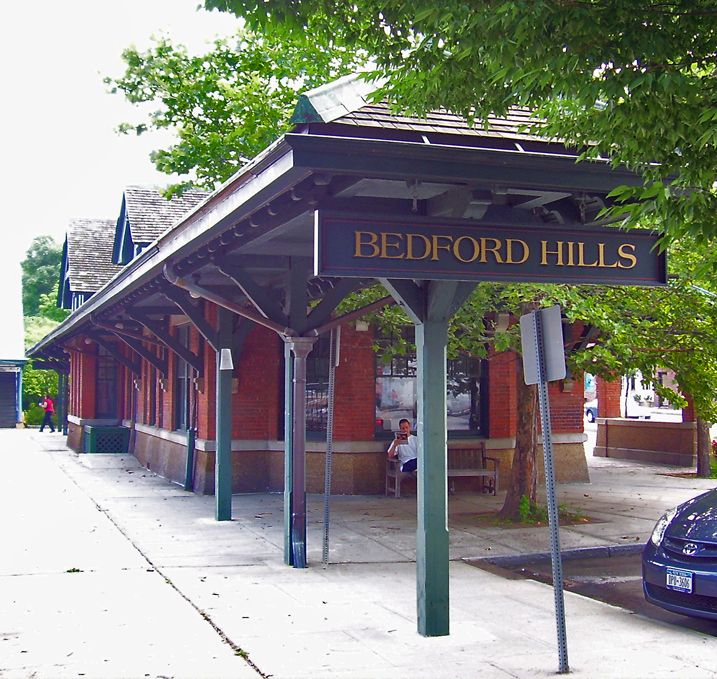
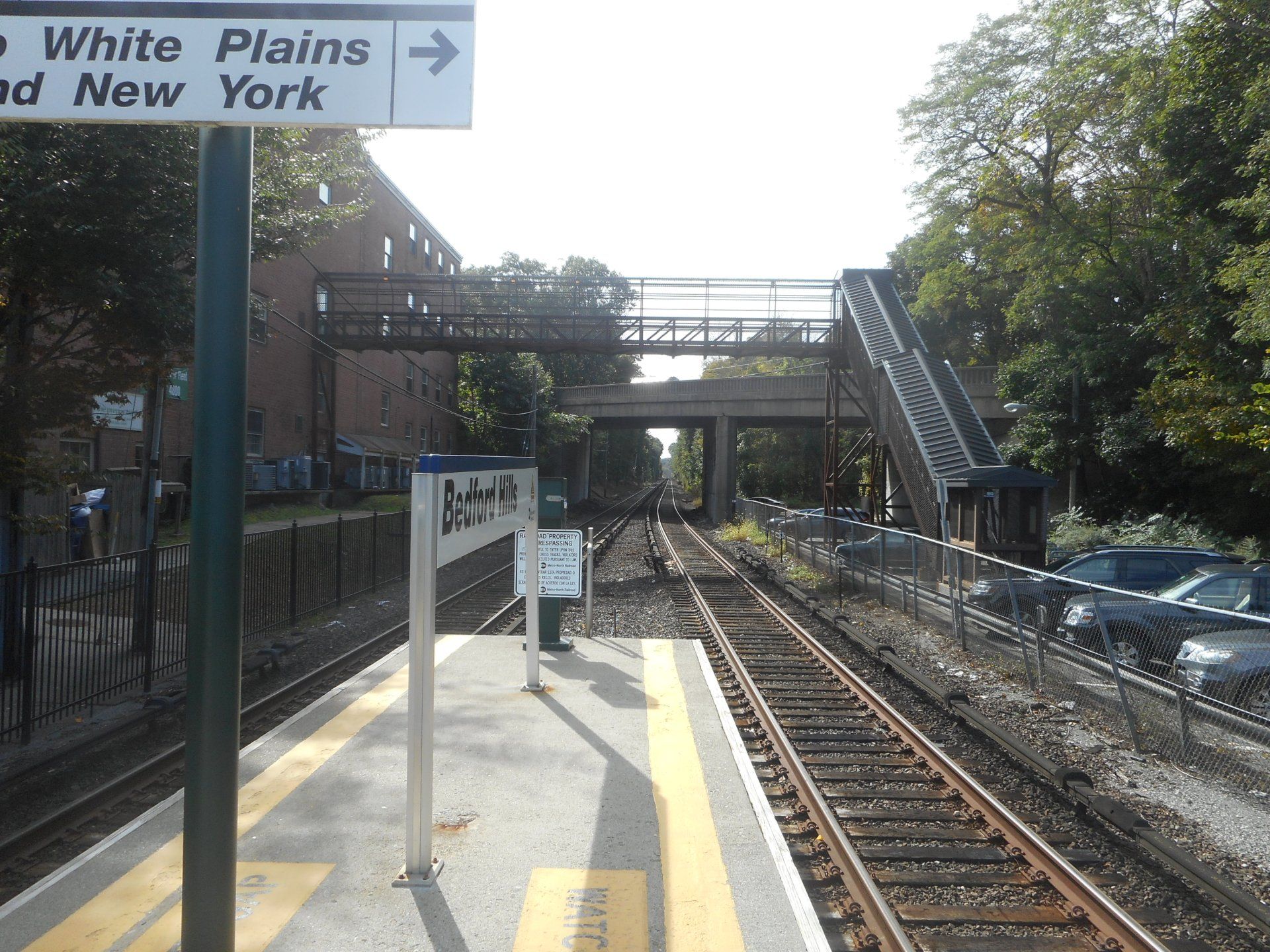
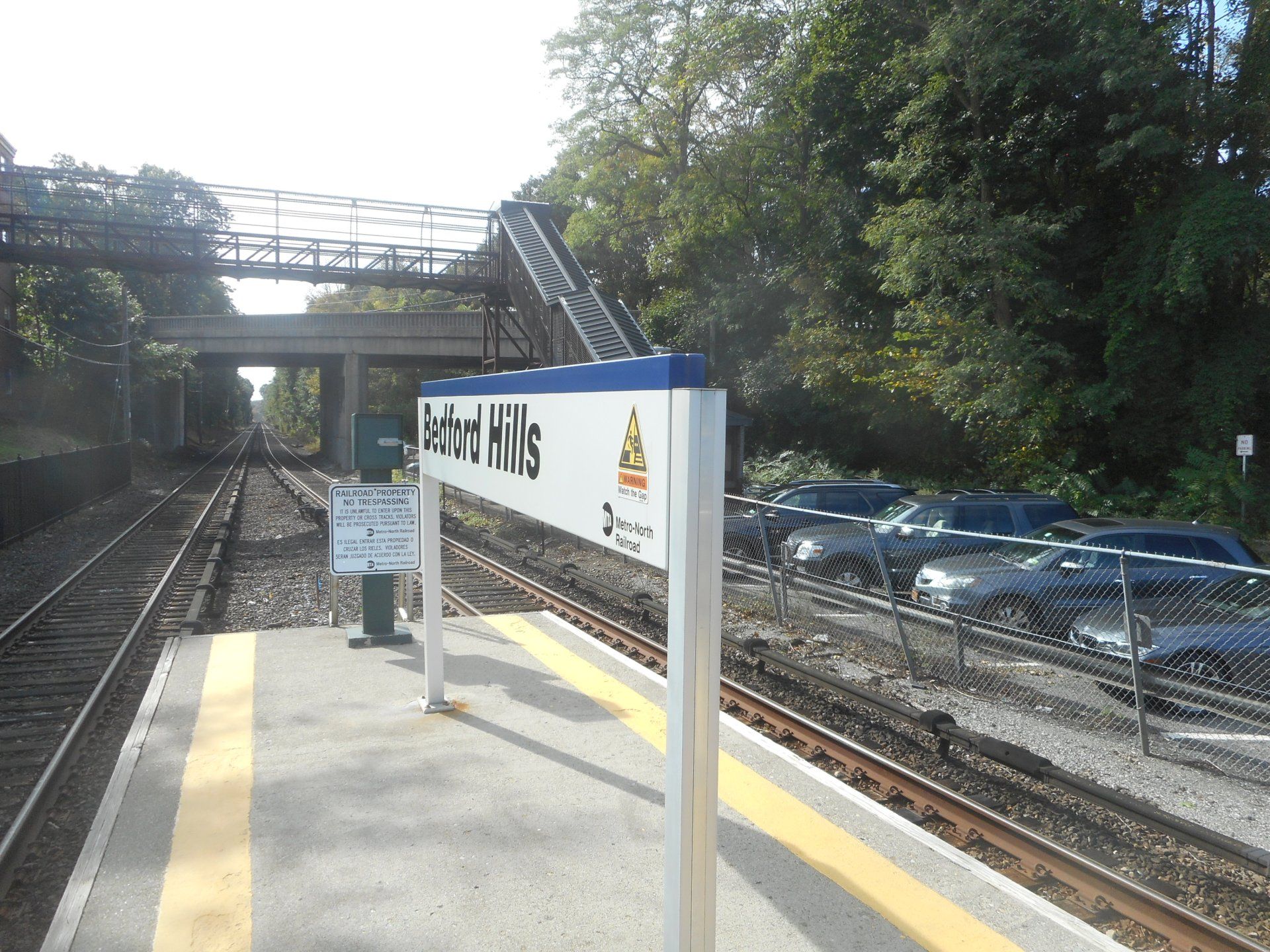
History runs deep in Bedford Hills, and the Bedford Hills Historical Museum is the community's primary keeper of that heritage. The museum chronicles the hamlet's evolution from a colonial farming settlement through its transformation into a railroad hub and eventually a Westchester commuter community. The nearby Bedford Hills Railroad Station, a historic structure along the Metro-North Harlem Line, is itself a piece of living architectural history — still actively used by commuters heading into Manhattan, roughly 38 miles to the south. The station connects residents not only to the city but to the region's long tradition of rail travel dating back to 1847.

Dining & Local Shopping

Bedford Hills has a modest but characterful commercial district centered near the train station, offering a mix of neighborhood dining, boutique retail, and everyday conveniences. The area's small-town atmosphere lends itself to locally owned establishments rather than chain-heavy corridors, giving the hamlet a distinctly personal character. The surrounding Town of Bedford and nearby communities like Mount Kisco and Katonah are just minutes away and significantly expand dining and shopping options, from casual cafés to upscale restaurants.

Family Activities & Community Life

Bedford Hills has a strong family-oriented identity, reflected in its well-maintained parks and active community organizations. Local recreational facilities support youth sports leagues and seasonal programming throughout the year. The hamlet's proximity to larger Westchester destinations — including cultural institutions, performing arts venues, and nature centers — means families never have to travel far for enriching activities. With a tight-knit community of just over 2,200 residents, neighborhood events and local gatherings carry real meaning here, fostering the kind of community spirit that makes Bedford Hills feel less like a suburb and more like a true small town.

Latest Properties in Bedford Hills

Loading...

Loading latest properties...

See All Properties in Bedford Hills

History

From Bedford Station to Bedroom Community

Bedford Hills traces its origins to December 23, 1680, when 22 Puritan farmers from Stamford, Connecticut, purchased roughly 7,673 acres of land — known as the "Hopp Ground" — from Native American sachems including Chief Katonah. That transaction established the colonial foundation of what is now the Town of Bedford, with outlying farmsteads spreading across the area that would eventually become Bedford Hills. A boundary dispute with New York Province was settled by royal decree in 1700, firmly placing the territory within New York.

The community's modern identity took shape on a summer day in 1847, when the New York and Harlem Railroad arrived, giving the hamlet its original name: Bedford Station. The rail connection was transformative. Farmers could ship dairy products and grain directly to New York City markets, and the depot quickly attracted merchants, warehouses, and workers. Commercial dairying replaced subsistence farming almost overnight, and the hamlet became the logistical hub for the surrounding agricultural township.

By the 20th century, improved rail and road access drew middle-class families seeking Westchester's pastoral character within commuting distance of Manhattan. Victorian and Foursquare-style homes rose alongside the older commercial core — many of which still define the neighborhood's architectural character today. The Bedford Hills Correctional Facility, established by state law in 1892 and operational by 1901 as Westfield State Farm, became a lasting presence, providing local employment and shaping community conversations about growth for decades.

That layered past — colonial land grants, railroad commerce, suburban expansion — is precisely what buyers searching for homes for sale in Bedford Hills, NY are purchasing into: a community where history is embedded in the streetscape and the land itself.

Weather

Four Distinct Seasons Define Life in Bedford Hills

Bedford Hills, New York experiences a humid continental climate, characterized by four well-defined seasons, meaningful temperature swings, and year-round precipitation distributed fairly evenly across the calendar. Situated in northern Westchester County at roughly 341 feet above sea level amid gently rolling glacial terrain, the hamlet sits far enough inland to escape direct coastal moderation, yet close enough to the broader New York metropolitan region to avoid the harsher extremes of upstate New York.

Summers are warm and humid, with daytime highs typically reaching the mid-to-upper 80s °F and overnight lows settling in the low 60s. Winters are cold and occasionally snowy, with average highs in the mid-30s °F and lows that regularly dip into the teens and low 20s. Spring and autumn are genuinely beautiful seasons here — crisp, colorful, and among the most celebrated aspects of life in this part of Westchester.

Annual snowfall averages around 30 to 40 inches, and the area receives roughly 45 to 50 inches of precipitation per year. Nor'easters can bring significant accumulation in winter, while summer afternoons occasionally produce thunderstorms rolling in from the west.

For anyone exploring homes for sale in Bedford Hills, NY, the climate carries real practical weight. Heating costs during cold winters and cooling demands in humid summers are genuine budget considerations, and the rolling landscape means snow removal and drainage management are seasonal priorities. On the upside, the climate strongly supports outdoor living — from expansive decks and gardens in summer to the kind of dramatic foliage that makes autumn in northern Westchester genuinely spectacular.

Bedford Hills Market Analytics

Market analytics data coming soon.
Can I Afford Bedford Hills?
$
%
$0
Est. Monthly Payment
$0/yr
Salary Required

*Principal & interest only. Salary based on 28% debt-to-income ratio.

Get Pre-Approved for Bedford Hills