Bronx, New York

Location:
Bronx, NY

Welcome to Bronx

The only New York City borough located primarily on the U.S. mainland, the Bronx was first settled by European colonists in 1639, when Jonas Bronck established a farm along what is now the Harlem River — and the borough still carries his name nearly four centuries later. That deep-rooted history gives the Bronx something no neighboring borough can claim: a continuous story of reinvention, from farmland to industrial powerhouse to one of New York City's most culturally layered communities.

Spanning 42 square miles, the Bronx is home to roughly 1.4 million residents and offers a geographic range that surprises first-time visitors — from the forested trails of Van Cortlandt Park and the ancient woodland preserved inside the New York Botanical Garden, to the waterfront energy of Hunts Point in the South Bronx, where industrial heritage and neighborhood revitalization are reshaping the landscape. Neighborhoods like Parkchester in the East Bronx offer well-established residential infrastructure, transit access, and a strong sense of place that draws buyers seeking value without sacrificing connectivity.

With direct subway lines reaching Midtown Manhattan in under 30 minutes and a real estate market that still offers meaningful upside compared to Brooklyn and Queens, the Bronx rewards those who look closely — and those who invest early.

Community Profile

One of New York City's most storied boroughs, the Bronx is home to 1,472,654 residents — a population larger than most American cities — packed into a vibrant, densely connected community at 13,356 people per square mile. That density is a feature, not a footnote: it means walkable streets, abundant transit, and the kind of neighborhood energy that only comes from a truly urban environment. As part of the New York–Newark–Jersey City metro area, the Bronx places residents at the center of one of the world's great economic engines, with access to jobs, culture, and opportunity that few places on earth can match.

For buyers exploring homes for sale in Bronx NY, the borough offers something increasingly rare in the New York metro: relative affordability compared to Manhattan and Brooklyn, without sacrificing connectivity or character. The Bronx is a community of working families, long-established neighborhoods, and a deeply multicultural identity shaped by waves of immigration that have made it one of the most culturally rich places in the country. From the tree-lined streets of Riverdale to the lively corridors of Fordham and the Grand Concourse's Art Deco architecture, the borough rewards those who look closely. With strong transit links via the Metro-North and the subway, commutes into Midtown Manhattan are genuinely practical — a compelling advantage for households weighing houses for sale in the Bronx against pricier alternatives elsewhere in the city.

Things to Do

Outdoor Recreation

The Bronx is one of New York City's great outdoor destinations, home to some of the largest and most celebrated green spaces in the five boroughs. Pelham Bay Park, the city's biggest park at over 2,700 acres, offers hiking trails, a beach at Orchard Beach, kayaking, and sweeping views of Long Island Sound. Van Cortlandt Park in the northwest draws runners, cyclists, and golfers to its vast meadows and the oldest public golf course in the United States. Mosholu Parkway connects these green corridors with tree-lined promenades perfect for a leisurely stroll. The New York Botanical Garden — spanning 250 acres in the Bronx Park area — is a world-class destination year-round, with its Victorian-era glasshouse, seasonal orchid shows, and the ancient Thain Family Forest, one of New York City's last remaining old-growth woodlands.

Arts & Culture

The Bronx punches well above its weight culturally. The Bronx Museum of the Arts on the Grand Concourse showcases contemporary and modern works with a strong emphasis on artists from the Americas, Africa, and Asia. Nearby, the Grand Concourse itself is a living museum of Art Deco architecture, lined with magnificent apartment buildings from the 1920s and 1930s. History buffs will appreciate Wave Hill in Riverdale, a stunning public garden and cultural center overlooking the Hudson River and Palisades. The Bronx is also the birthplace of hip-hop, and the Universal Hip Hop Museum, currently taking shape near Yankee Stadium, is set to become a landmark celebration of that legacy.

Family Activities & Sports

Few experiences rival a summer afternoon at the Bronx Zoo, one of the largest metropolitan zoos in the world, with over 4,000 animals across 265 acres. It's just steps from the Botanical Garden, making the two an easy full-day combination. For baseball fans, Yankee Stadium in the South Bronx is practically a pilgrimage site — catching a home game under the lights here is quintessential New York. The stadium also hosts concerts and other major events throughout the year.

Dining & Local Flavor

The Bronx's dining scene reflects its extraordinary cultural diversity. Arthur Avenue in the Belmont neighborhood — often called the real Little Italy — is lined with old-school Italian bakeries, butchers, and trattorias that have served the community for generations. The Arthur Avenue Retail Market is an indoor bazaar of vendors selling fresh pasta, cured meats, and imported cheeses. Elsewhere across the borough, from the Caribbean flavors of Fordham Road to the seafood traditions of the Bronx Hunts Point area — home to one of the largest food distribution markets in the world — there is always something extraordinary to eat.

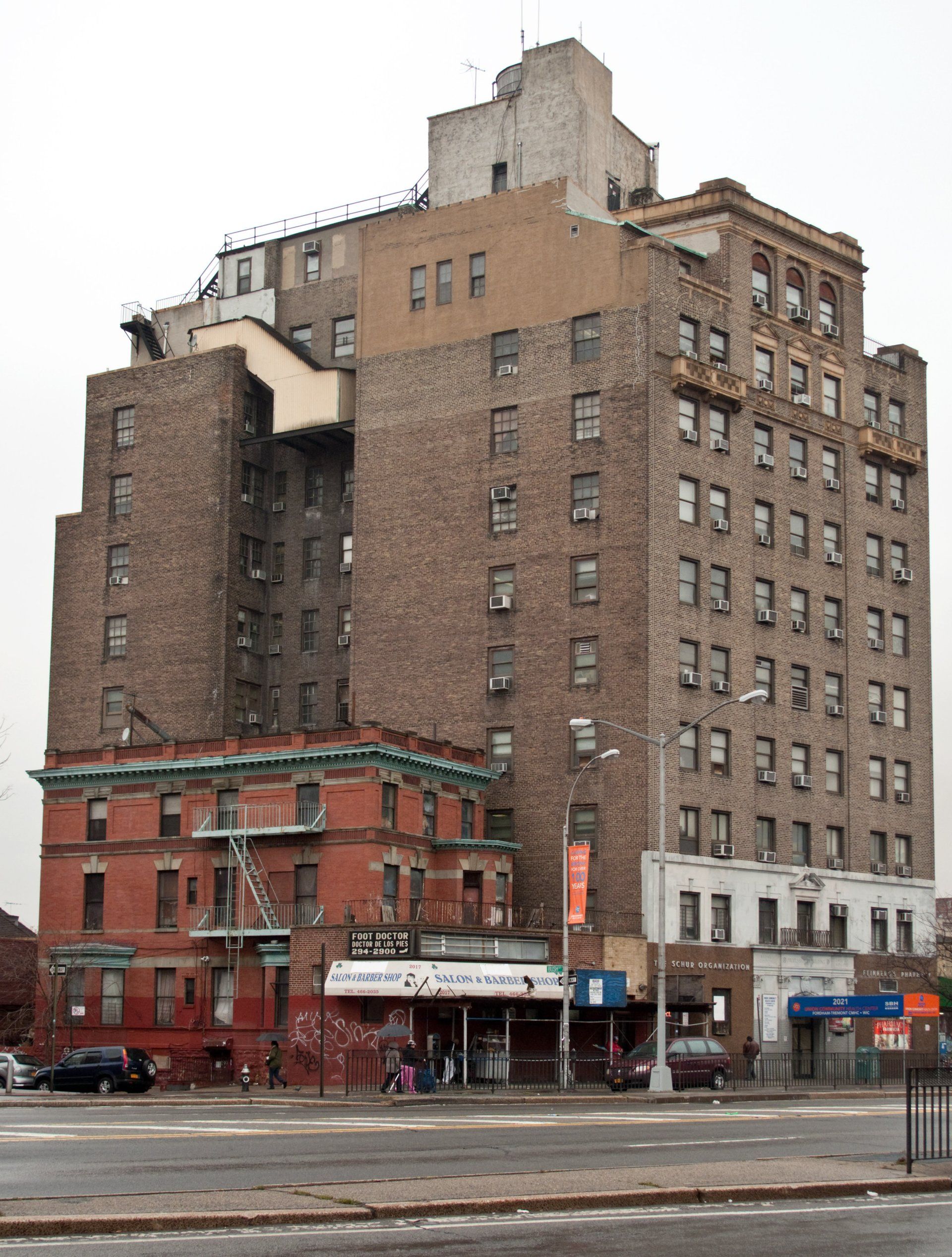
Latest Properties in Bronx

Loading...

Loading latest properties...

See All Properties in Bronx

History

From Jonas Bronck to the Modern Market

The Bronx takes its name from Jonas Bronck, a Swedish-born settler who arrived in New Netherland in 1639 and established the first recorded European settlement in the area, farming roughly 500 acres between the Harlem River and the river that would bear his name. That original homestead near present-day Mott Haven set in motion nearly four centuries of layered development that continues to shape the borough's real estate landscape today.

The West Bronx was formally annexed into New York City in 1874, followed by the eastern sections in 1895, and Bronx County was separated from Manhattan in 1914. Each annexation triggered new waves of infrastructure and housing investment. Through the late 19th and early 20th centuries, successive immigrant communities — Irish, German, Italian, Eastern European, and later Puerto Rican and Caribbean — built the dense residential fabric that defines neighborhoods from Fordham to Hunts Point to this day.

The mid-20th century brought ambitious planned communities like Parkchester, the massive MetLife-developed complex completed in 1942 that housed tens of thousands of residents and remains one of the Bronx's most recognizable addresses. Parkchester, Bronx, New York endures as a sought-after cooperative enclave precisely because of that original large-scale planning vision.

The borough suffered devastating urban decline through the 1970s, when arson and disinvestment hollowed out entire South Bronx blocks. Recovery began in earnest in the late 1990s and has accelerated since, with new construction, rising property values, and renewed buyer interest across neighborhoods that were written off a generation ago. That resilience — hard-won and historically grounded — is the defining story of the Bronx real estate market today.

Weather

A Four-Season Climate with Urban Intensity

The Bronx experiences a humid subtropical climate — technically on the boundary with humid continental — shaped by its position at the northern edge of New York City and its proximity to the Atlantic coast and Long Island Sound. Summers are warm and humid, with daytime highs typically reaching the upper 80s°F and overnight lows settling in the mid-60s°F. Winters are cold but rarely severe by northeastern standards, with average highs in the mid-30s°F and lows that can dip into the upper teens°F during cold snaps. The urban heat island effect, particularly pronounced in denser residential corridors, means the borough often runs a degree or two warmer than surrounding suburban areas.

Precipitation is fairly evenly distributed throughout the year, averaging around 46–50 inches annually, with no pronounced dry season. Nor'easters can bring significant snowfall between December and March, while summer brings occasional thunderstorms and, rarely, the remnants of tropical systems. The borough's coastal proximity moderates temperature extremes somewhat, but humidity makes summers feel noticeably hotter.

For homebuyers, these conditions have real implications. Heating costs are a meaningful budget consideration in older housing stock, and air conditioning is essentially a necessity through July and August. Residents of neighborhoods like Parkchester, Bronx, benefit from the area's tree canopy and green spaces during summer months. Seasonal maintenance — roof inspections before winter, drainage checks ahead of spring rains — is a routine part of responsible homeownership throughout the borough.

Bronx Market Analytics

The Bronx real estate market is experiencing a moderate increase in home values, with a 5.2% rise over the past year, according to data analyzed by Opulist, reaching an average home value of $492,741. This suggests the market is balancing, with a mix of homes selling above and below list price, and a relatively stable inventory of homes for sale, indicating a healthy and competitive market for both buyers and sellers.


1-Year Home Value Change: +5.2%

Bronx Home Value Index over time.

Can I Afford Bronx?
$
%
$0
Est. Monthly Payment
$0/yr
Salary Required

*Principal & interest only. Salary based on 28% debt-to-income ratio.

Get Pre-Approved for Bronx