
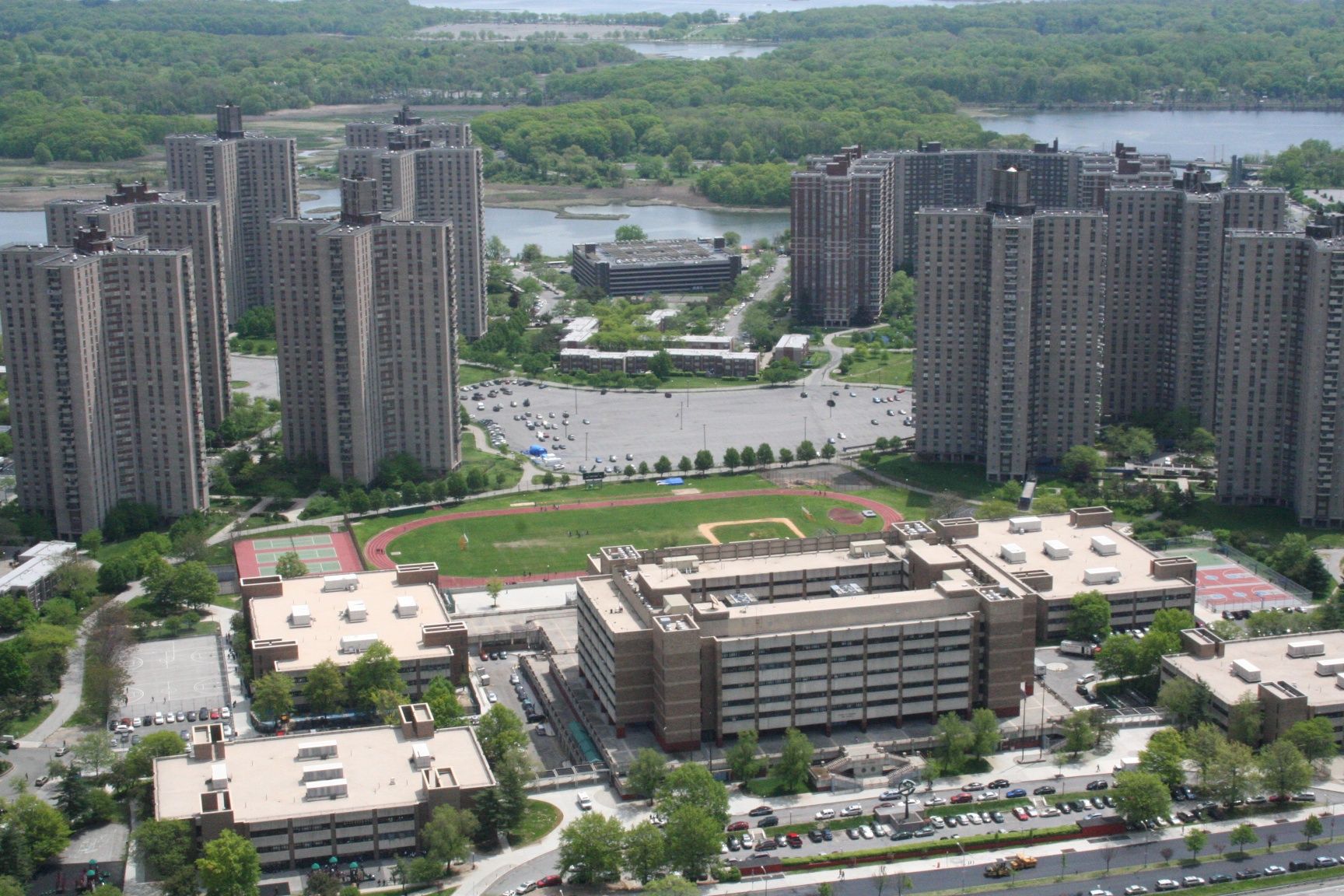
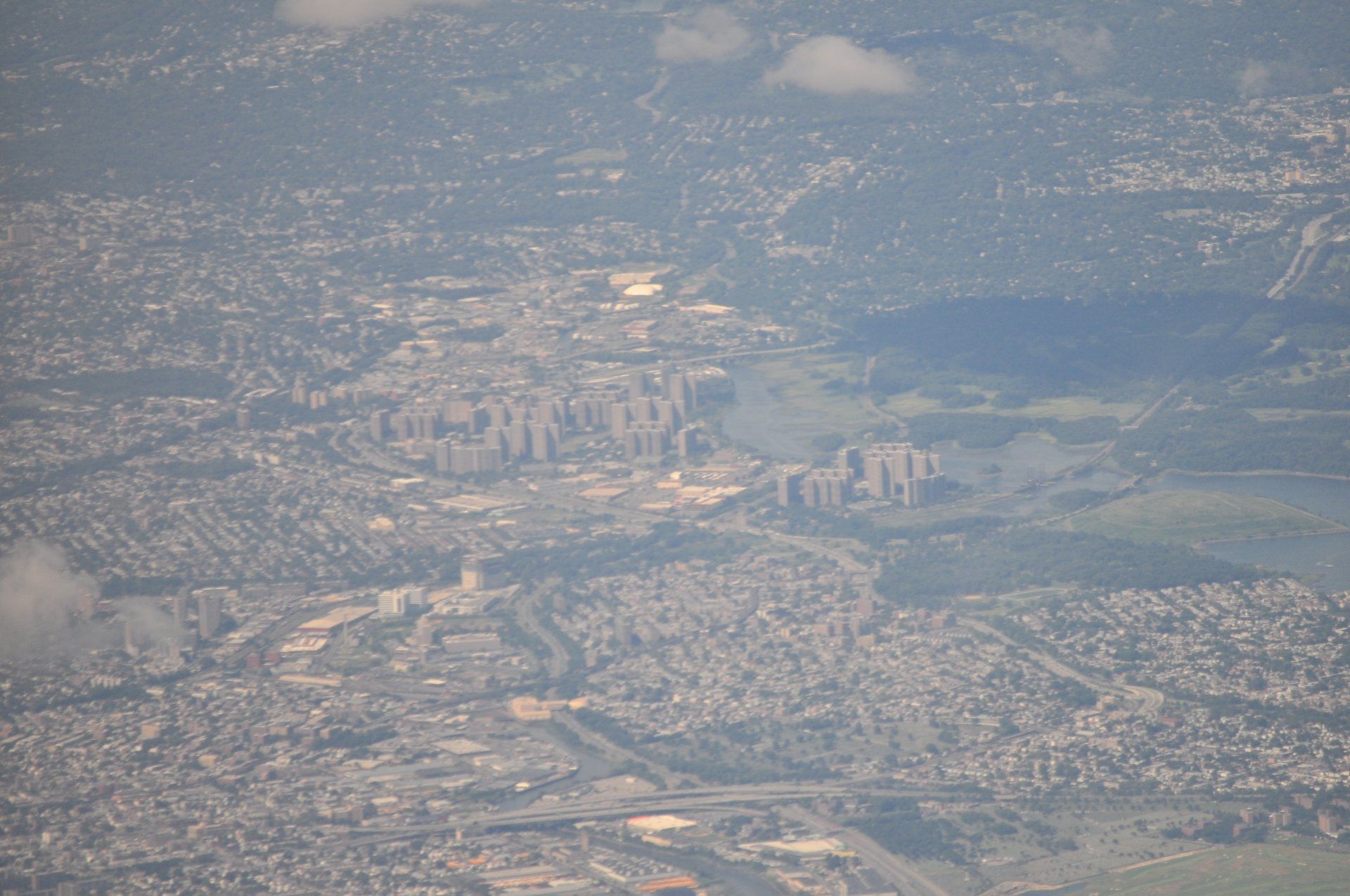
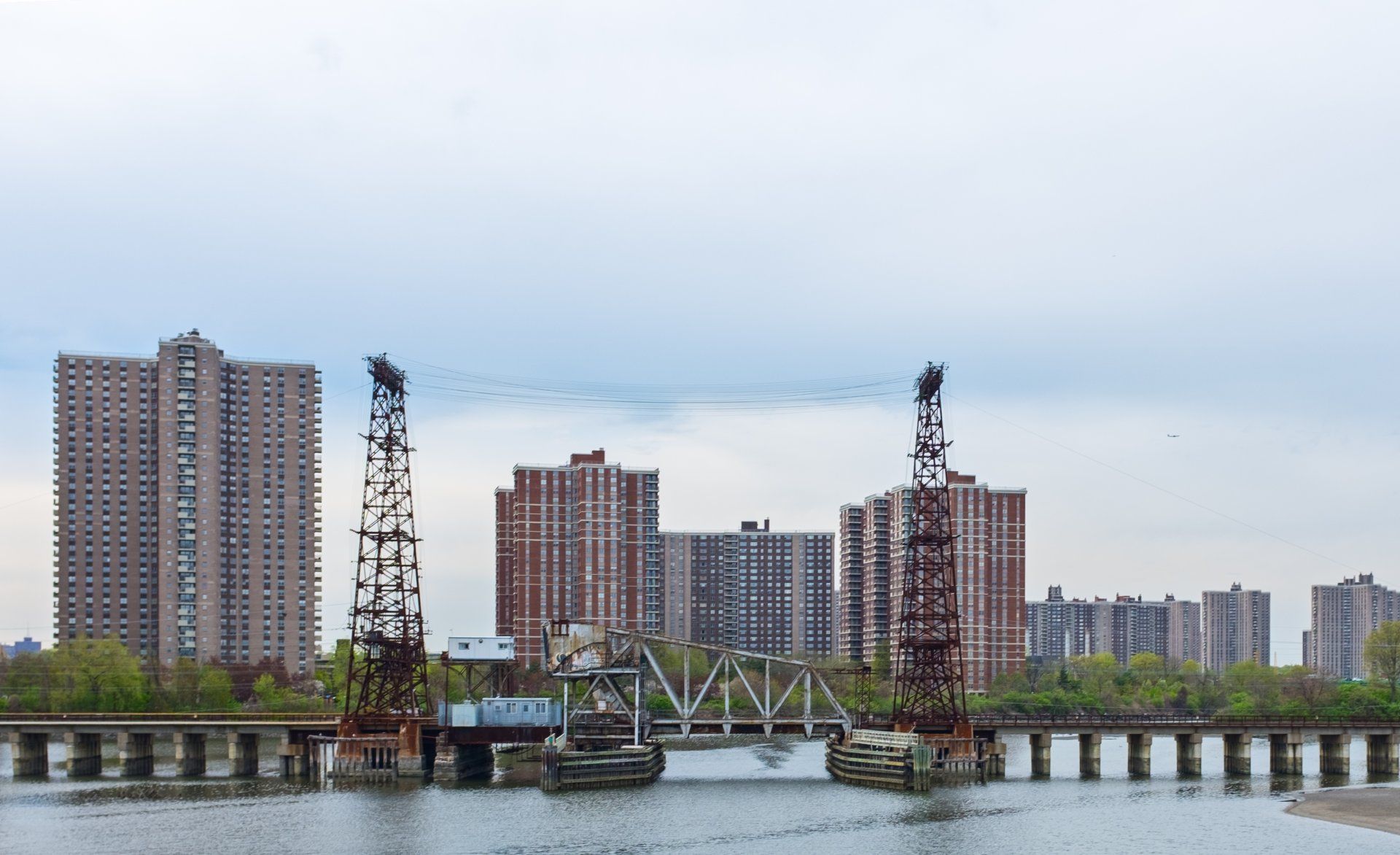
Co-op City, located in the northeastern Bronx along the Hutchinson River, holds a distinction that no other residential development in the world can claim: it is the largest housing cooperative on the planet. Spanning 320 acres and housing more than 43,000 residents across 35 high-rise buildings and seven townhouse clusters, this Mitchell-Lama community operates as a genuine city within a city — complete with three shopping centers, eight parking garages, and a 25-acre Education Park that encompasses elementary schools, middle schools, and a high school. Built between 1966 and 1973 on the former site of Freedomland U.S.A., an ambitious amusement park that once billed itself as the Disneyland of the East, Co-op City brought a new model of middle-income cooperative ownership to a part of the Bronx that had previously been tidal marshland. What sets it apart from surrounding neighborhoods like Baychester and Eastchester is its self-contained infrastructure, resident-controlled governance through the Riverbay Corporation, and proximity to Pelham Bay Park — New York City's largest park. For buyers seeking long-term affordability, community stability, and genuine urban convenience, Co-op City represents a compelling and enduring opportunity.
Welcome to Co-op City
Things to Do
Outdoor Recreation
Co-op City's 320-acre footprint was deliberately designed with green space in mind — roughly 80% of the land remains undeveloped, giving residents an unusually generous amount of open air for a Bronx neighborhood. Life Trail Park winds through the development's superblocks, offering dedicated pedestrian paths ideal for walking, jogging, and cycling. Spread throughout the community are four basketball courts and five baseball diamonds, keeping residents active year-round. The real outdoor crown jewel, however, is just beyond the development's edge: Pelham Bay Park, New York City's largest park at over 2,700 acres, is a short distance to the south and east, offering trails, picnic areas, and the beloved Orchard Beach — a crescent-shaped shoreline that draws sunbathers and swimmers every summer. The nearby Hutchinson River adds a scenic natural border to the community's eastern edge.
Shopping & Dining
Co-op City is notably self-sufficient when it comes to everyday needs. The community is served by three internal shopping centers that handle groceries, services, and daily essentials without requiring residents to leave the neighborhood. Adjacent to the development, Bay Plaza Shopping Center is the area's major retail hub, featuring department stores, a supermarket, and a 13-screen multiplex movie theater — making it a go-to destination for an evening out. The shopping center has grown considerably over the years and now ranks among the larger retail complexes in the Bronx. For dining, local eateries and casual restaurants serving the community's diverse population — predominantly Black and Hispanic — reflect a rich mix of Caribbean, Latin American, and soul food traditions.
Arts, Culture & Community Life
Co-op City's internal street grid is itself a quiet cultural monument, with roads named after writers, scientists, composers, and activists — Dreiser Loop, Einstein Loop, Earhart Lane, Casals Place — honoring a remarkably eclectic range of historical figures. The community hosts 15 houses of worship and numerous community centers that anchor neighborhood life and organize seasonal events and cultural programming throughout the year.
Family Activities & Education
Families are exceptionally well served here. The 25-acre Education Park at the heart of the development houses a high school, two middle schools, and three elementary schools all within walking distance of residents' front doors. Six nursery schools and day care centers serve the youngest residents, while the courts, diamonds, and open lawns provide informal play space for children of all ages. A short trip south leads to City Island, a charming nautical village with seafood restaurants and a distinctly New England character — a favorite weekend excursion for Co-op City families.
Latest Properties in Co-op City
Loading latest properties...
History
From Marshland to the World's Largest Housing Cooperative
The story of Co-op City begins not with bricks and mortar but with tidal wetlands. The 320 acres in the northeastern Bronx that would eventually become home to more than 43,000 residents were, for most of their history, low-lying marshland bordering the Hutchinson River — flood-prone terrain that the city briefly eyed for a municipal airport in the 1920s before leaving largely untouched. That changed in 1960, when developer William Zeckendorf transformed the northern portion of the site into Freedomland U.S.A., a 205-acre theme park billed as the "Disneyland of the East." The park closed in 1964, leaving behind a landfilled but still-soggy expanse.
The United Housing Foundation, working within New York State's Mitchell-Lama program for middle-income housing, saw an opportunity. Construction began in 1966 under architect Herman Jessor, whose "towers in the park" design produced 35 high-rise buildings and seven townhouse clusters — 15,372 units in all. The first residents moved in during December 1968, and the project reached full completion in 1973. Managed by the resident-controlled Riverbay Corporation, Co-op City was conceived as a limited-equity cooperative: shareholders purchase into the community at below-market rates and benefit from low carrying charges in exchange for resale restrictions.
That founding philosophy still defines the neighborhood today. While the broader Bronx endured severe urban decline through the 1970s and 1980s, Co-op City's cooperative structure provided a stabilizing anchor. For buyers priced out of a nyc co op for sale in more expensive boroughs, Co-op City continues to represent one of the most compelling value propositions in New York City real estate — a self-contained community with its own schools, shopping centers, and public safety department, built on a democratic ownership model that has now lasted more than half a century.
Weather
A Four-Season Climate in the Northeastern Bronx
Co-op City experiences a humid continental climate, the classification that defines much of the northeastern United States and applies squarely to this corner of the Bronx. Residents live through four genuinely distinct seasons, each with its own character and its own demands on a home.
Summers are warm and humid, with daytime highs typically climbing into the upper 80s°F and overnight lows settling in the mid-60s. The development's proximity to the Hutchinson River and Long Island Sound moderates the most extreme heat somewhat, though the density of concrete and glass across Co-op City's 35 high-rise towers can intensify the urban heat island effect on the hottest days. Winters are cold and occasionally harsh, with average highs in the mid-30s°F and lows that frequently dip into the 20s. Nor'easters sweeping up the Atlantic coast can deliver significant snowfall, and the community's exposed, elevated towers are particularly susceptible to wind chill.
Precipitation is distributed fairly evenly throughout the year, averaging around 46 to 50 inches annually, with no pronounced dry season. Spring and fall are transitional and often pleasant, though spring can bring heavy rain and fall occasionally delivers early cold snaps.
For residents and prospective buyers, these climate realities translate directly into household costs. Heating expenses through the long winter months and cooling demands during humid summers are meaningful budget considerations. The community's aging building infrastructure also requires attentive seasonal maintenance — from weatherproofing and pipe protection in winter to managing moisture and ventilation in summer.
Co-op City Market Analytics
Can I Afford Co-op City?
Weather