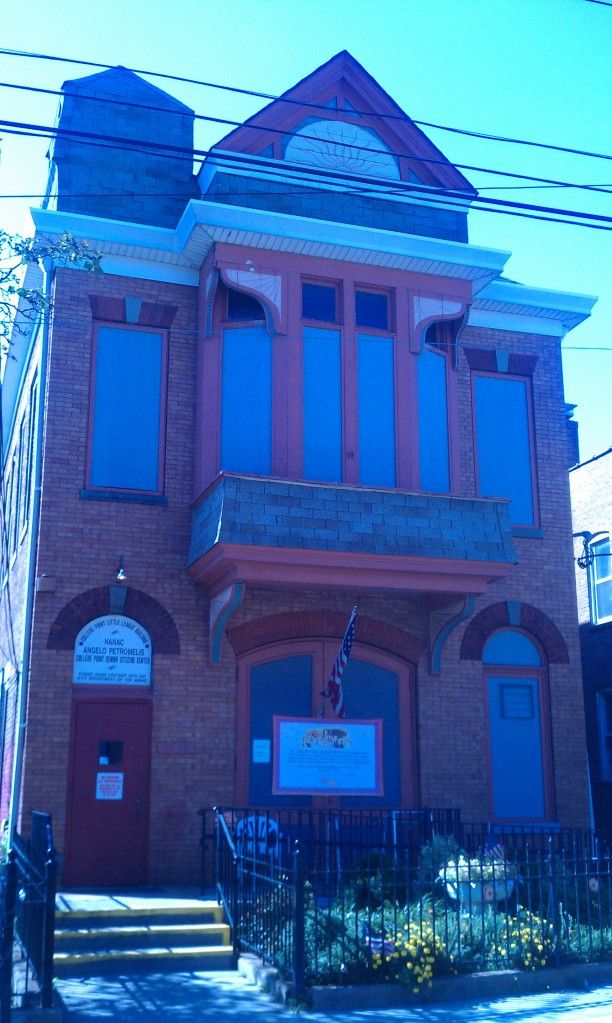
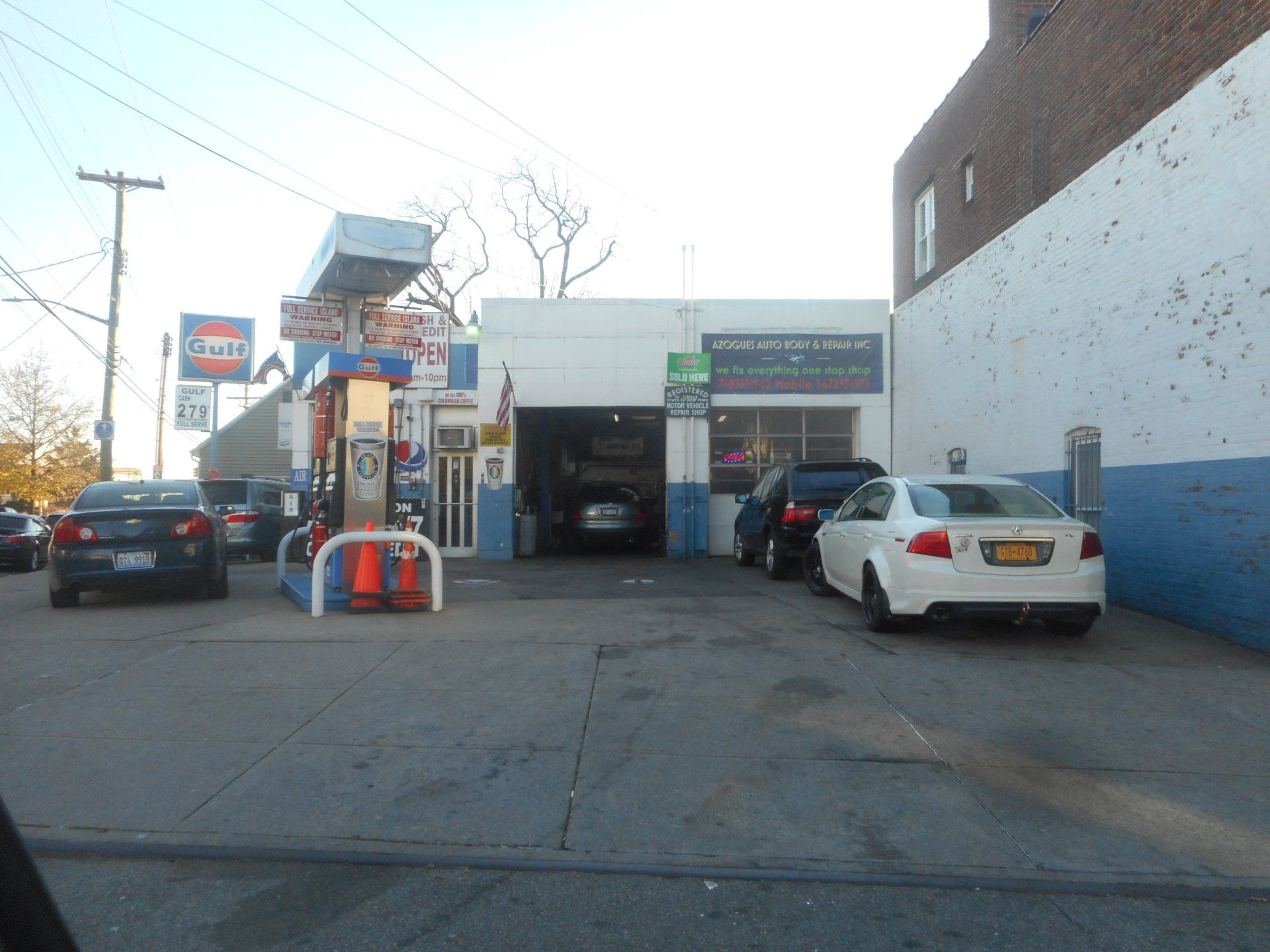
College Point, New York

Location:
College Point, NY

Welcome to College Point

Occupying just 1.8 square miles on a peninsula in northeastern Queens, College Point sits where the East River meets Flushing Bay — a geographic position that has shaped everything about this neighborhood, from its industrial past to its residential present. Unlike neighboring Flushing, which pulses with dense commercial energy and subway access, College Point retains a distinctly quieter, more residential character, with tree-lined blocks, waterfront parks, and a median household income of nearly $92,000 that outpaces both Queens and New York City as a whole.

The neighborhood's roots run deep. The Poppenhusen Institute, built in 1868 and still standing on 14th Avenue, once housed the first free kindergarten in the United States — a legacy that speaks to College Point's long tradition of community investment. Today, Hermon A. MacNeil Park and Powell's Cove Park offer residents direct waterfront access that most of Queens simply cannot match. Bus routes including the Q25 connect the neighborhood to the Flushing-Main Street 7 train station.

For buyers seeking genuine neighborhood identity, waterfront green space, and above-average household incomes within New York City limits, College Point represents a compelling and often overlooked case for long-term investment.

Things to Do

Outdoor Recreation & Waterfront

College Point's greatest natural asset is its waterfront, and the neighborhood's parks make the most of it. Powell's Cove Park sits along the East River shoreline and offers sweeping views across the water, walking paths, and a genuine sense of escape from the urban density of greater Queens. Hermon A. MacNeil Park — named for the American sculptor who lived and worked in College Point — provides open green space and recreational fields that serve as a community gathering point year-round. College Point Park rounds out the trio, offering additional waterfront access and a quiet spot to watch the boat traffic on Flushing Bay. The neighborhood is also home to two yacht clubs, reflecting a longstanding maritime culture that dates back to the area's days as a waterfront resort destination in the early twentieth century.

Dining & Local Flavor

College Point's remarkable ethnic diversity — with large Ecuadorian, Colombian, Chinese, and Italian communities — translates into a genuinely eclectic dining scene along College Point Boulevard, 14th Avenue, and 20th Avenue. These commercial corridors are lined with Latin American restaurants, Chinese eateries, delis, and bakeries that reflect the neighborhood's multicultural character. Each year, the College Point Restaurant Week draws food lovers from across Queens, offering a chance to explore the breadth of local cuisine at accessible prices.

Arts, Culture & History

The crown jewel of College Point's cultural life is the Poppenhusen Institute, a landmark building dating to 1868 that stands as one of the most historically significant structures in Queens. Founded by industrialist Conrad Poppenhusen, it housed the first free kindergarten in the United States and continues today as a library and cultural center hosting community events, classes, and exhibitions. History enthusiasts will also appreciate the First Reformed Church (built 1872) and the Schleicher Mansion (1857), both evocative remnants of the neighborhood's German immigrant industrial heyday.

Shopping & Community Events

The College Point Corporate Park along 20th Avenue offers big-box retail convenience, including a Target and BJ's Wholesale Club, making everyday errands easy without leaving the neighborhood. For community spirit, the annual College Point Street Fair and Memorial Day Parade are beloved traditions that draw residents together and celebrate the neighborhood's tight-knit, small-town character — a quality that feels genuinely rare for a community of over 33,000 people sitting within New York City limits.

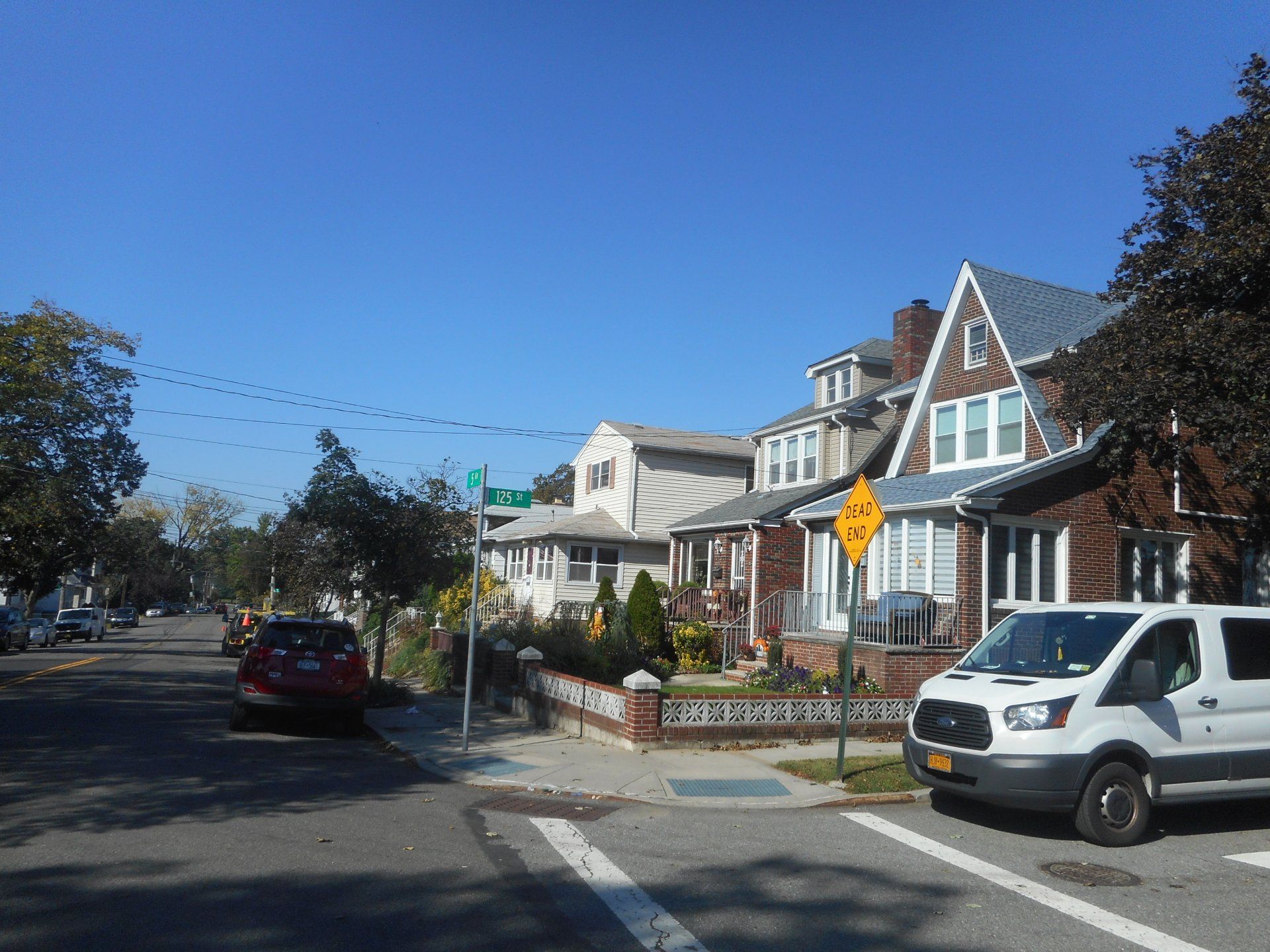
Latest Properties in College Point

Loading...

Loading latest properties...

See All Properties in College Point

History

From Matinecock Land to Modern Neighborhood

College Point's story begins long before its current name. The Matinecock people inhabited this northeastern Queens peninsula for centuries before Dutch Governor Willem Kieft purchased the land in 1645, setting it on a path through multiple identities — Lawrence's Neck, Tew's Neck, Flammersberg, Strattonsport — before finding its lasting name. That name came from St. Paul's College, an Episcopalian seminary founded in 1835 by the Rev. William Augustus Muhlenberg. The college closed around 1850, but the name endured, and the neighborhood was officially incorporated as a village in 1867.

The event that truly shaped College Point's character arrived in 1854, when German-American industrialist Conrad Poppenhusen established his hard-rubber factory here, transforming a quiet farming community into a factory town. Poppenhusen didn't just build a business — he built a neighborhood, funding water systems, schools, churches, and the Poppenhusen Institute in 1868, which housed the first free kindergarten in the United States. The tight-knit, working-class identity he cultivated never entirely left.

The early 20th century layered aviation onto that industrial foundation. The Edo Aircraft Corporation, founded in 1925, pioneered aluminum seaplane floats along Flushing Bay, while Flushing Airport operated from 1927 until its decommissioning in 1984. The former airport site later became a focus for residential redevelopment in the 1990s and 2000s, helping shift College Point from a manufacturing hub toward the mixed-use, predominantly residential neighborhood it is today.

Those successive waves of development — industrial housing stock, postwar Cape Cods like the 1953 Allied Homes development near 25th Avenue, and later infill construction — created the varied but cohesive streetscape that defines College Point's real estate market today, where a median household income of $91,789 reflects a community that has steadily climbed while retaining its working-class roots.

Weather

A Four-Season Climate with Coastal Character

College Point experiences a humid subtropical climate — the same classification that applies to much of New York City — shaped significantly by its position as a waterfront peninsula jutting into the waters where the East River meets Flushing Bay. This coastal exposure gives the neighborhood a moderating influence that softens temperature extremes compared to inland parts of Queens, though it also brings persistent humidity and occasional fog.

Summers are warm and muggy, with daytime highs typically ranging from the mid-80s to the low 90s°F, while overnight lows settle in the upper 60s to low 70s. Winters are cold but rarely severe by northeastern standards, with highs generally in the mid-30s to low 40s°F and lows dipping into the upper 20s. Spring and fall are the most pleasant seasons, offering mild temperatures and lower humidity that make College Point's waterfront parks genuinely inviting.

Precipitation is distributed fairly evenly throughout the year, averaging around 45 to 50 inches annually, with no pronounced dry season. Nor'easters in winter can bring significant snowfall, and the neighborhood's low-lying, water-adjacent terrain makes it particularly attentive to storm surge and coastal flooding during major weather events — a real consideration for prospective buyers near the shoreline.

For homeowners, the climate means meaningful heating costs through a four-to-five-month winter, reliable demand for air conditioning in summer, and year-round attention to exterior maintenance — especially given the salt air proximity that can accelerate wear on siding, roofing, and windows.

College Point Market Analytics

The College Point real estate market is showing signs of stability and growth, with the average home value increasing by 4.5% over the past year to $815,104, according to data analyzed by Opulist. This suggests that the market is balancing out, with moderate price growth and a steady supply of homes for sale, making it a good time for buyers and sellers to explore their options. As a buyer or seller in College Point, it's essential to work with a knowledgeable and experienced real estate partner like Opulist to navigate the local market and make informed decisions.


1-Year Home Value Change: +4.5%

College Point Home Value Index over time.

Can I Afford College Point?
$
%
$0
Est. Monthly Payment
$0/yr
Salary Required

*Principal & interest only. Salary based on 28% debt-to-income ratio.

Get Pre-Approved for College Point