
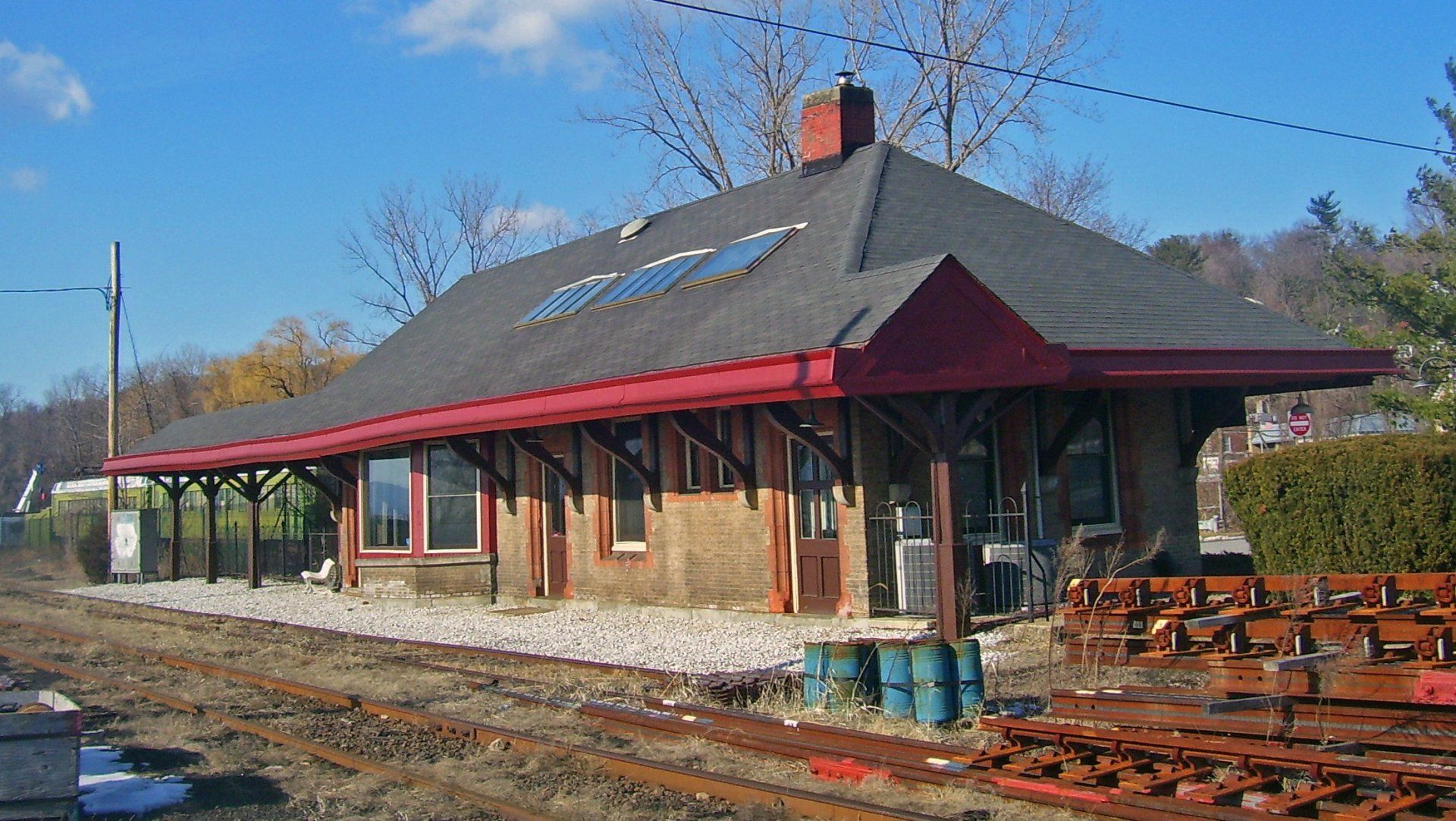
Incorporated in 1898 on the eastern bank of the Hudson River, Croton-on-Hudson sits approximately 35 miles north of Midtown Manhattan in Westchester County — close enough to the city to commute easily, yet defined by a character that is unmistakably its own. What separates it from neighboring communities like Ossining or Cortlandt Manor is a combination of genuine historical depth and exceptional transit access: the Croton-Harmon station, a major Metro-North hub on the Hudson Line, has anchored daily life here for generations and remains one of the most significant rail transfer points in the entire county. Beyond the commute, Croton Point Park — a sweeping county-managed peninsula where the Croton River meets the Hudson — offers waterfront trails and open space that larger, more developed suburbs simply cannot match. With a median household income of $185,718 and a median home price around $702,600, croton on hudson homes for sale attract buyers who are willing to invest in a place with real roots. For those seeking a well-connected, historically layered address on the Hudson with room to grow, Croton-on-Hudson continues to reward the decision to put down roots here.
Welcome to Croton-on-Hudson
Community Profile
Tucked along the eastern bank of the Hudson River in Westchester County, this intimate village of 8,202 residents draws a remarkably accomplished and financially stable population. The median household income here stands at an impressive $191,678 — more than double the national median — and 73.2% of households clear six figures annually, reflecting the deep professional roots of people who have chosen this community deliberately. That prosperity is built on genuine credentials: 74.8% of residents hold a bachelor's degree or higher, more than twice the national rate, and 37.3% have earned a graduate degree. A strong 39.6% hold STEM credentials, suggesting a technically sophisticated workforce well-suited to the innovation economy of the greater New York metro.
The community skews toward established life stages, with a median age of 46.3 years — notably above the national median of 38.5 — and a strong cohort of married households at 60.2%, with an average family size of 3.14. Homeownership is a defining characteristic here: 80% of residents own their homes, well above the national rate of 65.5%, and the median home value of $714,038 reflects both the quality of the housing stock and the enduring desirability of the area. Those browsing croton on hudson homes for sale will find a village where neighbors are long-term investors in their community. The poverty rate is a remarkably low 3.7%, and just 2.9% of residents lack health insurance — indicators of a community with genuine economic resilience. Most residents commute into New York City via Metro-North, and while the average commute of 45.1 minutes reflects that regional reality, many find the trade-off more than worthwhile for the quality of life Croton delivers.
Things to Do
Outdoor Recreation
Croton-on-Hudson is a paradise for anyone who loves the outdoors. Croton Point Park, managed by Westchester County, is the crown jewel — a sweeping peninsula jutting into the Hudson River where you can hike wooded trails, launch a kayak, camp overnight, and take in some of the most dramatic river views in the entire Hudson Valley. The park also features a plaque commemorating the 1645 peace treaty between the Kitchawanc tribe and Dutch settlers, giving it a sense of history that deepens every visit. Closer to the village center, Senasqua Park offers waterfront access along the Croton River estuary, and a pedestrian bridge spanning Route 9 connects it conveniently to the lower village. Cyclists and walkers enjoy the bike trail extensions around Half Moon Bay, and the restored "Picture Tunnel" — now closed to cars — makes for a charming, traffic-free passage through the landscape.
Arts & Culture
Croton-on-Hudson has a quietly rich creative heritage. The village and its neighboring Mount Airy community attracted Greenwich Village artists and writers in the early 20th century, and that bohemian spirit never entirely left. The Van Cortlandt Manor, a beautifully preserved colonial estate just minutes from the village, offers guided tours and seasonal living-history events that bring the region's 17th-century past vividly to life. The Old Croton Aqueduct State Historic Park — a 26-mile linear trail following the original 1842 aqueduct — passes through the area and doubles as both a recreational path and an open-air history lesson.
Dining & Shopping
The village's commercial district along Grand Street and the surrounding blocks offers an approachable mix of local shops, cafés, and restaurants with a distinctly neighborhood feel. The area has evolved from its earlier dual-district roots into a single walkable commercial zone with genuine small-town character — the kind of Main Street energy that draws people browsing croton on hudson homes for sale to imagine their everyday lives here.
Family Activities & Seasonal Events
Families find plenty to keep busy year-round. The Hudson River waterfront provides fishing, birdwatching, and picnicking, while Croton Point Park hosts camping programs popular with kids. Seasonal festivals and farmers markets animate the village through warmer months, and the proximity to New York City — just about 35 miles south via Metro-North — means world-class museums, theaters, and sporting events are always within easy reach on a weekend afternoon.
Latest Properties in Croton-on-Hudson
Loading latest properties...
History
From Kitchawank Territory to Commuter Village
Long before the first European deed was signed, the peninsula where the Croton River meets the Hudson River was home to the Kitchawank people, a subgroup of the Wappinger Confederacy, whose presence in this area dates back at least 7,000 years. In 1645, the Kitchawank signed a peace treaty with Dutch settlers at Croton Point — a moment still commemorated by a plaque in the park today. A generation later, in 1677, Stephanus van Cortlandt began assembling the landholdings that would become the 85,000-acre Manor of Cortlandt, formally granted by royal patent in 1697. By 1718, a census counted just 91 inhabitants farming and milling the land.
The 19th century transformed Croton entirely. Between 1837 and 1842, chief engineer John B. Jervis oversaw construction of the Old Croton Aqueduct, a 41-mile masonry channel that delivered fresh water to New York City and brought waves of Irish, Italian, and German laborers into the area. The railroad followed: service along the Hudson River line commenced by 1849, and in 1903 real estate developer Clifford Harmon purchased 550 acres adjacent to the village, donating land to the New York Central Railroad on the condition that the station bear his name permanently — hence the Croton-Harmon station that Metro-North commuters use today. The village formally incorporated on February 12, 1898, when its population reached roughly 1,000 residents.
After World War II, Croton shed its industrial character and embraced its identity as a commuter suburb. Population grew from 3,843 in 1940 to over 6,800 by 1960, and the neighborhoods built during that postwar expansion — tree-lined streets set against Hudson Valley terrain — remain the backbone of the housing stock that draws buyers today. That layered history, from manor land to railroad town to riverfront village, is precisely what gives Croton-on-Hudson homes for sale their distinctive character and enduring appeal.
Weather
Croton-on-Hudson experiences a humid continental climate, shaped by its position in the lower Hudson Valley roughly 35 miles north of New York City. The village sits at the confluence of the Croton and Hudson Rivers, and while it lacks direct ocean exposure, the broad Hudson corridor acts as a moderating influence on temperature extremes — though not enough to soften the region's distinctly four-season character.
Summers are warm and humid, with daytime highs typically ranging from the mid-80s°F and overnight lows settling into the mid-60s. Winters are cold and snowy, with average highs in the low-to-mid 30s°F and lows that regularly dip into the teens and 20s during the coldest stretches of January and February. Spring and fall are genuinely beautiful seasons here — crisp, colorful, and often the most compelling time to explore Croton-on-Hudson homes for sale.
Annual precipitation is fairly evenly distributed throughout the year, averaging around 45–50 inches, with winter snowfall typically ranging from 25 to 35 inches. Nor'easters can bring significant accumulation, and summer thunderstorms are common.
For homeowners and buyers, the climate has real practical implications. Heating costs are a meaningful budget consideration given the cold winters, and homes with good insulation and efficient systems command a premium. Outdoor living spaces — decks, patios, and gardens — are highly valued but require seasonal preparation. The dramatic seasonal foliage along the Hudson Valley also makes curb appeal a year-round conversation for those browsing Croton-on-Hudson houses for sale.
Croton-on-Hudson Market Analytics
Can I Afford Croton-on-Hudson?
Weather