
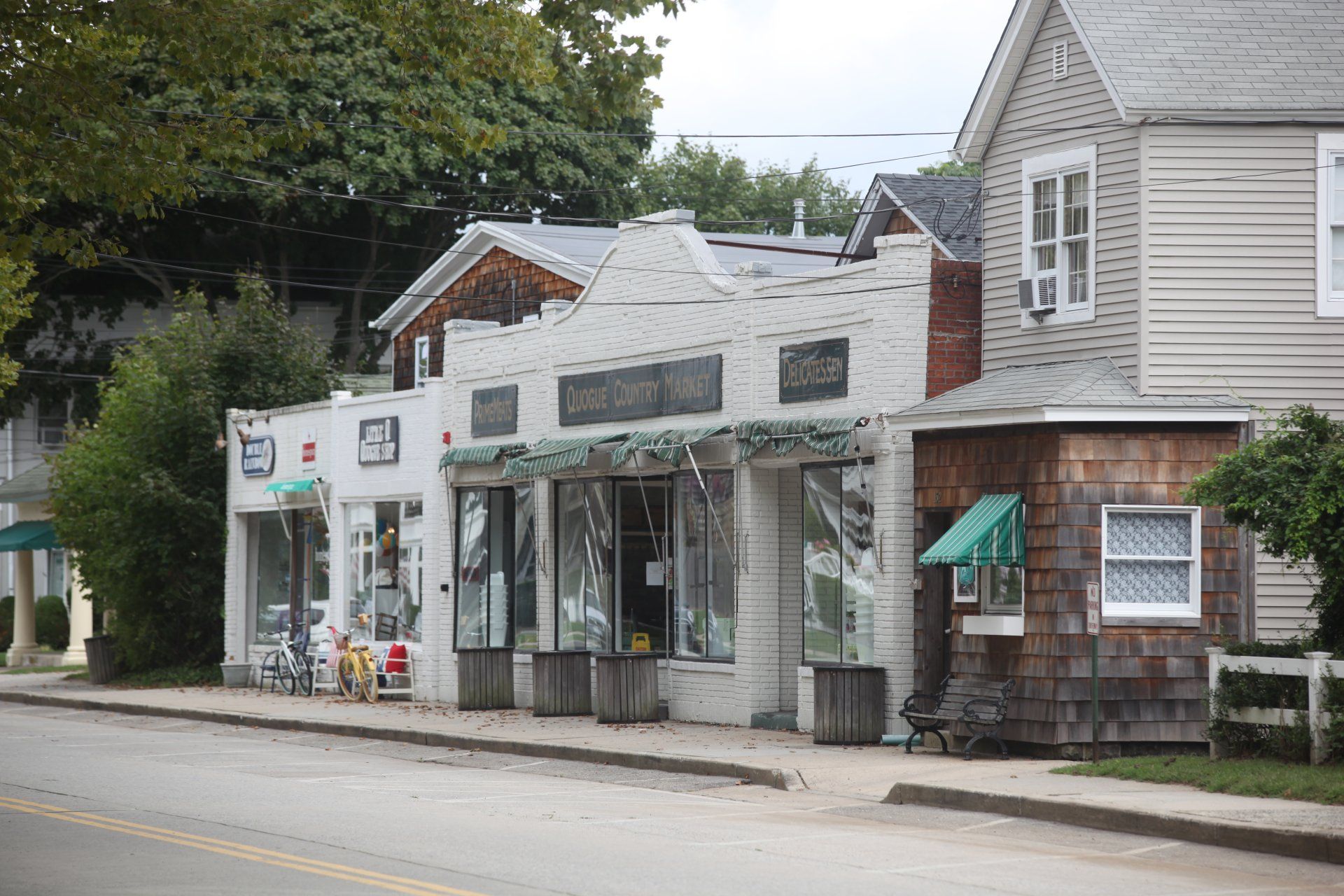
East Quogue, New York

Location:
East Quogue, NY

Welcome to East Quogue

First established in 1673 as "Fourth Neck" — the fourth peninsula along Long Island's South Fork — East Quogue has spent more than three centuries quietly becoming one of Suffolk County's most coveted coastal addresses. Situated in the Town of Southampton, this hamlet of roughly 5,500 residents borders both Shinnecock Bay to the north and the Atlantic Ocean to the south, giving it a dual-waterfront character that few communities along the South Fork can claim. Unlike the more commercially developed stretches of the Hamptons corridor, East Quogue has preserved a distinctly residential, unhurried atmosphere, with historic districts like Pine Neck and Oakville still anchoring its streetscapes alongside contemporary waterfront estates.

Families with children are served by the East Quogue Union Free School District, and daily life centers around gathering spots like East Quogue Village Green Park, with its walking paths, playground, and gazebo. The Long Island Rail Road connection that first opened the hamlet to visitors in the 1880s still links residents to New York City today. With a median home price of $1.6 million and a growing year-round population drawn to Tiana Beach and the hamlet's protected natural scenery, those exploring east quogue homes for sale are looking at a community where coastal living and long-term value go hand in hand.


Community Profile

Tucked into the quieter western reaches of the Hamptons corridor in Suffolk County, this small Peconic Bay community of 5,406 residents draws a distinctly accomplished, established crowd. The median age of 54.5 years — well above the national figure of 38.5 — reflects a community that has arrived: professionals and retirees who have chosen East Quogue deliberately, often trading city density for a more spacious, unhurried pace of life. Nearly 24% of residents are 65 or older, yet the community remains economically vibrant, with a low unemployment rate of just 3.1% and a median household income of $93,710, comfortably above the national median.

Education runs deep here. 49.6% of residents hold at least a bachelor's degree — well above the national average of 33% — and 18.2% have earned a graduate degree, a figure that speaks to the intellectual caliber of the neighborhood. Homeownership is the clear norm: at 78.8%, it far outpaces the national rate of 65.5%, and with a median home value of $842,473, those browsing east quogue homes for sale are entering a genuine luxury market. Nearly 46.4% of households report six-figure incomes, and the average commute of 29.2 minutes — reasonable for a community within the greater New York metro area — means that proximity to opportunity doesn't require sacrificing the serenity that makes East Quogue so appealing. With just 2,198 housing units spread across a low-density landscape, inventory is limited and demand remains strong.

Things to Do

Outdoor Recreation & Beaches

East Quogue's greatest natural asset is its stunning coastal geography. Tiana Beach, stretching along the Atlantic shoreline, offers wide sandy expanses backed by classic Long Island dunes — ideal for swimming, surf fishing, and long walks in every season. Shinnecock Bay to the north provides calmer waters perfect for kayaking, paddleboarding, and boating. The hamlet's low-lying terrain and proximity to preserved natural lands make it a haven for birdwatchers and nature lovers alike, with the broader Hamptons trail network easily accessible from town.

Parks & Family Activities

At the heart of the community, East Quogue Village Green Park is a beloved local gathering spot featuring playgrounds, shaded walking paths, and a charming gazebo. It's the kind of unhurried, neighborly space that defines life in a small coastal hamlet — equally welcoming to young families and older residents enjoying a morning stroll. The park regularly serves as a backdrop for community events that bring year-round and seasonal residents together.

Arts, Culture & History

East Quogue's history stretches back to 1673, and that heritage is very much alive today. The East Quogue Historical Society, founded in 1995, preserves the hamlet's story through archives, exhibits, walking tours, and educational programs. Landmarks like the Foster-Downs Home (built 1857) and the United Methodist Church (constructed 1882) anchor the historic districts of Pine Neck and Oakville, offering a tangible connection to the community's farming and maritime past. The Historical Society's walking tours are a wonderful way to explore the hamlet's Queen Anne and Colonial Revival architecture at a leisurely pace.

Dining & Shopping

East Quogue has a relaxed, village-scale dining and shopping scene befitting its intimate character. The surrounding Hamptons corridor — including nearby Hampton Bays and Westhampton Beach — expands options considerably, with acclaimed restaurants, boutiques, and farm stands just a short drive away. For those exploring east quogue homes for sale, this balance of quiet hamlet living and easy access to broader Hamptons amenities is a major part of the appeal. Whether you're browsing local shops along Montauk Highway or heading east toward Southampton Village, there's always something to discover within a comfortable distance.

Latest Properties in East Quogue

Loading...

Loading latest properties...

See All Properties in East Quogue

History

From Fourth Neck to the Hamptons: A Brief History of East Quogue

East Quogue's story begins in 1673, when the area was formally designated as Fourth Neck — so named for its position as the fourth peninsula along Long Island's South Fork — by English colonists who had been settling the Town of Southampton since the 1640s. Those early families, including the Phillips, Carters, Downs, Fosters, and Howells, built their livelihoods around farming, fishing, and woodcutting, harvesting timber from the densely forested Oakville area to the north and shipping it by schooner to New York City. The hamlet was renamed Atlanticville in 1858 and finally became East Quogue in 1891, reflecting its position just east of the neighboring village of Quogue.

The arrival of the Long Island Rail Road in the 1880s was a turning point. Population climbed from 179 in 1870 to 267 by 1885, and the rail connection ushered in a boarding house era that drew urban tourists to the coast. By the early 20th century, inns like the Vail House and the Punchmueller Inn were welcoming affluent New Yorkers — among them Theodore Roosevelt Jr. — for boating, hunting, and seaside leisure. The hamlet's identity as a coastal retreat was firmly established.

After World War II, open land gave way to residential subdivisions, including Wildlife and Woodland, which blended middle-class homes with upscale properties and set the template for East Quogue's current neighborhood character. The East Quogue Historical Society, founded in 1995, continues to document this layered past, and a 2014 Hamlet Heritage Area designation formalized the community's commitment to preservation. Today, that history is reflected directly in the real estate market: preserved Queen Anne and Colonial Revival farmhouses, landmark structures like the Foster-Downs Home (built 1857), and proximity to Tiana Beach and Shinnecock Bay make east quogue homes for sale among the most sought-after on the South Fork, with a median home price now reaching $1,600,000.

Weather

East Quogue experiences a humid subtropical climate — the mildest classification found on Long Island — moderated significantly by its position between Shinnecock Bay to the north and the Atlantic Ocean to the south. This dual coastal exposure acts as a natural thermostat, keeping summers cooler and winters warmer than inland areas at the same latitude.

Summer temperatures typically reach highs in the low-to-mid 80s°F, with overnight lows settling comfortably in the mid-60s. The ocean breeze makes even the warmest stretches feel livable, and humidity, while present, is tempered by consistent sea air. Winters are relatively mild for New York, with daytime highs generally ranging from the mid-30s to low 40s°F and lows dipping into the upper 20s. Significant snowfall is possible but rarely extreme, as the surrounding water moderates temperature swings.

Annual precipitation is fairly evenly distributed throughout the year, averaging around 45 inches. Nor'easters are the most notable weather threat, capable of bringing heavy rain, coastal flooding, and occasional storm surge to low-lying areas — something buyers browsing east quogue homes for sale should factor into their due diligence.

For real estate purposes, the climate is genuinely appealing. Long, pleasant summers support robust outdoor living from May through October, boosting the value of decks, pools, and waterfront access. Mild winters keep heating costs moderate, though coastal properties require diligent maintenance — particularly attention to salt-air corrosion, roof integrity, and flood preparedness — to protect long-term investments.

East Quogue Market Analytics

Market analytics data coming soon.
Can I Afford East Quogue?
$
%
$0
Est. Monthly Payment
$0/yr
Salary Required

*Principal & interest only. Salary based on 28% debt-to-income ratio.

Get Pre-Approved for East Quogue