
Floral Park, New York

Location:
Floral Park, NY

Welcome to Floral Park

Incorporated on October 15, 1908, the Village of Floral Park sits at the westernmost edge of Nassau County on Long Island, sharing a boundary with the New York City borough of Queens while remaining unmistakably its own place. Founded on the legacy of John Lewis Childs, who launched America's first mail-order seed catalog here in the 1870s and literally named the streets after flowers, Floral Park carries a distinct identity that sets it apart from neighboring communities like New Hyde Park and Elmont — one rooted in history, civic pride, and carefully maintained residential character.

At just 1.4 square miles, the village packs in a great deal: tree-lined blocks of well-kept single-family homes, the Floral Park station on the Long Island Rail Road offering direct service into Penn Station, and a school community anchored by Floral Park Memorial High School. With a median household income approaching $160,000 and a median home price around $760,000, this is a market that reflects genuine demand. For buyers who want the accessibility of New York City without surrendering the stability of a tight-knit suburban village — and for investors who recognize that well-located, supply-constrained communities hold their value — Floral Park makes a compelling case for the long term.


Community Profile

Tucked into Nassau County on Long Island's western edge, this tight-knit village of 16,169 residents presents a compelling portrait of established suburban prosperity. The median household income of $150,084 — double the national median — reflects a community of serious earners, and an extraordinary 66.8% of households clear six figures annually. That financial strength is backed by deep credentials: 59.8% of residents hold at least a bachelor's degree, nearly twice the national rate, and 25.9% have earned a graduate or professional degree. A striking 45.3% hold STEM degrees, signaling a highly analytical, career-driven population well-positioned for the modern economy.

For buyers seeking a stable, owner-occupied neighborhood, the numbers are equally reassuring. The homeownership rate stands at 85.5% — well above the national average of 65.5% — and a median home value of $772,371 reflects genuine long-term demand for housing here. The community skews toward married households (59.7%) with an average family size of 3.32, and the strong presence of children under 19 (25.1% of the population) signals an active, family-oriented environment. At a median age of 43.5 years, residents are in their prime earning and investing years. The unemployment rate of just 3.1% and a poverty rate of 3.0% — among the lowest imaginable — round out a picture of a community that is not merely affluent, but genuinely secure.

Things to Do

Outdoor Recreation

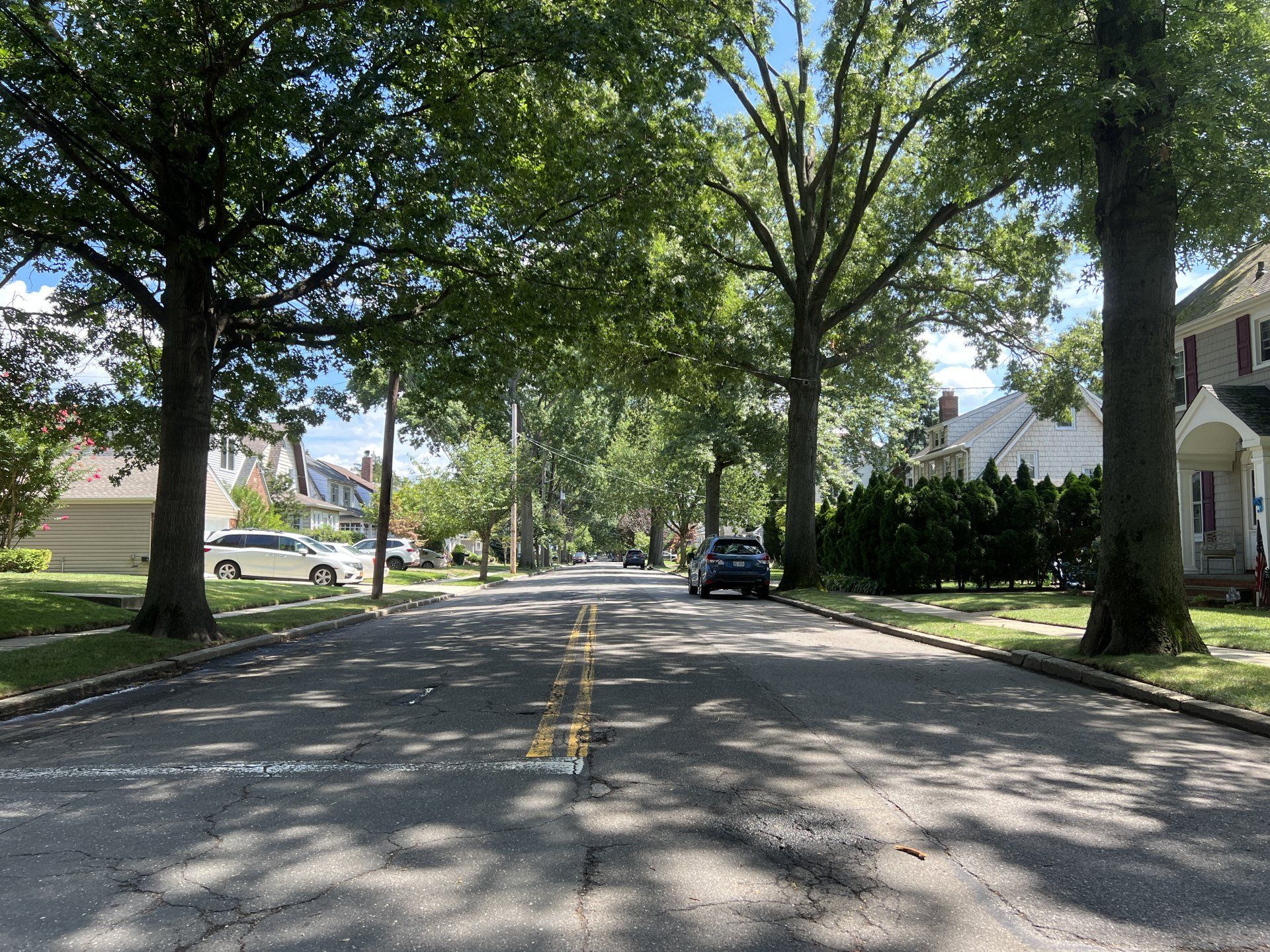
Despite its compact 1.4-square-mile footprint, Floral Park offers residents meaningful green space and recreational opportunities. Memorial Park serves as a beloved community anchor, providing open fields, playgrounds, and gathering areas where families spend warm-weather afternoons. The Floral Park Recreation Center keeps residents active year-round with fitness facilities and programs for all ages. The village's famously tree-lined streets — many of them named after flowers, a legacy of founder John Lewis Childs — make for genuinely pleasant walking and cycling, giving even a casual stroll a sense of history and charm.

Dining & Shopping

Jericho Turnpike forms the village's primary commercial corridor, lined with local restaurants, cafés, and shops that reflect the community's diverse character. From family-owned diners to international cuisine, the dining scene here is unpretentious and satisfying — the kind of neighborhood eating that regulars return to week after week. Small boutiques and service businesses round out the strip, giving Floral Park a walkable, small-town commercial feel that larger suburbs often lack.

Arts, Culture & Community

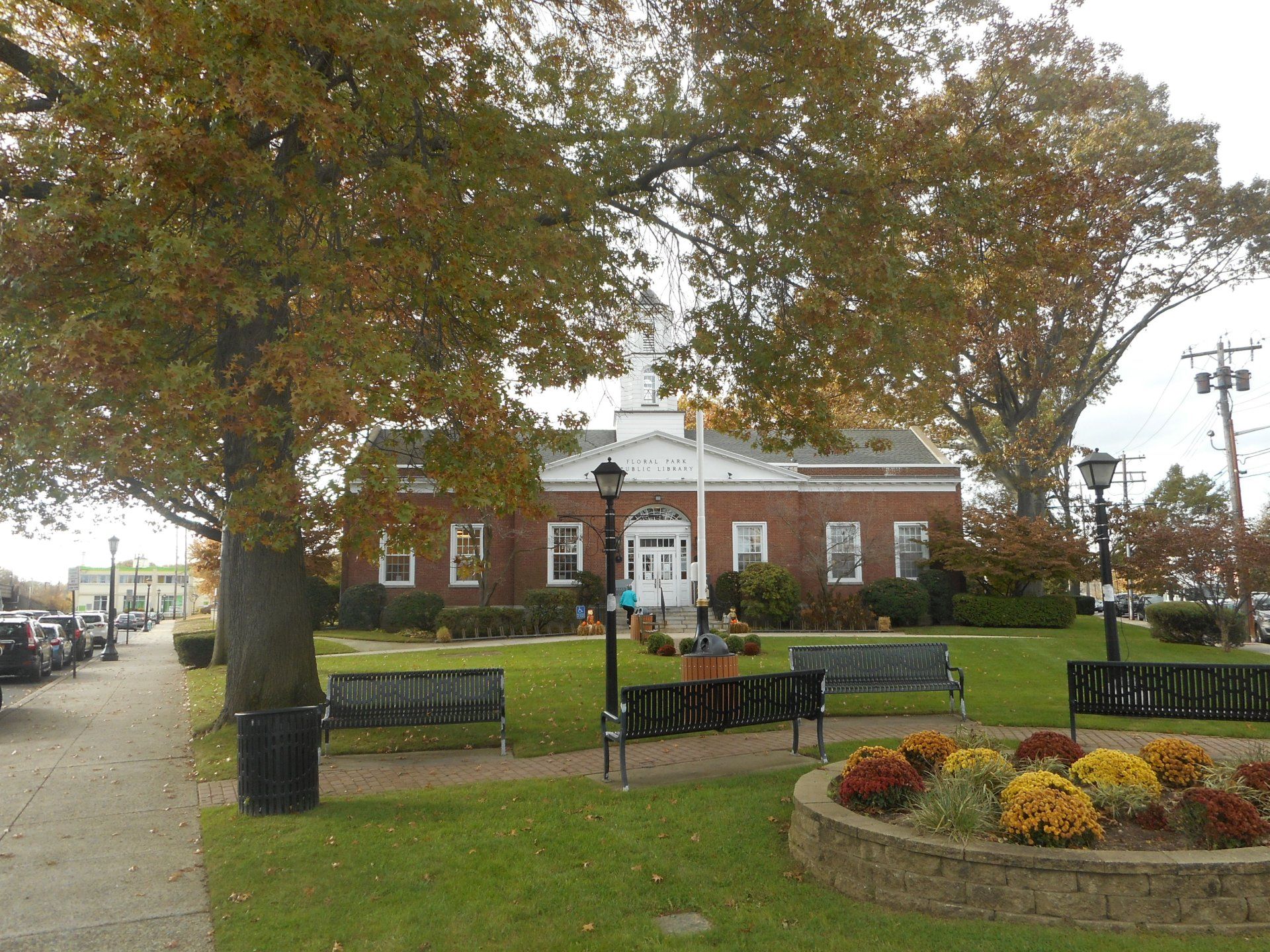
The Floral Park Public Library, established in 1923, remains a cultural cornerstone of village life, hosting programs, events, and community gatherings throughout the year. Floral Park Village Hall, built in 1936, is itself a piece of living history — a handsome civic building worth a look for anyone interested in the village's architectural heritage. Local volunteer organizations and community groups are unusually active here, contributing to a calendar of seasonal events and neighborhood celebrations that give the village its tight-knit feel.

Day Trips & Regional Attractions

Floral Park's location makes it an ideal base for exploring the broader region. Manhattan is roughly 18 miles west, reachable via the Long Island Rail Road at the village's own Floral Park station — elevated since 1960 and a convenient gateway to the city's world-class museums, theaters, and dining. Long Island's celebrated North and South Shores, with their beaches, vineyards, and historic Gold Coast estates, are easily accessible by car, making weekends here as varied and engaging as residents choose to make them.

Latest Properties in Floral Park

Loading...

Loading latest properties...

See All Properties in Floral Park

History

From Flower Fields to Sought-After Suburb

Floral Park's story begins not with a developer's blueprint but with a teenager from Maine and a mail-order catalog. In 1874, seventeen-year-old John Lewis Childs arrived in the area — then known as East Hinsdale — to work for a local seed grower named C.L. Allen. Childs quickly built his own horticultural empire, launching America's first mail-order seed catalog in 1876 and eventually cultivating more than 200 acres of flower beds. To promote his business, he renamed the community Floral Park and gave its streets the names of flowers — a romantic gesture that endures in the village's identity to this day.

The arrival of the Long Island Rail Road through the area in the 1870s was equally transformative, connecting this fertile patch of western Nassau County to New York City markets and drawing the first wave of commuter residents. When the local post office adopted the Floral Park name, the LIRR followed in 1888, renaming its station accordingly. The village was formally incorporated on October 15, 1908, with Childs elected as its first village president two days later.

After Childs died in 1921, the nursery industry gradually gave way to residential development. The post-World War II suburban boom accelerated this shift decisively, filling the village's compact 1.4 square miles with the single-family homes that define its character today. Village Hall was built in 1936, a sewer system was installed between 1954 and 1957, and Floral Park Memorial High School opened in 1957 — infrastructure investments that cemented the village as a stable, family-oriented enclave. That foundation now supports a median home price of $760,391, reflecting enduring demand for a community whose tree-lined streets still carry the names Childs chose nearly 150 years ago.

Weather

Floral Park, New York experiences a humid subtropical climate (Köppen classification Cfa), a designation that may surprise those who associate subtropical conditions with the Deep South. The village's position on Long Island, roughly 18 miles east of Manhattan, places it within a zone where the moderating influence of the Atlantic Ocean and Long Island Sound softens temperature extremes while keeping humidity consistently elevated throughout the year.

Summers are hot and humid, with average daily highs reaching the mid-to-upper 80s°F in July and August, while overnight lows typically settle in the mid-60s. The combination of heat and humidity can make July and August feel oppressive, and homeowners should plan accordingly for air conditioning costs. Winters are cool and damp rather than brutally cold — January highs average around 39°F, with overnight lows dipping into the upper 20s. Snowfall occurs regularly but rarely accumulates to extreme levels, though nor'easters can occasionally deliver significant storms.

One of Floral Park's notable climate characteristics is its remarkably even precipitation, with roughly 47 inches of rainfall distributed fairly consistently across all twelve months, with slight peaks in spring and fall. There is no true dry season.

For real estate purposes, this climate has meaningful implications. Homes require both efficient heating systems and central air conditioning, and the year-round moisture means basements, roofing, and exterior woodwork demand regular seasonal maintenance. On the upside, the temperate springs and autumns are genuinely pleasant, making outdoor living spaces — patios, gardens, and porches — worthwhile investments for Floral Park homeowners.

Floral Park Market Analytics

The Floral Park housing market is showing signs of stability and growth, with the average home value increasing by 5.5% over the past year to $838,728, according to data analyzed by Opulist. This uptrend suggests that the market is balancing out, with a relatively low for-sale inventory of 25 homes, indicating that homes are being sold at a steady pace. As a result, now may be a good time to consider buying or selling a home in Floral Park, and working with a knowledgeable real estate partner like Opulist can help you navigate the market with confidence.


1-Year Home Value Change: +5.5%

Floral Park Home Value Index over time.

Can I Afford Floral Park?
$
%
$0
Est. Monthly Payment
$0/yr
Salary Required

*Principal & interest only. Salary based on 28% debt-to-income ratio.

Get Pre-Approved for Floral Park