
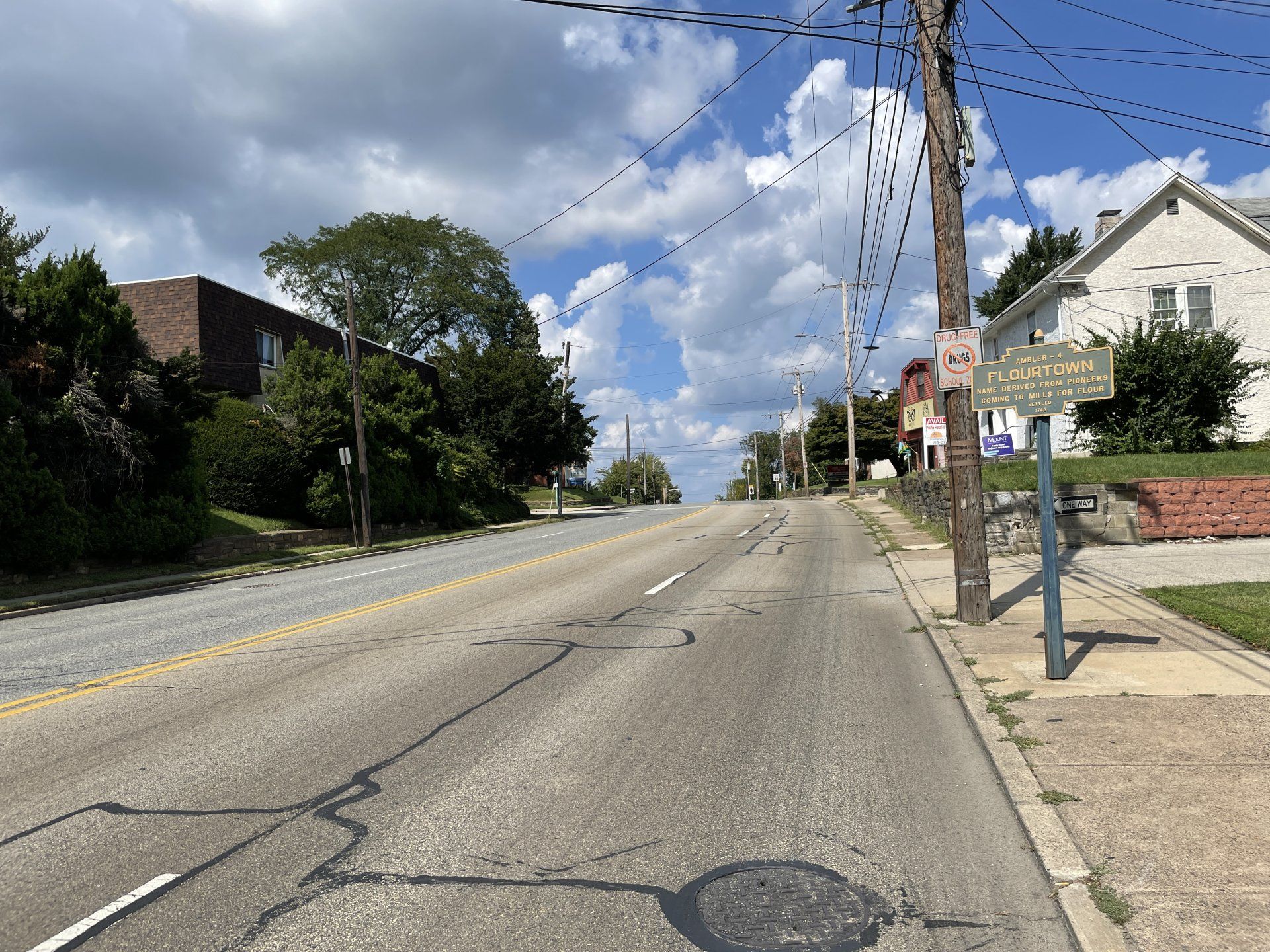
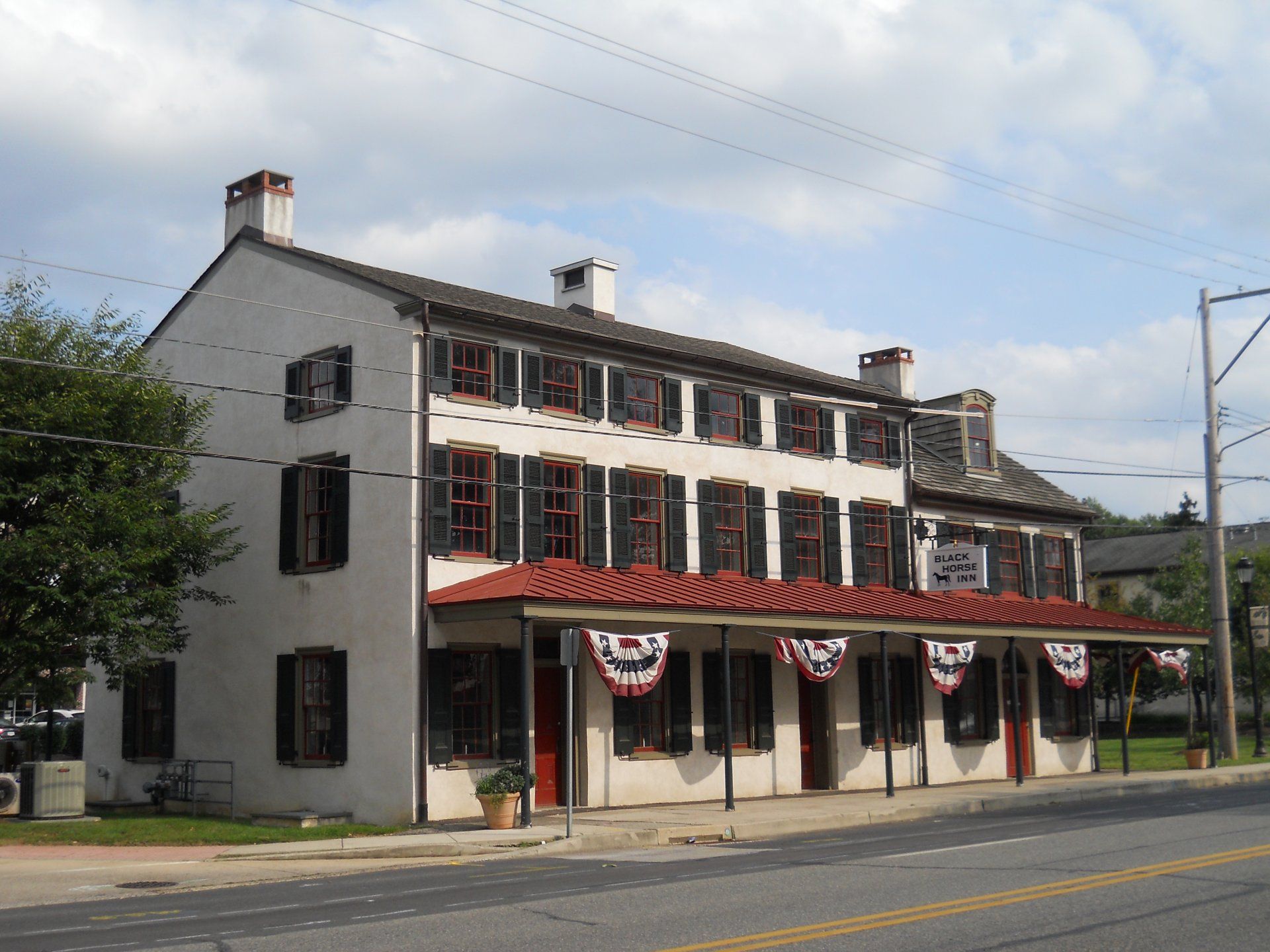
Founded in 1743 around the flour mills that gave it its name, Flourtown is an unincorporated community in Springfield Township, Montgomery County, roughly 12 miles north of central Philadelphia. What sets it apart from neighboring communities like Erdenheim and Oreland is a combination of genuine historical depth and modern affluence that is difficult to find in a single square mile of Pennsylvania suburbs. The Black Horse Inn, listed on the National Register of Historic Places, stands as a tangible link to the colonial-era stagecoach trade that once made Flourtown a key stopover along Bethlehem Pike. Families with school-age children are drawn to the Springfield Township School District, while the Wissahickon Valley Park Trail System provides more than 2,000 acres of conserved woodland practically at residents' doorsteps. With a median household income of $144,634 and a homeownership rate near 89%, the community reflects a stable, well-rooted residential character. For buyers exploring homes in Flourtown, PA, the appeal is straightforward: historic character, access to Philadelphia, and a quality of life that continues to attract discerning buyers to one of Montgomery County's most enduring addresses.
Welcome to Flourtown
Community Profile
Tucked into Montgomery County just northwest of Philadelphia, this small but prosperous community of 4,992 residents paints a compelling picture for anyone exploring flourtown pa houses for sale. The median household income here stands at a remarkable $148,274 — nearly double the national median — and 64.6% of households earn six figures or more, reflecting a deeply established professional class. That prosperity is backed by serious credentials: 63.3% of residents hold a bachelor's degree or higher, nearly double the national rate of 33%, and nearly one in three adults — 30.9% — has earned a graduate degree.
The community skews toward established families and experienced professionals, with a median age of 43.4 years and a strong cohort of school-age children — 18.6% of residents are between 10 and 19. Married households make up 55.1% of the population, and 70.6% of families are dual-income, suggesting a community where two careers are the norm rather than the exception. The average commute of just 25.8 minutes into the greater Philadelphia metro keeps work-life balance firmly in reach.
Perhaps most telling for buyers browsing homes in flourtown pa is the homeownership rate of 88.1% — far above the national average of 65.5% — signaling a neighborhood where people put down roots and stay. With a poverty rate of just 2.7% and an unemployment rate of 3.3%, the economic foundation here is as stable as they come.
Things to Do
Outdoor Recreation
Flourtown's greatest natural asset is its proximity to the Wissahickon Valley Park, one of the most spectacular urban green spaces in the entire country. Encompassing more than 2,000 acres of conserved woodland, the park's trail system winds along the Wissahickon Creek just minutes from Flourtown's front doors, offering hiking, mountain biking, horseback riding, and serene walks through old-growth forest. The creek itself — which historically powered the flour mills that gave this community its name — remains a focal point for nature lovers year-round. Springfield Township also maintains its own parks, playgrounds, and athletic fields that serve residents of all ages, making it easy to stay active without venturing far from home.
History & Culture
History runs deep in Flourtown, and exploring it is a genuine pleasure. The Black Horse Inn, listed on the National Register of Historic Places since 2005, stands as one of the community's most storied landmarks — a tangible connection to the colonial-era stagecoach routes that once made Flourtown a vital stop along Bethlehem Pike. The surrounding streetscape still features homes dating to the 18th century, many built from local stone, giving the neighborhood an architectural character that newer suburbs simply cannot replicate. The area's Revolutionary War history adds another layer of depth; skirmishes connected to the nearby Whitemarsh encampment of December 1777 took place in this very landscape.
Dining & Local Flavor
Bethlehem Pike serves as Flourtown's main commercial corridor, where a modest but welcoming mix of local eateries and shops lines the road. Scoogi's Italian Restaurant, situated at the intersection of Bethlehem Pike and Arlingham Road, is one of the community's most recognizable dining destinations — it even earned a cameo in a filmed production shot on location in Flourtown. The area's dining scene reflects its close-knit, residential character: approachable, unpretentious, and rooted in the neighborhood.
Family Activities & Community Life
The Free Library of Springfield Township offers robust programming for children, teens, and adults alike, making it a true community hub. Families with school-age children benefit from proximity to well-regarded institutions including Mount Saint Joseph Academy and St. Genevieve's School. And for those considering homes in Flourtown, PA, it's worth noting that Philadelphia's world-class museums, sports venues, and cultural institutions are only about 12 miles south — close enough for a day trip, far enough to keep the neighborhood refreshingly quiet.
Latest Properties in Flourtown
Loading latest properties...
History
From Flour Mills to Front Porches: A Brief History of Flourtown, PA
Flourtown's origins trace directly to 1743, when grain-grinding mills powered by the Wissahickon Creek gave the community both its economic foundation and its name. The completion of Bethlehem Pike — originally known as King's Highway — connected these mills to regional trade networks, allowing farmers from surrounding townships to bring their wheat for processing. That same road had been facilitating the transport of lime from local quarries to Philadelphia since 1703, establishing Flourtown early on as a node in colonial commerce rather than a mere rural outpost.
The community's ties to the Revolutionary War run deep as well. In December 1777, skirmishes between American and British forces played out in the Flourtown area, connected to the Continental Army's encampment at nearby Whitemarsh. By the 1760s, stagecoach lines along Bethlehem Pike had spurred the development of traveler's inns, including the Black Horse Inn, which was listed on the National Register of Historic Places in 2005 and remains one of the area's most tangible links to its colonial past.
A 1940 WPA guide to Pennsylvania described Flourtown as a quiet place where farmers once came to "have their wheat ground by the millers along the Wissahickon," with most of its houses already old and many dating to Colonial times. That description still resonates. The stone homes and tree-lined streets that define Flourtown today are a direct inheritance of that unhurried, village-scale development pattern — one that never gave way to large-scale industrial or commercial expansion. For buyers exploring homes in Flourtown, PA, that continuity is a genuine selling point: a median home price of $482,300 reflects not just square footage, but centuries of carefully preserved character within 1.4 square miles.
Weather
Four Seasons in the Philadelphia Suburbs
Flourtown, Pennsylvania experiences a humid continental climate — classified as Köppen Cfa — defined by four well-marked seasons, meaningful temperature swings, and reliable year-round precipitation. Situated about 12 miles northwest of central Philadelphia in the gently rolling Piedmont terrain of Montgomery County, the community sits at a modest elevation that keeps it squarely in the path of mid-Atlantic weather patterns without the moderating influence of the ocean or the dramatic effects of mountain topography.
Summers are warm and humid, with July highs typically reaching the upper 80s°F and overnight lows settling in the mid-60s. Winters are cold but not severe by northeastern standards — January highs average in the mid-30s°F, with lows dipping into the low-to-mid 20s. Annual snowfall averages around 23 inches, enough to create periodic disruptions but rarely the prolonged deep freezes of more northern climates. Spring and fall are genuinely pleasant, with mild temperatures and vivid foliage that make Flourtown's tree-lined streets and proximity to Wissahickon Valley Park especially appealing.
Annual precipitation totals roughly 44 inches, distributed fairly evenly across the year with slight peaks in spring and summer. For those exploring homes in Flourtown, PA, the climate carries real practical implications: heating and cooling systems both earn their keep, outdoor living spaces are usable for a solid six-month stretch, and the wet-dry cycle means roofs, gutters, and foundations benefit from regular seasonal attention. The four-season character is, for many buyers, part of the appeal.
Flourtown Market Analytics
Can I Afford Flourtown?
Weather