
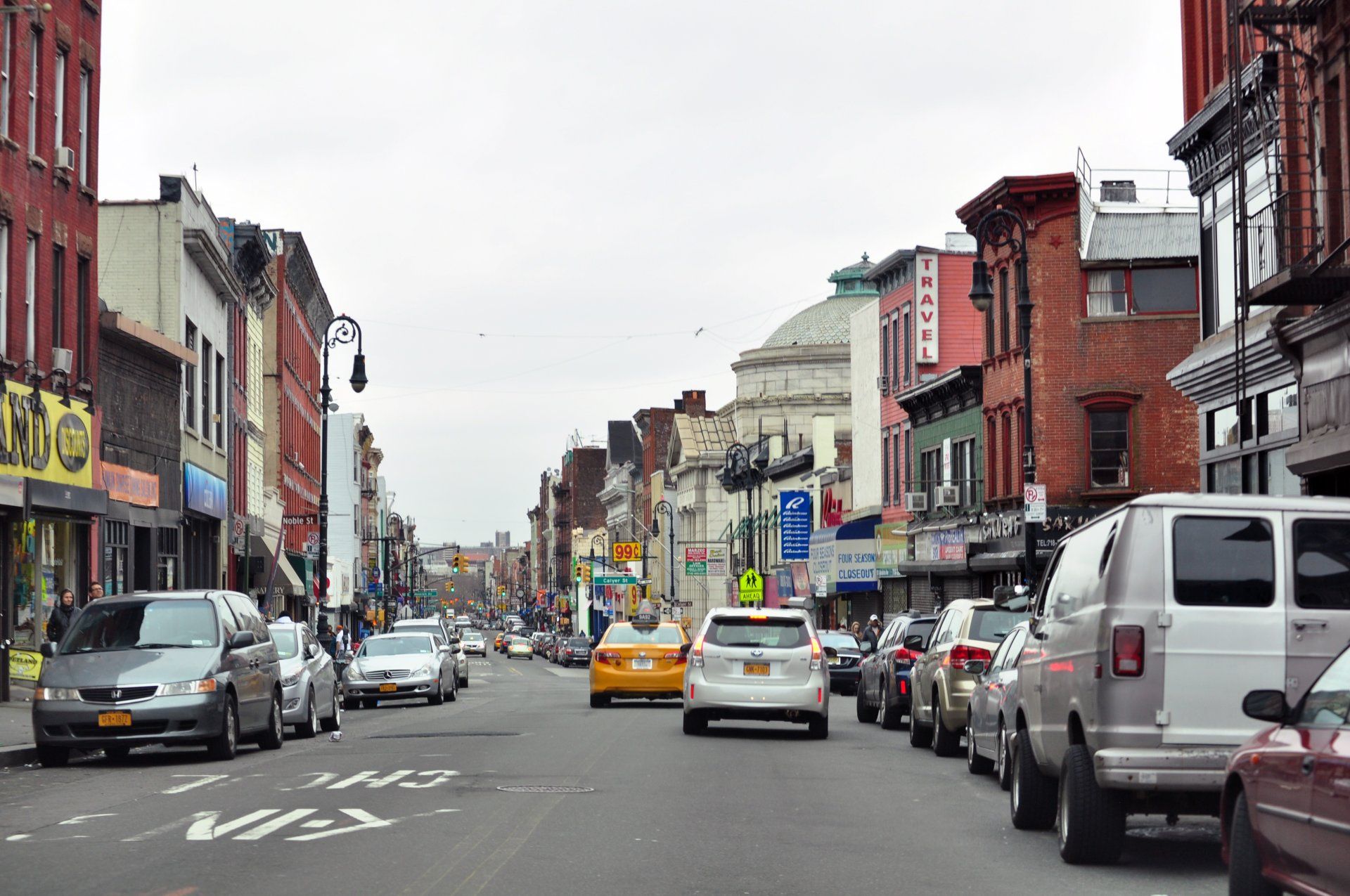
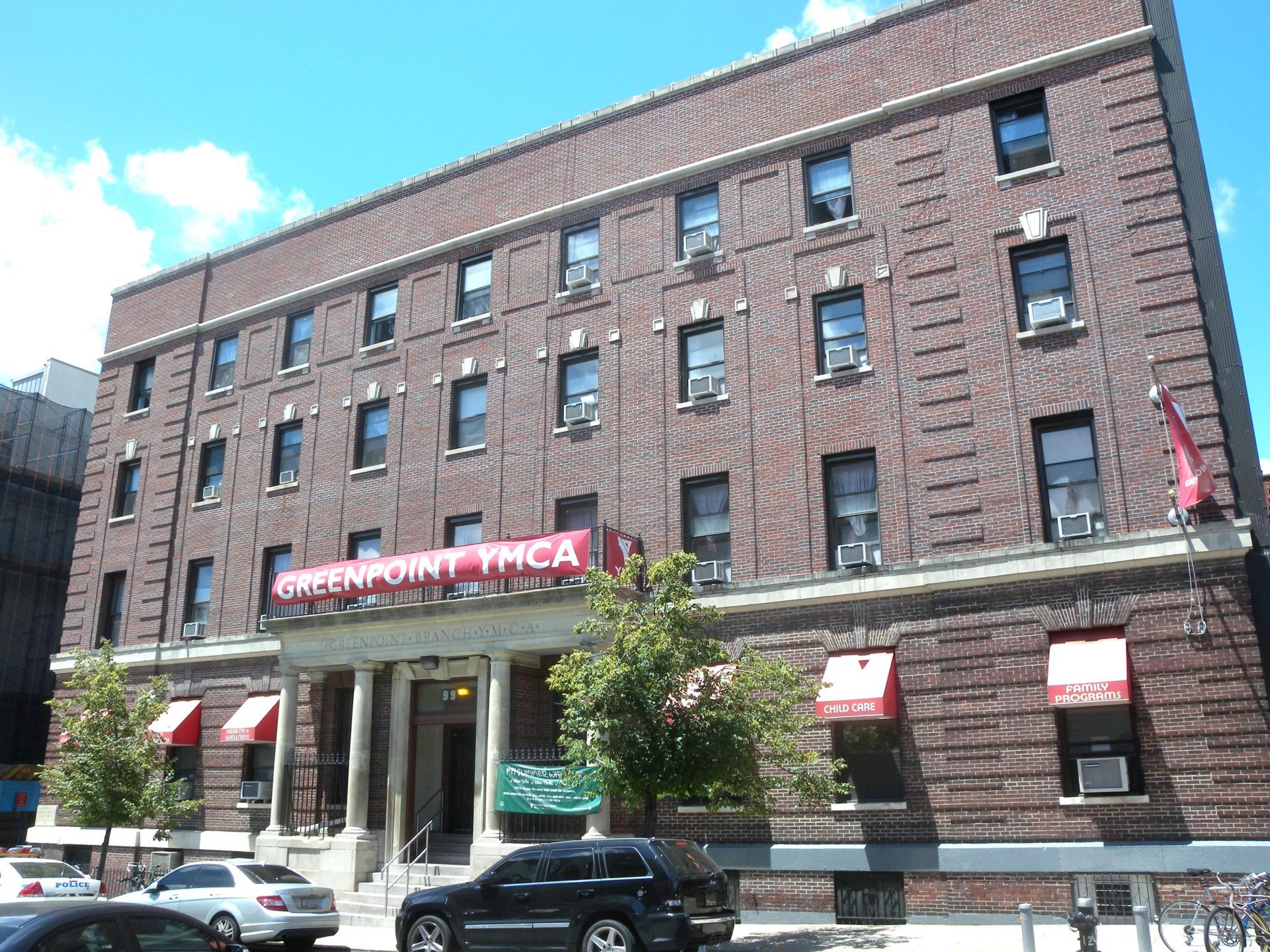
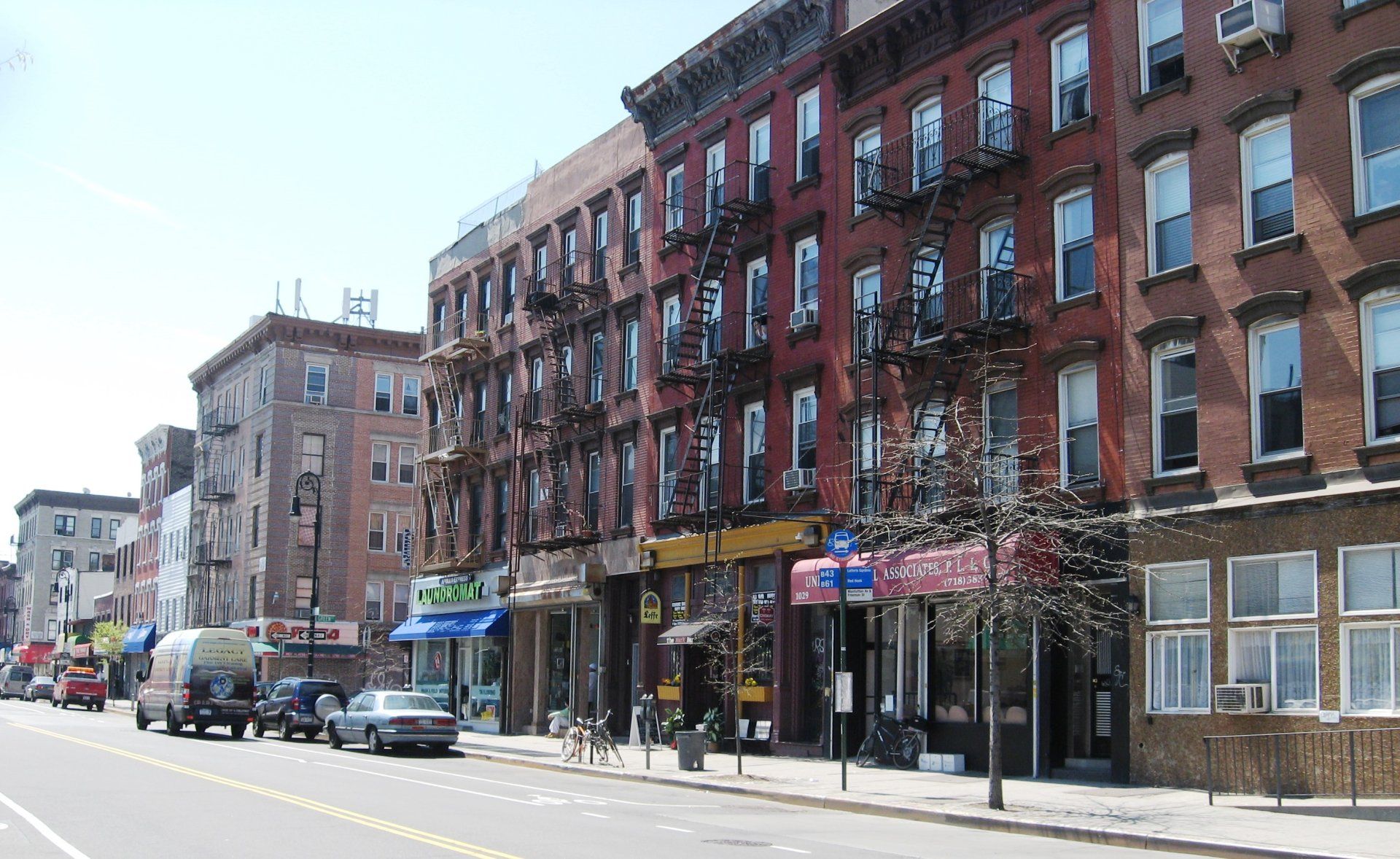
Greenpoint occupies the northernmost tip of Brooklyn, separated from Long Island City in Queens by Newtown Creek and facing the Manhattan skyline across the East River. That geography alone sets it apart — no other Brooklyn neighborhood sits quite so literally at the edge of the borough, with water on three sides and a history that stretches from 17th-century Norwegian farmsteads to ironclad shipbuilding to today's East River waterfront towers. The neighborhood's Polish identity, earned over generations of immigration, remains tangible along Manhattan Avenue, where the character is distinctly different from the trendier blocks of neighboring Williamsburg to the south. McCarren Park, straddling the boundary between the two neighborhoods, anchors community life and draws residents year-round. The G train runs directly through Greenpoint, connecting residents to the broader subway system, while the East River Ferry offers a scenic commute to Midtown Manhattan. With a median age of 35, a household income well above the city average, and significant new construction bringing greenpoint condos for sale to the waterfront, this is a neighborhood whose trajectory points firmly upward — making now a compelling moment to plant roots here.
Welcome to Greenpoint
Things to Do
Outdoor Recreation & Waterfront
Greenpoint's East River waterfront is one of its most compelling assets. Transmitter Park, perched at the end of Greenpoint Avenue along the river, offers sweeping views of the Manhattan skyline and is a beloved gathering spot for picnics, sunset watching, and casual recreation. Just to the south, Bushwick Inlet Park marks the boundary between Greenpoint and Williamsburg and provides open green space along the water's edge. McCarren Park, shared with Williamsburg, is a neighborhood anchor featuring a public pool, running track, ball fields, and a performance space that hosts outdoor concerts and events throughout the warmer months. The park's greenmarket and seasonal programming make it a lively destination year-round.
Dining & Neighborhood Character
Greenpoint's dining scene reflects its dual identity as Little Poland and a hub of contemporary Brooklyn food culture. Along Manhattan Avenue — the neighborhood's main commercial corridor — you'll find Polish delis, bakeries, and pierogi shops that have anchored the community for generations, sitting comfortably alongside craft cocktail bars, specialty coffee roasters, and farm-to-table restaurants. Franklin Street has emerged as a destination in its own right, lined with independent boutiques and eateries that draw visitors from across the borough. For those exploring greenpoint brooklyn apartments for sale, the walkability of this dining corridor is a genuine daily-life advantage.
Arts & Culture
Greenpoint has cultivated a quietly vibrant arts scene rooted in its industrial past. Converted warehouses and former factory spaces now house artist studios, galleries, and creative businesses. The neighborhood's Greenpoint Historic District, centered on a cluster of beautifully preserved 19th-century rowhouses, offers a tangible connection to the area's architectural heritage. The local Polish community maintains cultural institutions including churches and social clubs that have shaped the neighborhood's character for over a century.
Shopping & Everyday Life
Independent retail thrives here. Vintage shops, bookstores, home goods boutiques, and specialty food markets line the streets between Manhattan Avenue and Franklin Street, giving Greenpoint a distinctly local, non-chain feel that residents fiercely protect. Weekend mornings bring out a loyal crowd of farmers market shoppers and brunch-goers, reinforcing the neighborhood's strong sense of community. For anyone considering greenpoint condos for sale, this walkable, amenity-rich streetscape is a significant part of the lifestyle appeal.
Latest Properties in Greenpoint
Loading latest properties...
History
From Farmland to Waterfront Luxury
Greenpoint's story begins in 1645, when Norwegian immigrant Dirck Volckertsen — known to his Dutch neighbors as Dirck de Noorman — built a farmhouse near what is now the intersection of Calyer and Franklin Streets, becoming the first recorded European settler of the area. For nearly two centuries, the land remained in the hands of just a handful of interrelated farming families, their names still visible today on street signs: Meserole, Calyer, Provost. The neighborhood's very identity was shaped by this tight-knit agricultural isolation.
The transformation came in the 1830s, when entrepreneur Neziah Bliss married into the Meserole family and gradually bought out most of Greenpoint's land. By 1834 he had commissioned a formal survey, and by 1839 he had opened a public turnpike along what is now Franklin Street, followed by regular ferry service to Manhattan around 1850. Industry flooded in behind him — shipyards, rope factories, lumber yards, and eventually the Eberhard Faber pencil factory. Greenpoint became a working-class immigrant neighborhood, drawing waves of European newcomers, most notably Poles, whose cultural imprint remains so strong the neighborhood is still called Little Poland.
A 2005 rezoning fundamentally redirected Greenpoint's trajectory, permitting high-density residential construction along the East River waterfront and triggering the gentrification wave that defines the market today. Those 19th-century industrial lots are now luxury towers, and the rowhouses of the historic district — landmarked precisely because of their mid-1800s character — command extraordinary premiums. For buyers exploring greenpoint brooklyn apartments for sale, that layered history is part of what they're purchasing: a neighborhood whose bones were shaped by farmers, shipbuilders, and immigrants, now reimagined as one of Brooklyn's most sought-after addresses.
Weather
Greenpoint sits within one of the most climatically dynamic cities in the world, and its weather follows the humid subtropical classification — the same that governs all of New York City — with four genuinely distinct seasons and no shortage of meteorological variety throughout the year.
Summers in Greenpoint are warm and often humid, with daytime highs typically ranging from the mid-80s°F and occasional stretches pushing into the low 90s. Nights offer some relief, generally settling in the upper 60s to low 70s. The neighborhood's position along the East River provides a modest coastal moderating effect, with river breezes occasionally cutting through the heat on the waterfront — a feature that makes greenpoint condos for sale along the water particularly attractive during warmer months.
Winters are cold and variable, with daytime highs averaging in the mid-30s to low 40s°F and overnight lows frequently dipping into the 20s. Snowfall is a regular seasonal feature, though accumulations tend to be moderate given the urban heat island effect and proximity to the harbor.
Precipitation is distributed fairly evenly across all four seasons, averaging roughly 46 to 50 inches annually, with no pronounced dry season. Spring and fall are generally mild and pleasant, making them the most comfortable periods for outdoor living.
For buyers considering greenpoint brooklyn apartments for sale, the climate carries real practical implications. Heating costs during cold winters and cooling demands in humid summers are meaningful budget considerations. The neighborhood's low-lying topography near the East River and Newtown Creek also makes flood preparedness and storm drainage relevant factors in seasonal home maintenance.
Greenpoint Market Analytics
Greenpoint Home Value Index over time.
Can I Afford Greenpoint?
Weather