
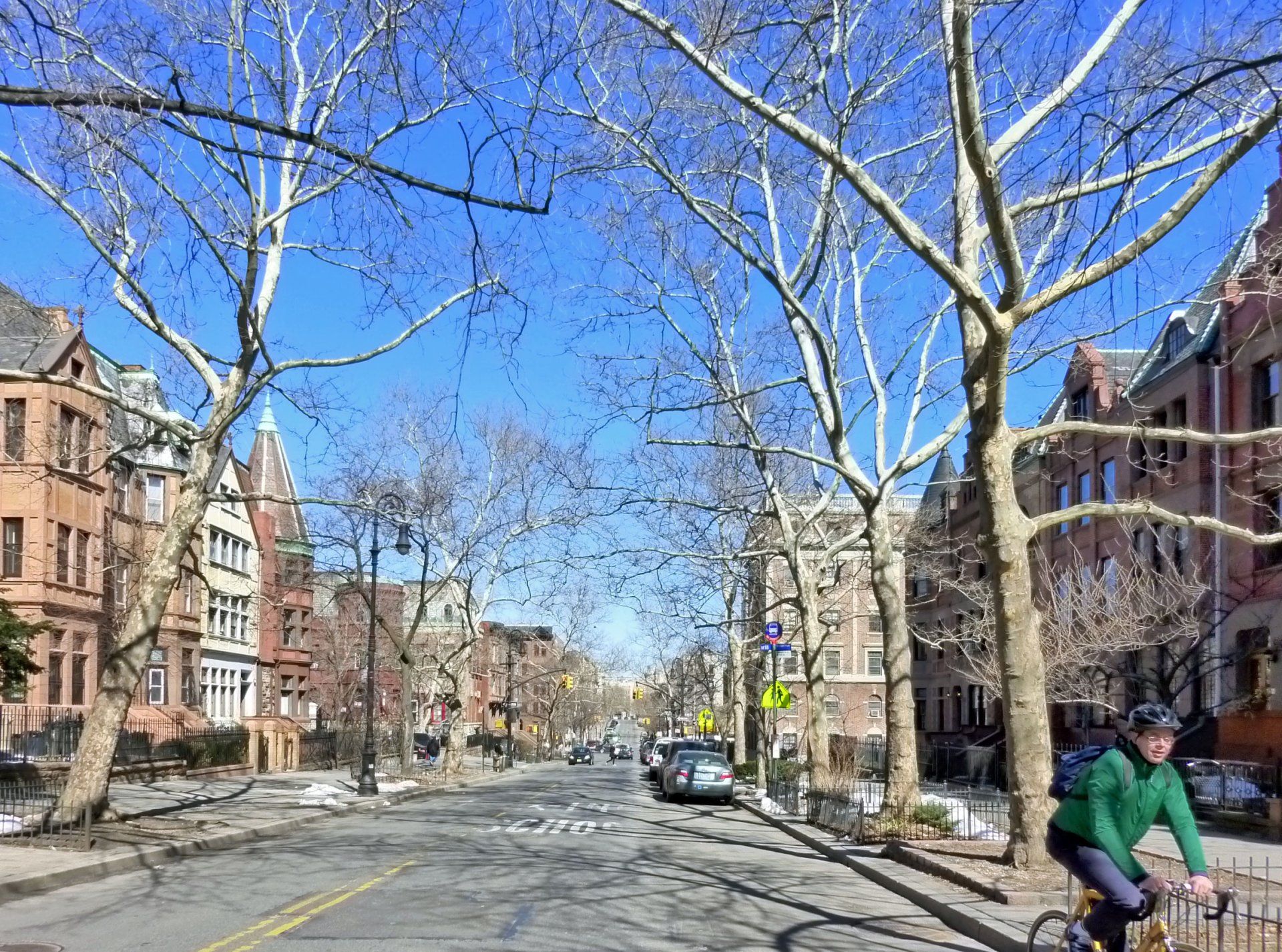
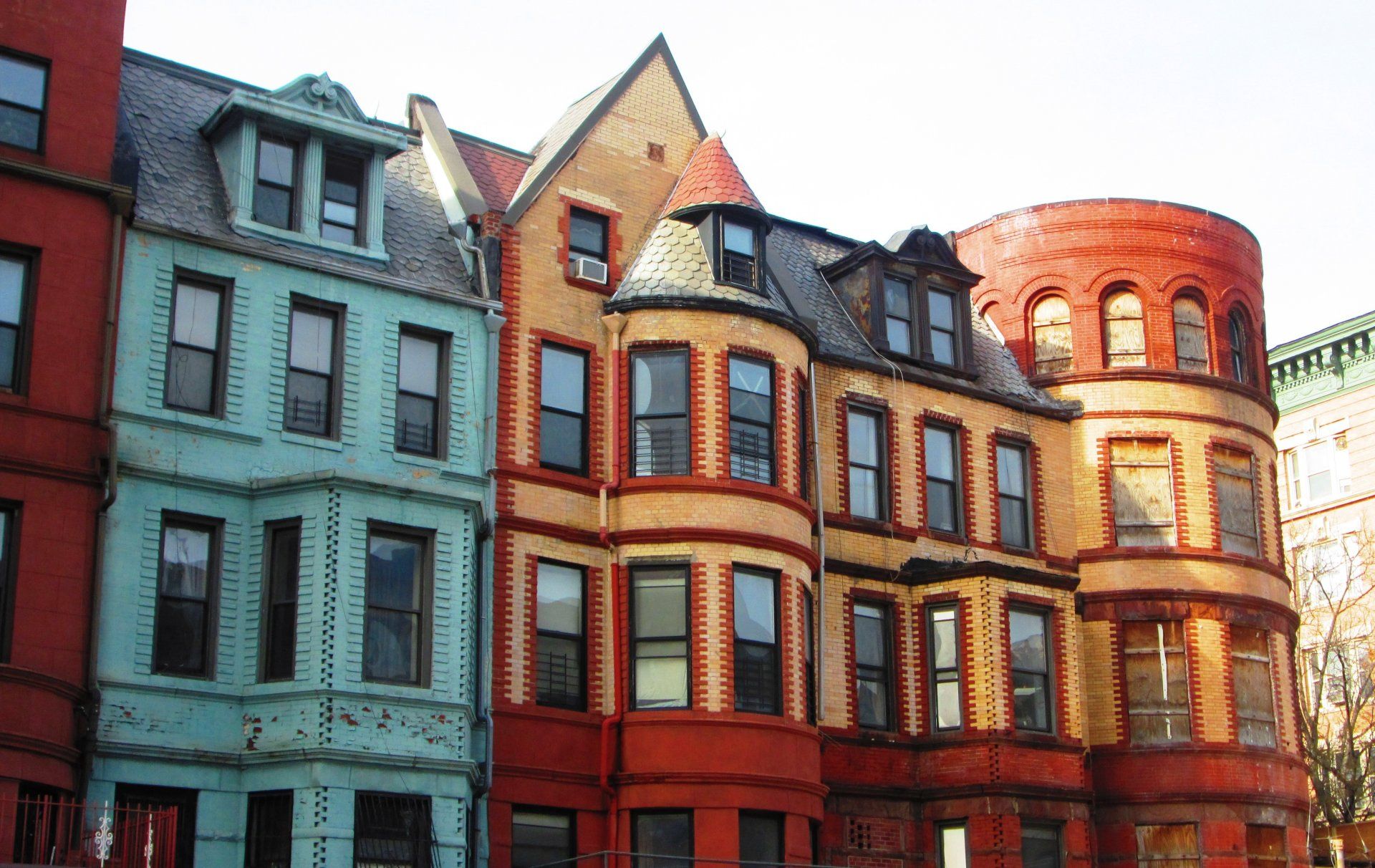
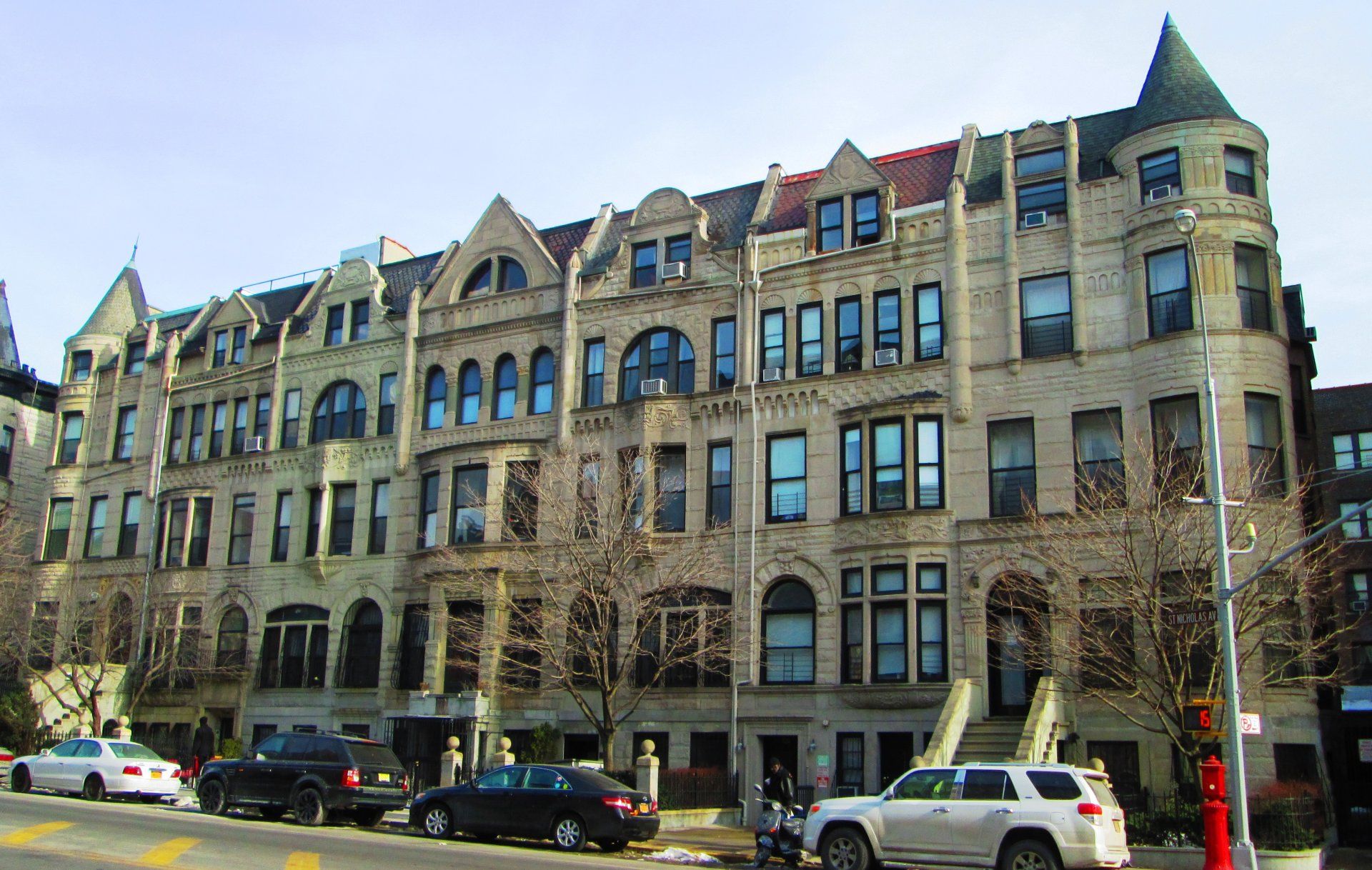
Hamilton Heights sits on the elevated bluffs of Upper Manhattan, bounded by 135th Street to the south and 155th Street to the north, where the land rises sharply above the Hudson River and the skyline opens up in ways that most Manhattan neighborhoods simply cannot offer. The neighborhood takes its name from Alexander Hamilton himself — his country estate, the Grange, once stood on these very grounds before being relocated and preserved as a national memorial. That founding-era identity still shapes the character of the streets today, most visibly in the Hamilton Heights Historic District, where intact rows of Queen Anne, Romanesque Revival, and Beaux-Arts brownstones line Convent Avenue in a state of preservation rare for any borough, let alone Manhattan. The 1 train at 145th Street connects residents directly to Midtown, while City College of New York anchors the southern edge of the neighborhood with an intellectual energy that has defined the area for generations. With a median home price around $491,800 and genuine architectural character that newer developments cannot replicate, Hamilton Heights rewards buyers and investors who recognize that Upper Manhattan's trajectory is still very much upward.
Welcome to Hamilton Heights
Things to Do
Arts & Culture
Hamilton Heights punches well above its weight when it comes to cultural richness. Hamilton Grange National Memorial, the restored country home of Founding Father Alexander Hamilton, anchors the neighborhood's identity and offers free tours that bring early American history vividly to life. The Dance Theatre of Harlem and the Harlem School of the Arts, both based in the neighborhood, present world-class performances and community programming throughout the year. The striking Gothic Revival campus of City College of New York hosts public lectures, gallery exhibitions, and events at Aaron Davis Hall, a beloved performing arts venue. Meanwhile, the Audubon Mural Project transforms building facades across the neighborhood into a stunning open-air gallery, with large-scale paintings of birds from John James Audubon's The Birds of America — a walking tour in itself.
Outdoor Recreation
Green space is surprisingly abundant here. St. Nicholas Park, tucked along the neighborhood's eastern edge, offers wooded paths, playgrounds, and rocky outcroppings that recall the area's naturally rugged terrain. Jackie Robinson Park features athletic facilities, a pool, and open lawns popular with families. For a grander escape, Riverbank State Park — embedded within Riverside Park along the Hudson River — delivers athletic fields, a skating rink, a pool, and sweeping river views, all just minutes from the heart of Hamilton Heights. The Hudson waterfront promenade is ideal for cycling and jogging, especially in warmer months.
Dining & Local Flavor
The neighborhood's dining scene reflects its vibrant Dominican heritage alongside a growing mix of cuisines. Broadway and Amsterdam Avenue are lined with family-run restaurants, bakeries, and cafés serving everything from traditional Caribbean dishes to contemporary fare. The area rewards explorers who wander its commercial corridors looking for authentic local spots.
Family Activities & Community Life
Carmansville Playground and several smaller parks provide gathering spots for families year-round. Trinity Cemetery, one of Manhattan's last active burial grounds, offers a surprisingly peaceful and historically rich stroll. For those exploring Hamilton Heights NYC apartments for rent or considering a longer-term move, the neighborhood's blend of historic architecture, cultural institutions, and accessible green space makes everyday life genuinely enjoyable.
Latest Properties in Hamilton Heights
Loading latest properties...
History
From Hamilton's Grange to a Landmark Neighborhood
Hamilton Heights takes its name from one of America's most consequential founders. In 1802, Alexander Hamilton built his country estate, the Grange, on roughly 32 acres of Upper Manhattan farmland — land that had been part of the Dutch colonial village of Nieuw Harlem since 1658 and a Revolutionary War battleground since the Battle of Harlem Heights on September 16, 1776. Hamilton lived there only briefly before his death in 1804, but his presence permanently shaped the neighborhood's identity. The Grange has since been relocated and preserved as a national memorial.
The neighborhood's physical character was largely formed between the 1880s and early 1900s, when speculative developers — including the Schellenger brothers along Convent Avenue — built rows of Queen Anne, Romanesque Revival, and Beaux-Arts townhouses for Manhattan's professional class. The arrival of the IRT subway in 1904 accelerated densification, and City College of New York, chartered in 1847 and anchored on its 135th Street hilltop campus, gave the area lasting intellectual prestige.
By the 1920s and 1930s, the elevated Sugar Hill section attracted prominent African American professionals, artists, and intellectuals during the Great Migration. Later decades brought Eastern European immigrants, then a large Dominican community from the 1980s onward, layering the neighborhood's remarkable cultural depth.
Today, those same Gilded Age rowhouses and prewar apartment buildings — many protected within the Hamilton Heights Historic District designated in 2000 — define what buyers and renters seek here. Gentrification pressures since roughly 2005 have pushed demand steadily upward, making hamilton heights apartments for sale increasingly competitive, while the neighborhood's architectural integrity and proximity to the Hudson River ensure its appeal endures.
Weather
Four Seasons in Hamilton Heights
Hamilton Heights experiences a humid continental climate, the classification that defines most of inland and upper Manhattan. Positioned in northern Manhattan at modest elevation above the Hudson River, the neighborhood sees the full sweep of northeastern seasons — sometimes dramatically so. Summers are warm and humid, with daytime highs typically reaching the upper 80s°F and overnight lows settling in the mid-60s°F. Winters are cold and occasionally harsh, with average highs in the mid-30s°F and lows that can dip into the teens during cold snaps. Spring and autumn are genuinely pleasant, offering mild temperatures and some of the most appealing conditions for exploring the neighborhood's tree-lined streets and riverside parks.
Annual precipitation is distributed fairly evenly throughout the year, averaging around 46 to 50 inches, with occasional nor'easters delivering significant snowfall between December and March. The Hudson River exerts a modest moderating influence, tempering the most extreme temperature swings compared to inland areas, though Upper Manhattan is still exposed to cold northerly winds in winter.
For anyone considering hamilton heights apartments for sale or long-term residency, the climate carries real practical implications. Older brownstones and pre-war apartment buildings — the neighborhood's architectural backbone — can require meaningful investment in heating during winter months. Summer humidity makes central air conditioning or quality window units a genuine priority. Seasonal maintenance, particularly roof and facade upkeep after freeze-thaw cycles, is a routine consideration for property owners in this historic district.
Hamilton Heights Market Analytics
Can I Afford Hamilton Heights?
Weather