
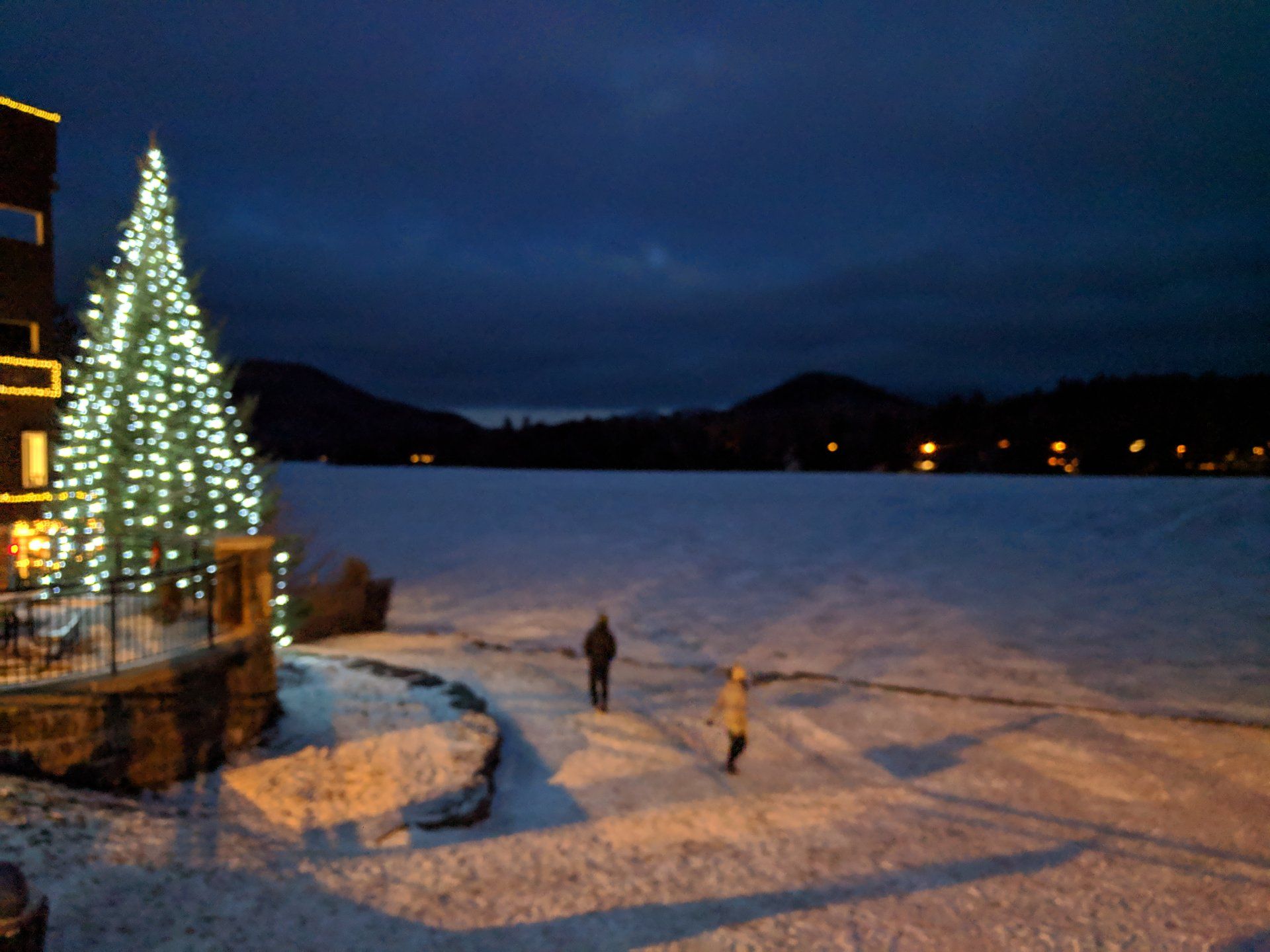
Situated at 1,801 feet above sea level in Essex County, New York, Lake Placid is the only community in the world to have hosted the Winter Olympics twice — in 1932 and again in 1980, the year of the legendary "Miracle on Ice." That singular distinction shapes everything about this small Adirondack village, from the preserved ski jumping complex and bobsled track still in active use, to the Lake Placid Olympic Museum on Main Street, where that history remains very much alive. What separates Lake Placid from neighboring Adirondack towns like Saranac Lake or Keene is the rare combination of world-class athletic infrastructure, a genuinely walkable downtown, and immediate access to the High Peaks Wilderness Area — the largest wilderness designation in New York State. Students here are served by the Lake Placid Central School District, and the surrounding Adirondack Park provides a constitutionally protected natural landscape that no developer can touch. For those considering living in Lake Placid, NY, the appeal is straightforward: a place where Olympic legacy, mountain wilderness, and four distinct seasons converge in a community small enough to know your neighbors, yet consequential enough to draw the world.
Welcome to Lake Placid
Community Profile
Tucked into the Adirondack High Peaks of Essex County, this storied Olympic village punches well above its weight in education, employment, and quality of life. With a population of just 2,306 residents and a median age of 42 years, Lake Placid attracts a mature, accomplished crowd — people who have made a deliberate choice to trade urban sprawl for mountain living. That intentionality shows in the numbers: 42.8% of residents hold a bachelor's degree or higher, well above the national average of roughly 33%, and 16.2% have earned a graduate degree. An impressive 57.3% of degree holders studied STEM fields, lending the community an intellectually curious, professionally driven character.
The job market here is remarkably tight — an unemployment rate of just 1.1% signals that those who want to work are working, and a 17.7-minute average commute means residents spend far less time in traffic and far more time on the trails, slopes, and lake. For those considering living in Lake Placid NY, the median home value of $371,190 reflects the area's desirability and its status as a world-renowned destination, while remaining competitive given the lifestyle on offer. A notable 25.3% of households earn six figures, and the poverty rate of 9% is modest for a small resort community. With a labor force participation rate of 70.7% and a low uninsured rate of 6.7%, this is a community that takes care of its own — a compelling foundation for anyone ready to call the Adirondacks home.
Things to Do
Outdoor Recreation
Few villages in the Northeast pack as much adventure into 1.32 square miles as Lake Placid. Whiteface Mountain, the fifth-highest peak in New York at 4,867 feet, anchors the region's alpine scene with world-class skiing and snowboarding in winter and exhilarating hiking and mountain biking when the snow melts. The surrounding High Peaks Wilderness Area offers access to the legendary 46 High Peaks, drawing serious hikers and casual trail walkers alike across more than 35 miles of maintained paths. Closer to the village, the calm waters of Mirror Lake invite kayaking, paddleboarding, and open-water swimming in summer, while its glassy frozen surface becomes a beloved ice-skating destination each winter.
Olympic Legacy & Cultural Attractions
Lake Placid is the only community in the world to have hosted the Winter Olympics twice — in 1932 and 1980 — and its venues remain very much alive. The Lake Placid Olympic Museum on Main Street chronicles both Games in vivid detail, including the legendary "Miracle on Ice" U.S. hockey victory. Visitors can tour the Olympic Center, ride a bobsled on the historic track, or watch ski jumpers train at the Olympic Ski Jumping Complex. These aren't museum pieces — they're active training facilities used by elite athletes year-round, giving the village an energy unlike any other small town in America.
Dining & Shopping
Downtown Lake Placid's Main Street punches well above its weight for a village of roughly 2,200 people. More than 35 restaurants line the corridor, ranging from cozy Adirondack-style taverns to upscale dining rooms with mountain views. Boutique shops, art galleries, and outfitters fill the gaps between, making it easy to spend a full afternoon browsing. For those considering living in Lake Placid, NY, this walkable downtown is a genuine daily amenity, not just a tourist draw.
Annual Events & Family Activities
The event calendar keeps the village buzzing across every season. The Lake Placid Marathon draws runners from across the country each summer, while the UCI Mountain Bike World Series brings elite international competition to the trails. Families enjoy boat tours on Lake Placid, the Adirondack Railroad excursions from nearby Saranac Lake just 15 miles west, and seasonal festivals that celebrate everything from winter carnival traditions to fall foliage.
Latest Properties in Lake Placid
Loading latest properties...
History
From Ironworks to Olympic Icon: A Brief History of Lake Placid, NY
Lake Placid's story begins not with ski slopes and Olympic medals, but with iron. The town of North Elba, within which the village sits, was established in 1849, and the surrounding Adirondack region drew mid-19th-century settlers through ironworks and farming operations that took advantage of the area's timber and ore deposits. The village itself was incorporated in 1900, by which point its identity had already begun to shift dramatically.
The transformation into a resort destination accelerated in the late 1800s, when affluent visitors discovered the High Peaks region's cool summers and dramatic scenery. Melvil Dewey — better known as the inventor of the Dewey Decimal System — played a pivotal role around 1905 through the Lake Placid Club, which helped establish the village as America's first winter resort and introduced organized winter sports to a broader audience. That legacy compounded spectacularly when Lake Placid hosted the Winter Olympics in 1932 and again in 1980, becoming the only community in the world to host the Games twice. The 1980 Games brought the legendary "Miracle on Ice," when the U.S. hockey team defeated the Soviet Union, cementing the village's place in sports history.
These layers of history shape the real estate market that exists today. The Olympic-era infrastructure — the skating oval, ski jumping complex, and bobsled track — remains active and draws a year-round stream of visitors and athletes. The grand resort tradition established by the Lake Placid Club set a precedent for premium hospitality and second-home demand that persists in today's median home price of $370,700. For those considering living in Lake Placid, NY, the village's compact 1.32 square miles contain more than a century of intentional development as a place where people come — and stay — for the mountains.
Weather
Lake Placid, New York, experiences a humid continental climate — classified as Dfb under the Köppen-Geiger system — defined by four sharply distinct seasons, cold and snowy winters, and mild, relatively brief summers. Sitting at roughly 1,800 feet above sea level in the heart of the Adirondack High Peaks region, the village runs noticeably cooler than most of New York State year-round.
Summer highs typically reach the mid-to-upper 70s°F, with overnight lows often dipping into the 50s — comfortable for hiking and paddling, but rarely warm enough to feel oppressive. Winters are serious: January lows regularly fall near 6°F, and daytime highs frequently stay well below freezing. Annual snowfall averages around 106 inches, with the bulk arriving between November and March. The surrounding mountains and regional lake systems can amplify snowfall during lake-effect events, and major nor'easters have historically delivered extraordinary single-storm totals.
Annual precipitation runs approximately 44 inches, distributed fairly evenly across the year. Spring arrives gradually, with lingering snowpack well into April at higher elevations. Fall brings vivid foliage and crisp temperatures — one of the most celebrated seasons in the Adirondacks.
For those considering living in Lake Placid, NY, the climate carries real practical weight. Heating costs are substantial, and homes require thoughtful winterization — from insulation and roof load capacity to reliable driveways and heating systems. On the upside, the same climate that demands preparation also delivers world-class skiing, snowshoeing, and ice sports right outside the door, making weather not just a consideration but a core part of the lifestyle.
Lake Placid Market Analytics
Lake Placid's typical home value sits at $402,061, up a healthy 2.3% over the past year, and the trend line shows steady, resilient growth since 2021, which suggests this is a stable market rather than a boom-or-bust one. With only 61 homes for sale and a median list price of $876,500, inventory is tight and the market clearly skews toward higher-end properties, so buyers should move decisively while sellers still hold a strong hand. Whether you're pricing a listing or hunting for a lake town retreat, Opulist can help you read these signals and act with confidence.
Lake Placid Home Value Index over time.
Can I Afford Lake Placid?
Weather