
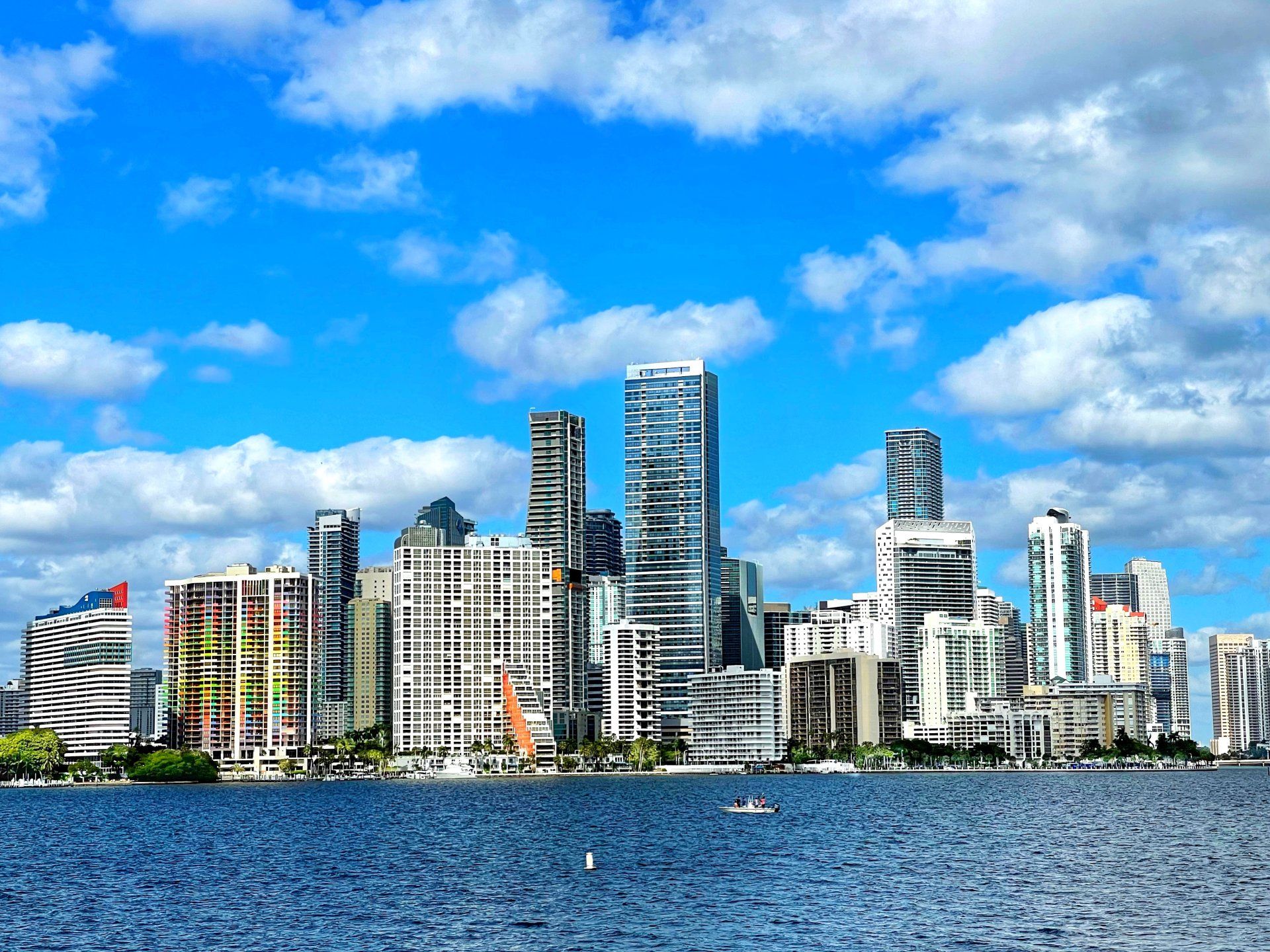
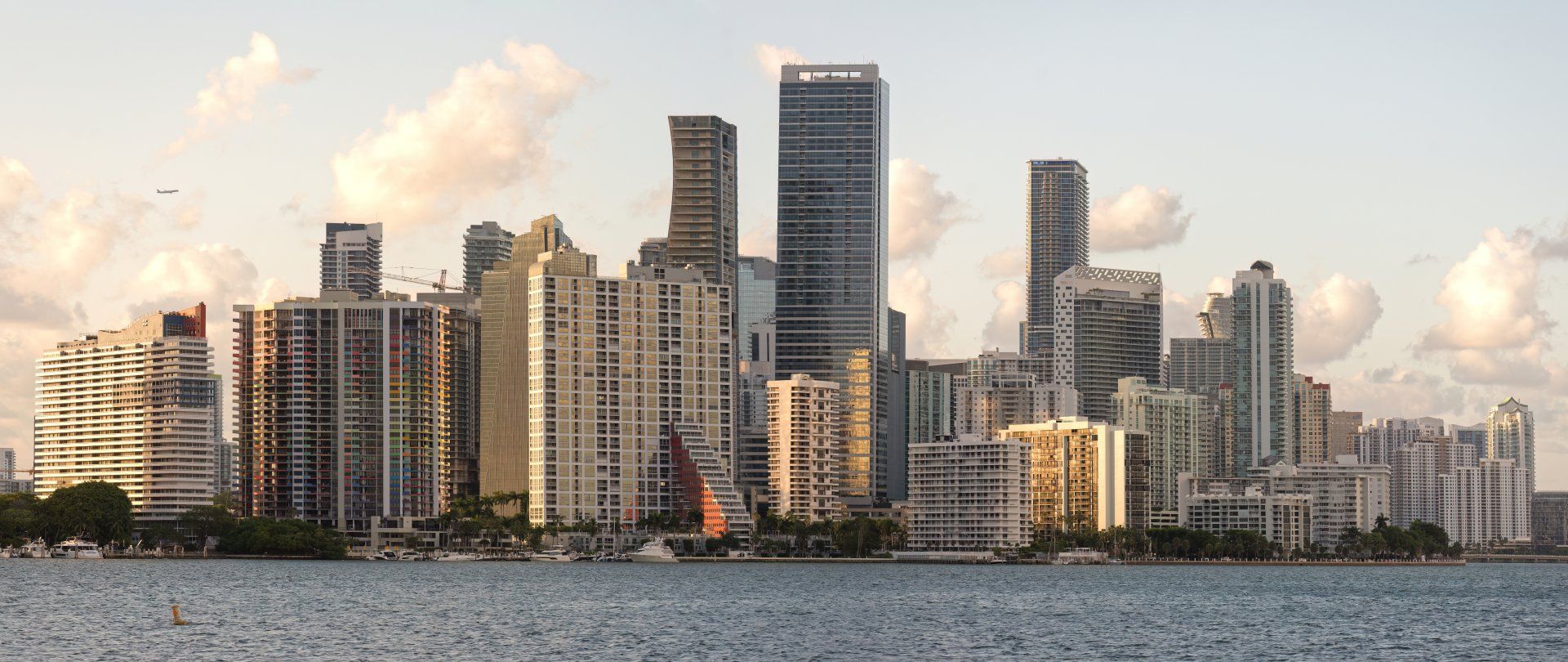
Incorporated on July 28, 1896 — with a founding population of just over 300 residents — Miami has grown into Florida's second-largest city, home to more than 442,000 people spread across 56 square miles along the shores of Biscayne Bay. What sets Miami apart from neighboring Fort Lauderdale or Coral Gables isn't simply its scale, but its singular identity as the de facto capital of Latin America: roughly 70% of residents identify as Hispanic or Latino, and the city's financial district hosts one of the largest concentrations of international banks in the United States. PortMiami, the world's busiest cruise passenger port, anchors a trade network that stretches across the Caribbean and South America, while neighborhoods like Little Havana and Wynwood give the city a cultural texture no suburb can replicate. Miami-Dade County Public Schools serves the region's families, and institutions like Florida International University fuel a growing pipeline of local talent. For those exploring homes for sale in Miami FL, the city's continued population growth, global economic ties, and year-round subtropical climate make it one of the most compelling long-term bets in American real estate.
Welcome to Miami
Community Profile
One of the most culturally dynamic cities in the Western Hemisphere, Miami pulses with a youthful, ambitious energy reflected clearly in its demographics. The median age sits at 39.3 years, close to the national figure, but the real story is in the age distribution: nearly a third of residents fall between 20 and 39, fueling a labor force participation rate of 67.1% and a dual-income household rate of 54.5% — a strong signal of economic drive and household resilience. That ambition shows up in education, too, with 37.5% of residents holding a bachelor's degree or higher, surpassing the national average, and an impressive 46.8% of degree holders concentrated in STEM fields — a workforce profile that has helped attract finance, tech, and biomedical employers to corridors like the Brickell neighborhood in Miami and beyond.
The city's median household income of $62,462 trails the national median modestly, yet 32.2% of households clear six figures — reflecting a wide and dynamic income spectrum. Homeownership stands at 30.8%, well below the national rate, which underscores just how significant an opportunity buying here represents: with a median home value of $519,827, those who do own have built meaningful equity in one of the country's most sought-after real estate markets. Miami's defining characteristic, however, may be its extraordinary diversity — 71.5% of residents identify as Hispanic or Latino, and vibrant enclaves from the Little Haiti neighborhood in Miami to Coral Way reflect a city where global cultures don't just coexist but actively shape daily life, cuisine, commerce, and community.
Things to Do
Outdoor Recreation & Beaches
Miami's greatest natural asset is its coastline, and residents take full advantage of it year-round. South Beach, stretching along the Atlantic edge of Miami Beach, is the city's most iconic strand — a place where turquoise water meets white sand and the famous Art Deco architecture of Ocean Drive provides a colorful backdrop. For a more local experience, Crandon Park on Key Biscayne offers calm, family-friendly waters and lush green space just a short drive from downtown. Bayfront Park, situated along Biscayne Bay in the heart of the city, hosts outdoor concerts, festivals, and waterfront walking paths that make it a daily gathering spot for Miamians.
Arts & Culture
Miami punches well above its weight culturally. The Wynwood Art District transformed a former warehouse neighborhood into one of the world's most celebrated open-air street art destinations, with galleries, studios, and the iconic Wynwood Walls drawing visitors from across the globe. The Vizcaya Museum and Gardens, a stunning Gilded Age villa on Biscayne Bay, offers a glimpse into early 20th-century opulence surrounded by formal European gardens. For performing arts, the Adrienne Arsht Center for the Performing Arts — one of the largest performing arts centers in the country — stages world-class opera, ballet, Broadway productions, and concerts throughout the year.
Dining & Neighborhoods
Food in Miami is an adventure rooted in Latin American and Caribbean tradition. Little Havana, centered on Calle Ocho, is the spiritual heart of Miami's Cuban community, lined with cafecito windows, cigar shops, and restaurants serving ropa vieja and pressed Cuban sandwiches. The neighborhood comes alive every last Friday of the month during Viernes Culturales, a street festival celebrating Latin art and music. Coconut Grove offers a more relaxed, tree-canopied dining scene, while the Design District and Brickell have emerged as destinations for upscale cuisine and rooftop bars.
Sports & Family Activities
Sports fans are well served here. The Miami Heat play at Kaseya Center on Biscayne Bay, and the Miami Marlins call loanDepot park home in Little Havana. Families exploring homes for sale in Miami FL often cite the Miami Children's Museum on Watson Island and the nearby Phillip and Patricia Frost Museum of Science — complete with a four-story planetarium and living reef aquarium — as major draws. Miami truly rewards those who explore it beyond the beach.
History
From Frontier Outpost to Global Real Estate Market
Miami's story begins not with sprawling condominiums or waterfront mansions, but with a single determined woman and a catastrophic freeze. Julia Tuttle, a Cleveland-born citrus grower and landowner, used the Great Freeze of 1894–1895 — which devastated crops across Florida but spared her Biscayne Bay holdings — to convince railroad magnate Henry Flagler to extend his Florida East Coast Railway southward. The gambit worked. On July 28, 1896, Miami was officially incorporated as a city with a population of just over 300, earning Tuttle the enduring title "the mother of Miami."
Flagler's railway didn't just connect Miami to the outside world — it created it. The city's nickname, the "Magic City," reflects how quickly it materialized from swampland into a functioning urban center. In the early twentieth century, Bahamian immigrants provided much of the skilled labor that built Miami's roads, hotels, and infrastructure, laying the physical foundation of neighborhoods that still command premium prices today.
The mid-twentieth century brought successive waves of Cuban and Latin American immigration that fundamentally reshaped the city's cultural geography. Little Havana emerged as the heart of the Cuban exile community, while Coconut Grove — one of Miami's oldest continuously inhabited neighborhoods — retained its bohemian character. These distinct neighborhood identities, forged over decades, are precisely what drives buyer demand today when people search for houses for sale in Miami, Florida.
Miami's incorporation of international finance, PortMiami's global trade connections, and its evolution into the self-styled "Capital of Latin America" have all sustained relentless real estate demand — pushing the median home price to $475,000 in a city that barely existed 130 years ago.
Weather
Miami's Climate: Sun, Heat, and the Rhythm of Two Seasons
Miami enjoys a tropical monsoon climate — one of only a handful of major American cities that can claim this distinction. Sitting at roughly 25 degrees north latitude along Biscayne Bay, the city experiences warm to hot temperatures year-round, with virtually no true winter in the traditional sense. Summer highs typically climb into the low-to-mid 90s°F, with overnight lows rarely dipping below the mid-70s. Humidity is a defining feature of the season, making the heat feel more intense than the thermometer suggests. Winters are genuinely mild, with afternoon highs generally ranging from the mid-60s to the low 80s°F and lows occasionally brushing the upper 50s on the coolest nights.
Rather than four distinct seasons, Miami operates on a wet season and dry season rhythm. The wet season runs roughly from May through October, when afternoon thunderstorms arrive with impressive regularity, delivering the bulk of the city's approximately 60 inches of annual rainfall. The dry season — November through April — brings lower humidity, brilliant sunshine, and the weather that draws visitors and prospective buyers exploring homes for sale in Miami, FL from colder climates.
Hurricane season, which spans June through November, is a real consideration for the region. Flood insurance, impact-resistant windows, and storm shutters are standard real estate topics here. On the upside, the climate enables exceptional outdoor living nearly every month of the year, though air conditioning is not a luxury — it is an essential, year-round utility cost that every buyer of houses for sale in Miami Florida should factor into their budget.
Miami Market Analytics
Can I Afford Miami?
Weather