Mount Tabor, New Jersey

Location:
Mount Tabor, NJ

Welcome to Mount Tabor

Founded in 1869 as the first permanent Methodist camp meeting ground in New Jersey, Mount Tabor is a one-of-a-kind unincorporated community within Denville Township, Morris County — and its origins are still visible in every gabled roofline and gingerbread-trimmed porch. What began as a seasonal revival site of canvas tents arranged around a communal tabernacle gradually transformed into a close-knit residential enclave of Victorian Stick-Style and Gothic Revival cottages, a character that no neighboring community in Morris County can claim.

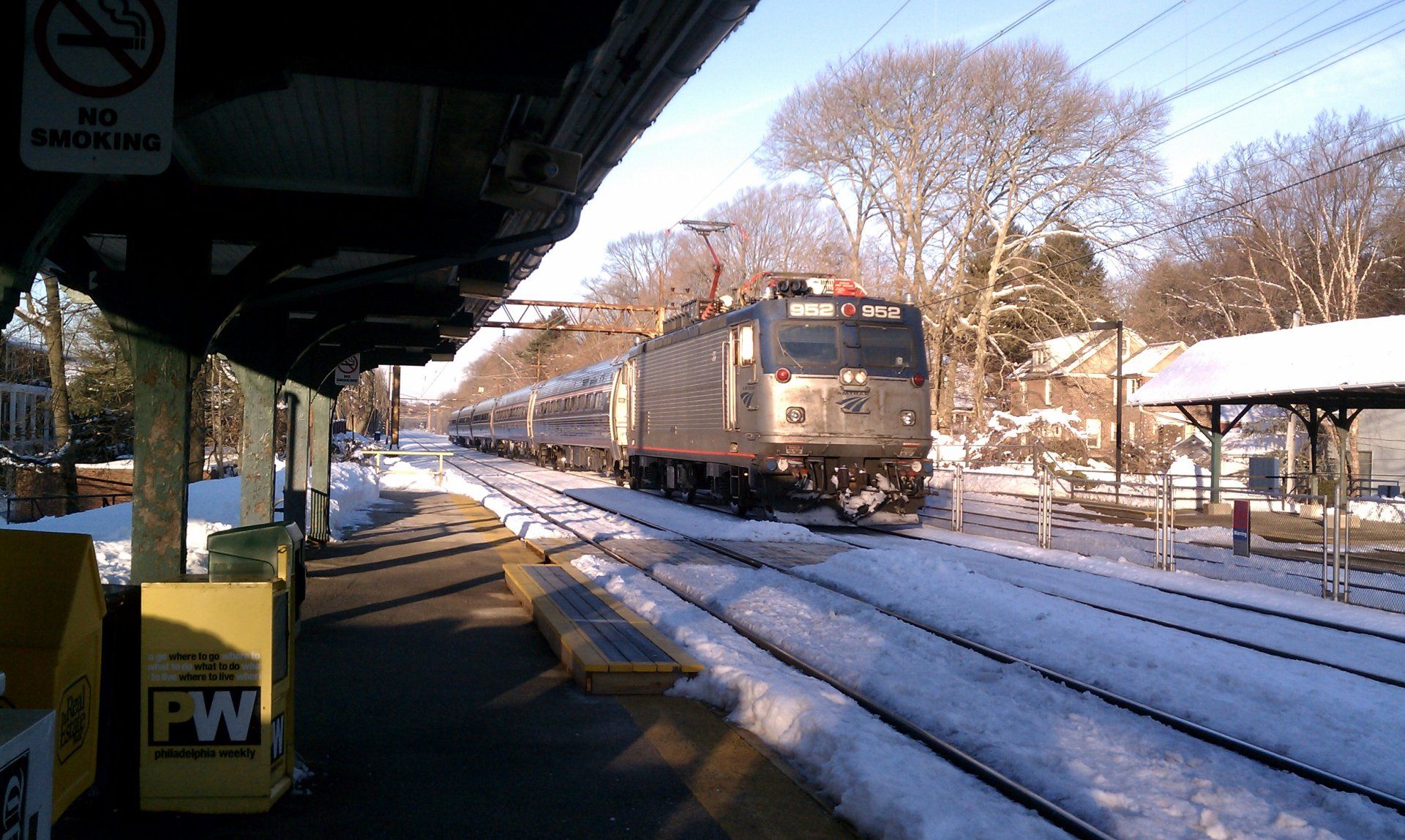
In 2015, that architectural legacy earned Mount Tabor a place on both the New Jersey Register of Historic Places and the National Register of Historic Places, cementing its status as one of the state's most authentically preserved 19th-century planned communities. Residents enjoy access to Denville Township's well-regarded public schools and convenient rail connections through nearby Denville Station on NJ Transit's Morris & Essex Lines, keeping New York City well within reach.

For buyers who want a home with genuine architectural character, a strong sense of place, and easy access to the broader Morris County region, Mount Tabor offers something increasingly rare: a neighborhood that history has already validated.

Community Profile

Tucked into Morris County with just 1,184 residents, this intimate borough punches well above its weight in economic strength and educational achievement. The median household income here reaches $115,199 — more than 50% above the national median — and a remarkable 68.5% of households earn six figures or more, a figure that speaks to the deep professional roots of the community. That prosperity is matched by credentials: 46.8% of residents hold at least a bachelor's degree, and 28.3% have earned a graduate degree, nearly double the national college attainment rate. Perhaps most striking, 63.1% of degree holders studied STEM fields, reflecting a community shaped by engineers, scientists, and technical professionals who commute easily into the broader New York metro area.

With an average commute of just 23.1 minutes and an unemployment rate of only 2.5%, daily life here carries a rare sense of stability and ease. That stability extends to housing: a 92.7% homeownership rate — far exceeding the national norm of 65.5% — signals that people who arrive in Mount Tabor tend to stay. The median home value of $445,965 reflects genuine demand for this community. The median age of 51.1 years and a 33.2% share of residents over 65 paint a picture of an established, settled enclave, while a 0% poverty rate and 0% uninsured rate underscore the exceptional quality of life that defines this quiet Morris County gem.

Things to Do

Outdoor Recreation & Natural Surroundings

Despite its compact footprint of less than half a square mile, Mount Tabor offers a surprisingly rich outdoor experience rooted in its natural setting. Tabor Lake anchors the community's recreational life, providing a scenic backdrop for walking, fishing, and quiet reflection. The elevated, wooded terrain that originally drew Methodist revivalists in 1869 still lends the neighborhood a peaceful, retreat-like atmosphere. The broader Denville Township offers additional green space and trail access, and nearby Tourne County Park — just a short drive away — provides hiking trails through Morris County's rolling hills and forested ridgelines.

History, Architecture & Culture

Mount Tabor's greatest attraction may well be the community itself. Listed on the National Register of Historic Places in 2015, the Mount Tabor Historic District is a remarkably intact Victorian-era enclave where Stick-Style and Gothic Revival cottages — adorned with steep gables, wraparound porches, and elaborate gingerbread trim — line narrow lanes in a layout unchanged since the camp meeting era. Trinity Park sits at the heart of the community, surrounded by the original octagonal structures including the Tabernacle, once the center of evangelical preaching. Walking tours of the historic district offer a genuinely rare window into 19th-century communal religious life, and local historical societies maintain interpretive resources that bring the neighborhood's origins vividly to life.

Family Activities & Community Events

Mount Tabor's tight-knit character makes it a natural hub for community-centered activities. The neighborhood hosts seasonal gatherings that reflect its longstanding tradition of communal fellowship, and the cottage-lined streets are ideal for leisurely family strolls. Children and adults alike enjoy the intimate, small-town atmosphere that feels worlds away from the suburban sprawl of greater Morris County. The community's proximity to Denville Township's recreational facilities means youth sports, playgrounds, and organized programs are all within easy reach.

Dining & Shopping Nearby

Mount Tabor itself is a quiet residential enclave without commercial strips, but downtown Denville — just minutes away — offers a charming Main Street with independent restaurants, cafés, and local shops. The broader Morris County region provides ample dining and retail options, and the Rockaway Townsquare mall is a short drive for more extensive shopping. For day-trippers, the combination of Mount Tabor's architectural charm and Denville's walkable downtown makes for a thoroughly satisfying outing.

Latest Properties in Mount Tabor

Loading...

Loading latest properties...

See All Properties in Mount Tabor

History

Mount Tabor's story begins with a single act of incorporation: on March 17, 1869, the Camp Meeting Association of the Newark Conference of the Methodist Episcopal Church was formally established, creating what would become New Jersey's first permanent Methodist camp meeting ground. The site, tucked into the wooded terrain of what is now Denville Township in Morris County, was chosen deliberately — elevated, serene, and accessible enough to draw worshippers seeking escape from the industrializing cities of northern New Jersey.

The earliest gatherings centered on ten-day summer revivals, with participants living in tents on standardized 25-by-16-foot lots arranged around a communal core at Trinity Park. Three octagonal structures, including the Tabernacle, rose quickly to anchor the site as a fixed place of worship rather than a roving assembly. Almost immediately, attendees began replacing their tents with modest cottages — and in 1873, three lot owners joined their parcels to construct the Smith Richardson History House, one of the earliest permanent residences and a signal that Mount Tabor was becoming a year-round community.

The architectural character that emerged from this evolution — Stick-Style and Gothic Revival cottages with steep gables, open porches, and gingerbread trim — was never erased by later suburban development. Those closely spaced, fanciful homes still define the neighborhood today. In 2015, that integrity was formally recognized when Mount Tabor was listed on both the New Jersey and National Registers of Historic Places.

For today's buyers, that history is the market. The same restrictive covenants and communal layout that preserved the camp's original character now create a rare, walkable enclave within commuting distance of New York — one where the housing stock is genuinely irreplaceable.

Weather

Mount Tabor, New Jersey sits in Morris County's inland hill country, and its climate reflects that position squarely: humid continental, with four well-defined seasons, meaningful temperature swings, and no moderating influence from the coast. The Atlantic Ocean is simply too far away to soften the extremes here, and the rolling terrain of the New Jersey Highlands adds its own character — slightly cooler summers and occasionally harsher winters than communities closer to the shore.

Summer days typically see highs in the mid-to-upper 80s °F, with overnight lows dropping into the 60s — warm enough to enjoy the community's famously shaded, porch-lined streets, but rarely oppressive. Winters are genuinely cold, with average highs in the low-to-mid 30s °F and lows that regularly dip into the teens and 20s. Snowfall is a real seasonal presence, accumulating meaningfully through December, January, and February.

Precipitation is distributed fairly evenly across the year, averaging roughly 45–50 inches annually, with summer thunderstorms and winter nor'easters both contributing. Spring and fall are transitional but often beautiful — the wooded setting turns spectacular in October.

For prospective homeowners, the climate has direct real estate implications. The Victorian-era cottages that define Mount Tabor's historic character require diligent seasonal maintenance — wood siding, ornate trim, and steep-pitched roofs all demand attention after hard winters. Heating costs are a genuine budget consideration, while the warm summers make outdoor living on those signature porches a genuine seasonal pleasure worth planning for.

Mount Tabor Market Analytics

The Mount Tabor real estate market is showing signs of stability and growth, with the average home value increasing by 3.9% over the past year to $706,888, according to data analyzed by Opulist. This suggests the market is balancing, with nearly equal percentages of homes selling above and below list price, indicating a healthy and competitive market. Overall, the trends indicate a positive outlook for both buyers and sellers in the Mount Tabor area.


1-Year Home Value Change: +3.9%

Mount Tabor Home Value Index over time.

Can I Afford Mount Tabor?
$
%
$0
Est. Monthly Payment
$0/yr
Salary Required

*Principal & interest only. Salary based on 28% debt-to-income ratio.

Get Pre-Approved for Mount Tabor