
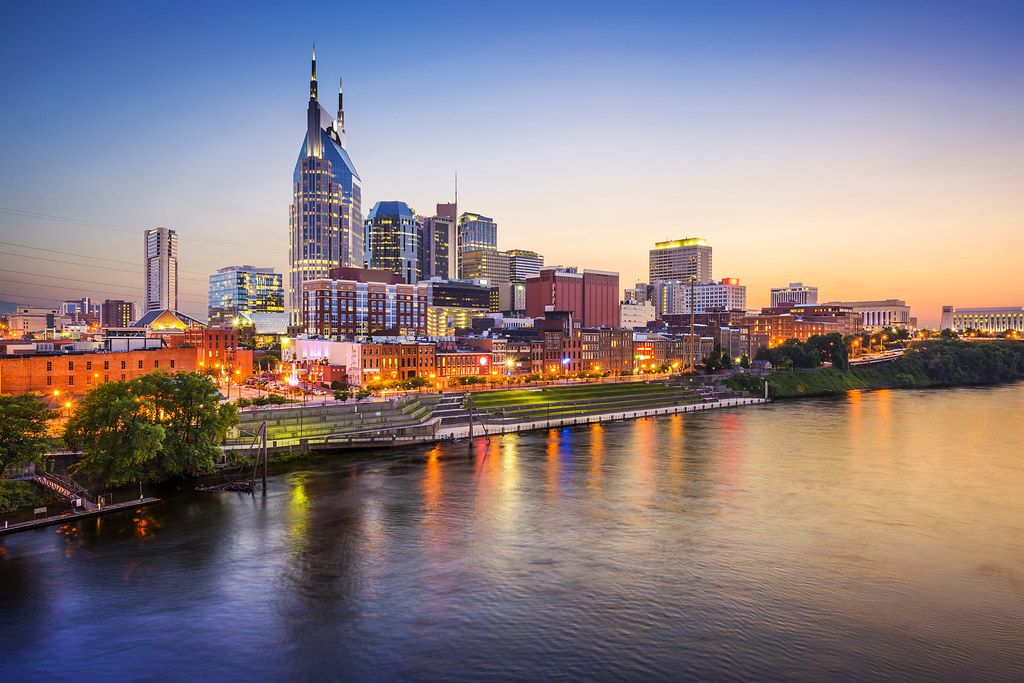
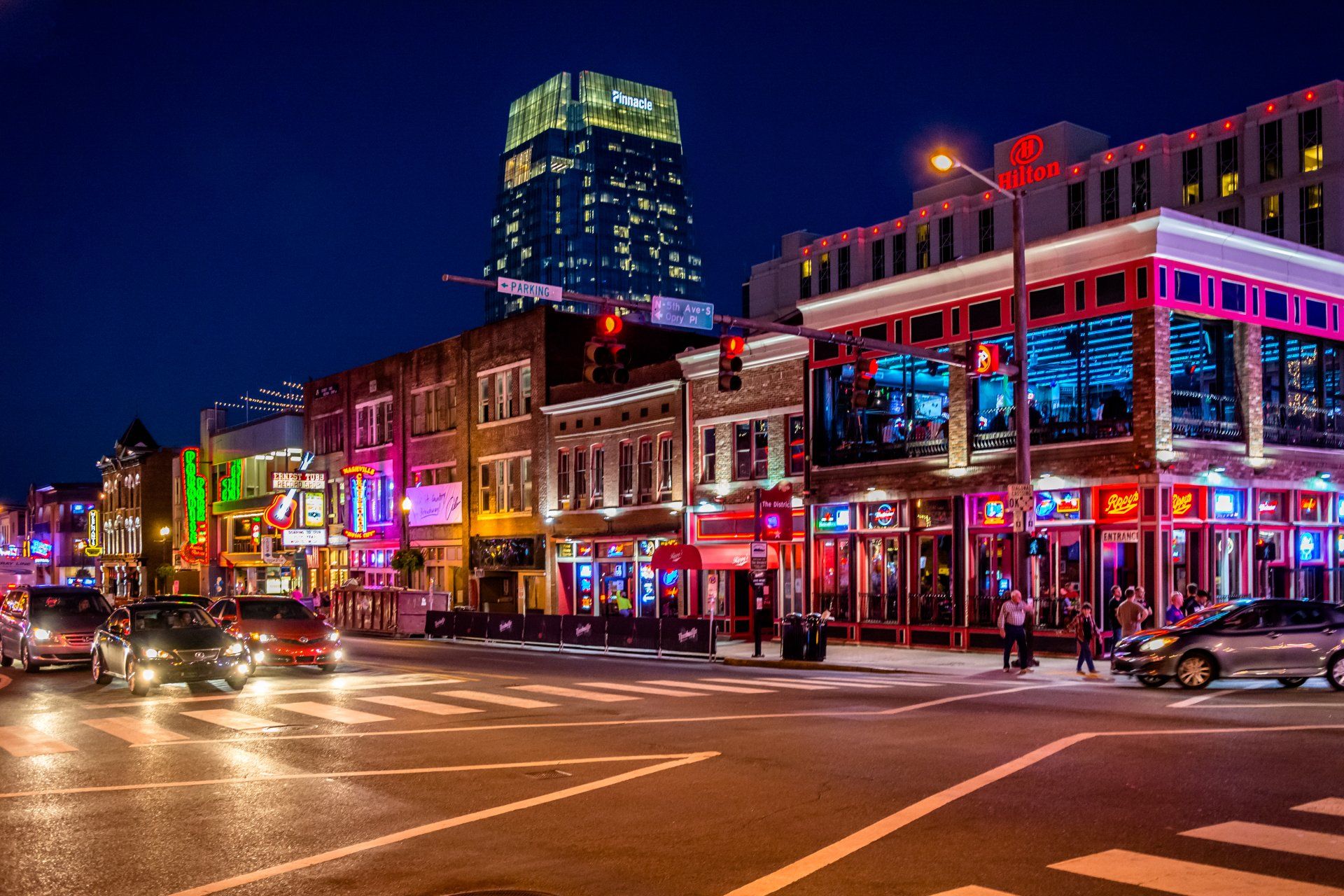
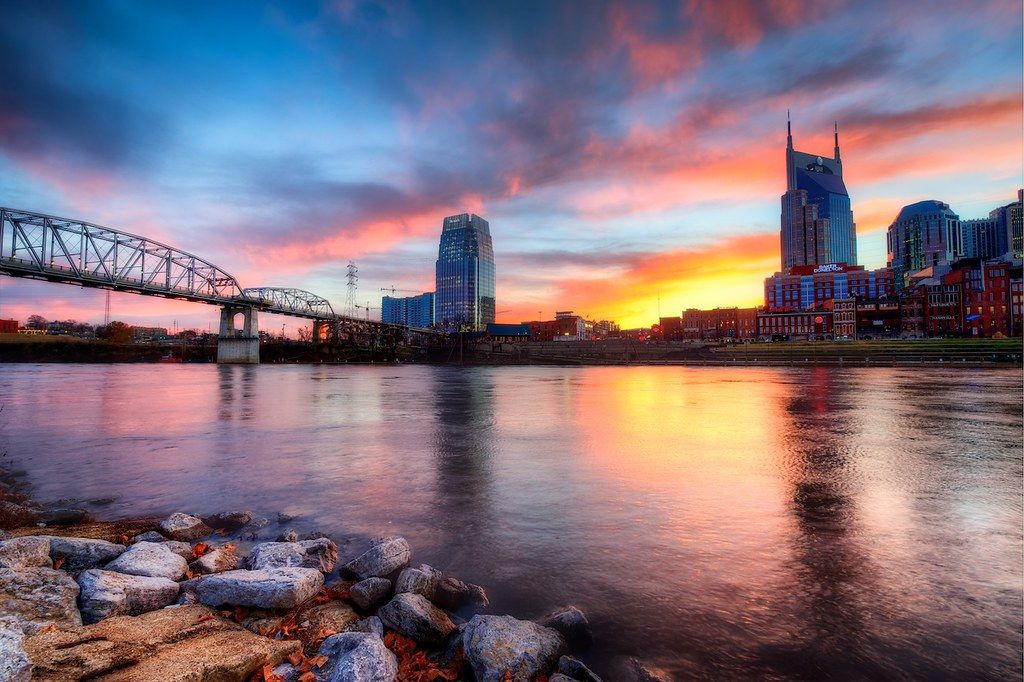
Founded in 1779 along the Cumberland River, Nashville has grown from a frontier outpost named after Revolutionary War general Francis Nash into Tennessee's capital city and its most populous — a place that now anchors a metropolitan area of more than 2.1 million people. What separates Nashville from neighboring cities like Memphis or Knoxville is the rare combination of state government, a globally recognized music industry, and a diversified economy spanning healthcare, technology, and higher education, all concentrated within a single consolidated city-county government that has been in place since 1963. Vanderbilt University, one of the country's top research institutions, sits just miles from the Tennessee State Capitol, reinforcing Nashville's long-standing nickname as the "Athens of the South." The city's position on Interstate 40 and its well-connected Nashville International Airport make it a genuine regional hub rather than a secondary market. For buyers and investors, Nashville represents something increasingly rare: a major American city still in the middle of its growth story, where infrastructure investment, job creation, and cultural momentum are all pointing in the same direction.
Welcome to Nashville
Community Profile
One of the most energetic cities in the American South, Nashville pulses with a youthful vitality that shows clearly in its numbers. The median age here is just 34.5 years — well below the national median of 38.5 — and nearly 36% of residents fall between the ages of 20 and 39, reflecting the steady wave of young professionals and growing families that have made Music City one of the country's most talked-about destinations. With a population surpassing 1.2 million, Nashville offers the amenities of a major metro while retaining the neighborly warmth that keeps people rooted here for life.
The city's talent base is genuinely impressive. Nearly 48.1% of residents hold a bachelor's degree or higher — far above the national average of 33% — and 18.5% have earned a graduate degree. That intellectual capital fuels a robust economy: the median household income stands at $77,371, edging above the national benchmark, and a striking 38.3% of households earn six figures or more. With 59.1% of families bringing in dual incomes and a labor force participation rate of 72.6%, financial momentum here is real. The average commute of just 24.7 minutes means more time at home and less on the highway — a genuine quality-of-life advantage in a city this size.
Nashville's diversity adds to its appeal. Residents identify across a rich spectrum of backgrounds, with 24.9% Black, 14.1% Hispanic or Latino, and 11.2% multiracial residents contributing to a cultural fabric that flavors everything from the food scene to the arts. For those exploring homes for sale in Nashville, TN, the median home value of $413,142 reflects strong demand — and with 313,513 total housing units spread across Davidson County's varied neighborhoods, buyers will find options ranging from walkable urban condos to spacious suburban retreats.
Things to Do
Arts & Culture
Nashville's cultural identity runs deep, and no visit is complete without exploring its legendary music scene. The Ryman Auditorium, the original home of the Grand Ole Opry and one of the most storied concert venues in American history, sits in the heart of downtown and hosts performances year-round. Just a short drive away in the Donelson area, the Grand Ole Opry House continues its iconic weekly broadcasts, a tradition stretching back to 1925. The Country Music Hall of Fame and Museum on Fifth Avenue South offers an immersive deep dive into Nashville's musical heritage, while the Frist Art Museum brings world-class rotating exhibitions to a beautifully restored Art Deco building downtown.
Outdoor Recreation
The Cumberland River and its surrounding greenways give Nashville a surprisingly outdoorsy character for a major city. Centennial Park, home to a full-scale replica of the Greek Parthenon, is a beloved urban retreat perfect for picnics, jogging, and summer concerts. Percy Warner Park and Edwin Warner Park in the city's west end together form one of the largest municipal park systems in the Southeast, offering miles of hiking and equestrian trails through rolling hardwood forest. Shelby Bottoms Greenway along the Cumberland provides scenic cycling and walking paths just east of downtown.
Dining & Entertainment
Nashville's food scene has exploded in recent years. The city is the birthplace of Nashville hot chicken, a fiery, cayenne-crusted specialty you'll find at institutions across town. The Broadway honky-tonk corridor downtown pulses nightly with live music spilling out of every door, while the 12 South and East Nashville neighborhoods offer independent boutiques, coffee shops, and acclaimed restaurants with a distinctly local flavor.
Sports & Family Activities
Sports fans are well served year-round. The Nashville Predators play NHL hockey at Bridgestone Arena downtown, generating the electric atmosphere that earned the team the nickname Smashville. The Tennessee Titans bring NFL football to the city, and Nashville SC competes in Major League Soccer. Families will enjoy the Tennessee State Museum, which traces the region's history from prehistoric times through the 20th century, and the Adventure Science Center, featuring hands-on exhibits and a full-dome planetarium.
Latest Properties in Nashville
Loading latest properties...
History
From Fort Nashborough to Boomtown: Nashville's Historical Arc
Nashville's story begins in 1779, when explorers James Robertson and John Donelson led a party of settlers to a bend in the Cumberland River and established Fort Nashborough, naming it for Revolutionary War general Francis Nash. The site was no accident — the Cumberland's connection to the Ohio River made it a natural trading hub, and the city's population had already reached 345 by 1800. Incorporated in 1806 and named Tennessee's permanent state capital in 1843, Nashville grew into one of the wealthiest cities in the South, its prosperity built on iron production, tobacco, hemp, and thoroughbred horse breeding.
The Civil War interrupted that trajectory sharply. In February 1862, Nashville became the first Confederate state capital to fall to Union forces, and it remained under Federal occupation for the duration of the war. The city's strategic value — as both a river port and a railroad center — made it a prize worth holding. Reconstruction was slow, but Nashville gradually rebuilt its commercial identity, eventually emerging as a center of trade, manufacturing, and education, earning the nickname "Athens of the South" for its concentration of universities.
The 1963 consolidation of Nashville and Davidson County into a unified metropolitan government was a turning point that shaped the modern city. That streamlined governance helped attract corporate headquarters, healthcare giants, and eventually the music industry infrastructure that rebranded Nashville as Music City. The postwar decades produced the suburban neighborhoods — particularly in the Green Hills, Belle Meade, and Brentwood corridors — that remain among the most sought-after addresses today. Now a metro of over 2.15 million people, Nashville's real estate market reflects that long arc: a river town that became a capital, a capital that became a cultural and economic powerhouse.
Weather
Nashville's Climate and Weather Patterns
Nashville sits squarely within a humid subtropical climate zone, a classification that brings warm, often muggy summers, mild but occasionally unpredictable winters, and generous rainfall spread across all four seasons. Positioned in the Cumberland River basin of Middle Tennessee, the city experiences the full range of continental weather patterns without the moderating influence of any ocean or mountain range — the nearest significant terrain, the Cumberland Plateau to the east, offers only modest protection from weather systems sweeping in from the west and south.
Summers are long and humid, with daytime highs regularly climbing into the upper 80s and low 90s°F, while overnight lows typically settle in the mid-60s. Winters are relatively mild compared to northern cities, with average highs in the mid-40s°F and lows in the upper 20s to low 30s — though ice storms and occasional snow events are a genuine seasonal reality. Spring and fall are Nashville's most temperate seasons, though spring brings the highest risk of severe thunderstorms and occasional tornado activity given the city's position in the mid-South.
Annual precipitation averages around 47 inches, distributed fairly evenly throughout the year. For homebuyers and owners, the climate has real practical implications: central air conditioning is essentially non-negotiable given summer heat and humidity, heating costs are moderate but ice storms can cause infrastructure stress, and outdoor living spaces — covered porches, patios, and decks — add genuine year-round value given the long temperate shoulder seasons.
Nashville Market Analytics
Can I Afford Nashville?
Weather