
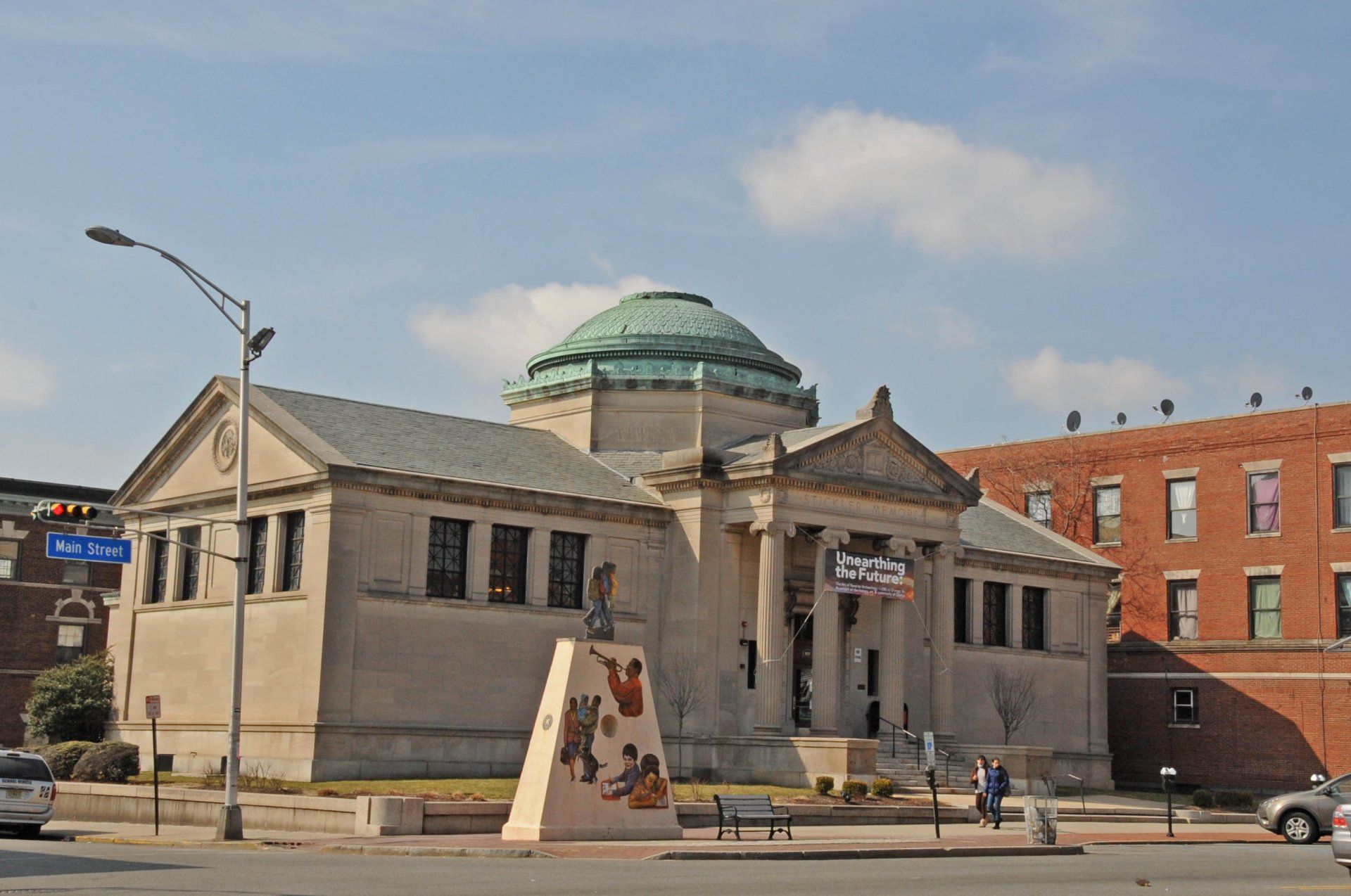
Orange, New Jersey

Location:
Orange, NJ

Welcome to Orange

Incorporated as a township in 1806 and later as a city in 1872, Orange, New Jersey sits in Essex County just four miles west of Newark, occupying a compact but densely settled two square miles that have shaped one of the most historically layered communities in the state. Unlike its immediate neighbors — East Orange, West Orange, and South Orange — the City of Orange carries the original designation, the place from which the others were carved as the region grew. That history shows up in the architecture, the street grid, and the civic identity that longtime residents take seriously.

For commuters, the Orange Station on NJ Transit's Morris & Essex Line — a Renaissance Revival landmark built between 1918 and 1920 and listed on the National Register of Historic Places — offers direct service to New York Penn Station via Secaucus Junction, making the daily commute genuinely practical. Multiple bus routes further connect residents to the broader Essex County network.

Those exploring orange nj real estate will find a market shaped by proximity to major employment centers, a walkable urban fabric, and a city actively investing in its own future. For buyers who want real urban character, direct transit access, and a foothold in one of New Jersey's most connected corridors, Orange rewards a closer look.


Community Profile

Nestled in Essex County and woven into the fabric of the greater New York-Newark-Jersey City metro area, Orange, NJ pulses with the energy of one of the most dynamic economic regions on the planet. With a population density of 5,221 people per square mile, this is a genuinely urban community — walkable, connected, and alive in the way that only a true city can be. That density tells a story of neighbors who share sidewalks, local businesses with loyal regulars, and a street-level vitality that suburban sprawl simply cannot replicate.

For buyers exploring homes for sale in Orange, NJ, the metro connection is a major draw. Positioned within commuting range of Manhattan and Newark's expanding job market, Orange offers access to world-class employment, culture, and infrastructure while maintaining its own distinct identity as a close-knit Essex County city with deep historical roots stretching back to the colonial era. The surrounding region encompasses some of New Jersey's most established neighborhoods, top medical institutions, and major transit corridors — all within reach. Whether you're a first-time buyer drawn by relative affordability compared to neighboring towns, or someone seeking an authentically urban lifestyle without a Manhattan price tag, the density and connectivity here represent genuine everyday value. Buyers browsing orange nj houses for sale will find a community that rewards those who appreciate urban energy, regional access, and a neighborhood character built over generations.

Things to Do

Outdoor Recreation

Orange offers residents and visitors a satisfying mix of green space within a densely urban setting. Elmwood Park, one of the city's most beloved outdoor destinations, provides open fields, walking paths, and a welcoming atmosphere for families, joggers, and neighbors looking to unwind. The park connects Orange to the broader Essex County park system, giving residents easy access to additional green corridors throughout the region. Whether you're exploring on a crisp autumn morning or enjoying a summer afternoon, Orange's parks reflect the tight-knit, community-driven spirit of the city.

Arts & Culture

Orange has a rich and layered history that reveals itself in its architecture and public spaces. The Orange Train Station at 73 Lincoln Avenue is a genuine architectural gem — a Renaissance Revival masterpiece built between 1918 and 1920 by the Delaware, Lackawanna & Western Railroad. With its red brick façade, limestone trim, and copper canopies, the station is listed on the National Register of Historic Places and remains an active NJ Transit hub. It's the kind of landmark that makes browsing orange nj real estate feel like stepping into living history. The surrounding Lincoln Avenue and Essex Street commercial corridors offer local shops and a sense of neighborhood authenticity that's increasingly rare in the New York metro area.

Dining & Local Flavor

Orange's dining scene reflects its wonderfully diverse population. The city's main commercial strips along Main Street and Central Avenue are home to Caribbean, Latin American, and West African eateries, bakeries, and casual spots that serve bold, home-style cooking. You won't find a sanitized chain-restaurant corridor here — instead, expect genuine neighborhood restaurants where the food tells a story about the community's roots and culture.

Family Activities & Day Trips

Families considering a house for sale in Orange NJ will appreciate the city's proximity to major regional attractions. Branch Brook Park in nearby Newark — home to the largest cherry blossom collection in the United States — is just minutes away and spectacular each spring. The South Mountain Reservation, a vast Essex County wilderness preserve, is a short drive and offers hiking, picnicking, and nature programming year-round. New York City is accessible in under an hour via NJ Transit's Morris & Essex Line directly from Orange Station, making weekend cultural excursions to world-class museums, theaters, and sporting events entirely effortless.

Latest Properties in Orange

Loading...

Loading latest properties...

See All Properties in Orange

History

From Railroad Stop to Urban Neighborhood: A Brief History of Orange, NJ

Orange's story begins in earnest on November 19, 1836, when the Morris and Essex Railroad — chartered just the year before — opened its first segment from Newark, with Orange serving as the western terminus. That early rail connection was transformative. Within a generation, Orange evolved from a rural township into a bustling industrial center, with tanning operations and boot manufacturing among its defining industries, all linked to broader markets through the railroad.

The Delaware, Lackawanna and Western Railroad deepened that legacy in the early twentieth century. Under DL&W President William H. Truesdale and Chief Engineer George J. Ray, a massive grade-separation project eliminated nineteen dangerous at-grade crossings along a three-mile corridor through Orange and East Orange. Completed on December 18, 1922, the project also produced the handsome Renaissance Revival station at 73 Lincoln Avenue — designed by DL&W architect Frank J. Nies and built between 1918 and 1920 — which still anchors the Lincoln Avenue corridor today and is listed on the National Register of Historic Places.

That industrial and transit infrastructure shaped the dense, walkable urban fabric that defines Orange today. The city's mix of multi-family housing, Victorian-era single-family homes, and commercial corridors reflects over a century of layered development. For buyers exploring orange nj real estate, that history translates into architectural character and genuine transit access — the Morris & Essex Line still runs direct service to New York Penn Station. Anyone searching for a house for sale in orange nj will find a city whose bones were built to last, with a commuter-friendly core that remains as relevant now as it was in 1836.

Weather

Orange, New Jersey experiences a humid continental climate, characterized by four distinct seasons with meaningful temperature swings throughout the year. Situated in Essex County in the northeastern part of the state, the city sits inland enough to escape direct coastal moderation but still benefits from its proximity to the broader New York metropolitan region's urban heat influence.

Summers are warm and humid, with daytime highs typically reaching the mid- to upper 80s°F and overnight lows settling in the mid-60s. July is generally the hottest month, and heat waves pushing into the 90s are not uncommon. Winters are cold and occasionally harsh, with January highs averaging in the low-to-mid 30s°F and lows dipping into the teens and 20s. Snowfall is a regular seasonal feature, with nor'easters capable of delivering significant accumulation.

Precipitation is fairly well distributed across all four seasons, averaging roughly 45–50 inches annually, including rain, snow, and mixed precipitation. Spring and fall are transitional and often pleasant, making them popular seasons for those exploring orange nj real estate.

Weather and Real Estate Considerations

For anyone looking at a house for sale in Orange NJ, the climate has practical implications. Older housing stock — and Orange has plenty of it — demands attention to insulation, roof integrity, and heating systems capable of handling cold winters. Air conditioning is a genuine necessity given humid summer conditions. Homeowners should also budget for seasonal maintenance such as gutter clearing, weatherproofing, and snow removal, while the mild spring and fall seasons reward those with outdoor spaces and gardens.

Orange Market Analytics

Market analytics data coming soon.
Can I Afford Orange?
$
%
$0
Est. Monthly Payment
$0/yr
Salary Required

*Principal & interest only. Salary based on 28% debt-to-income ratio.

Get Pre-Approved for Orange