
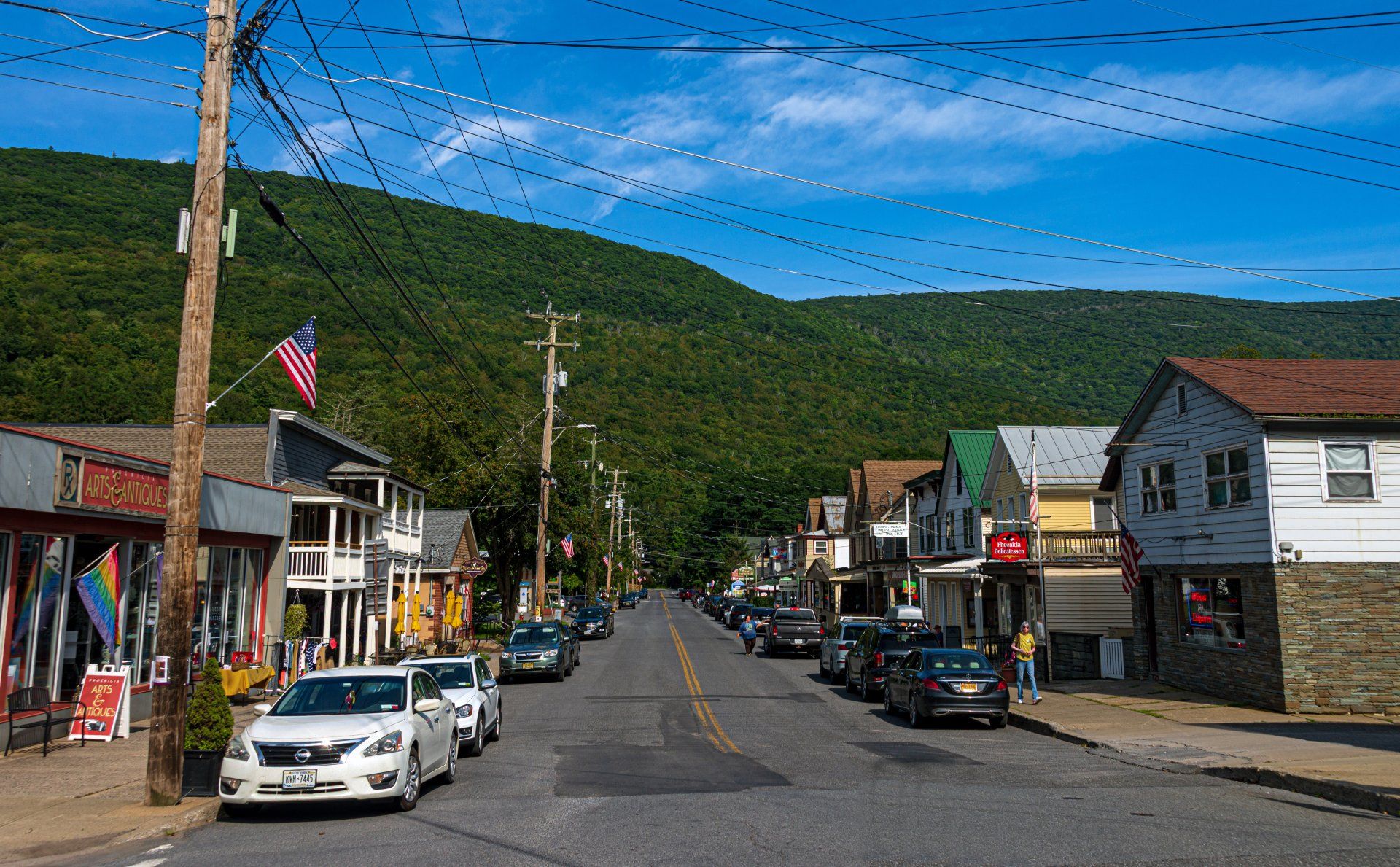
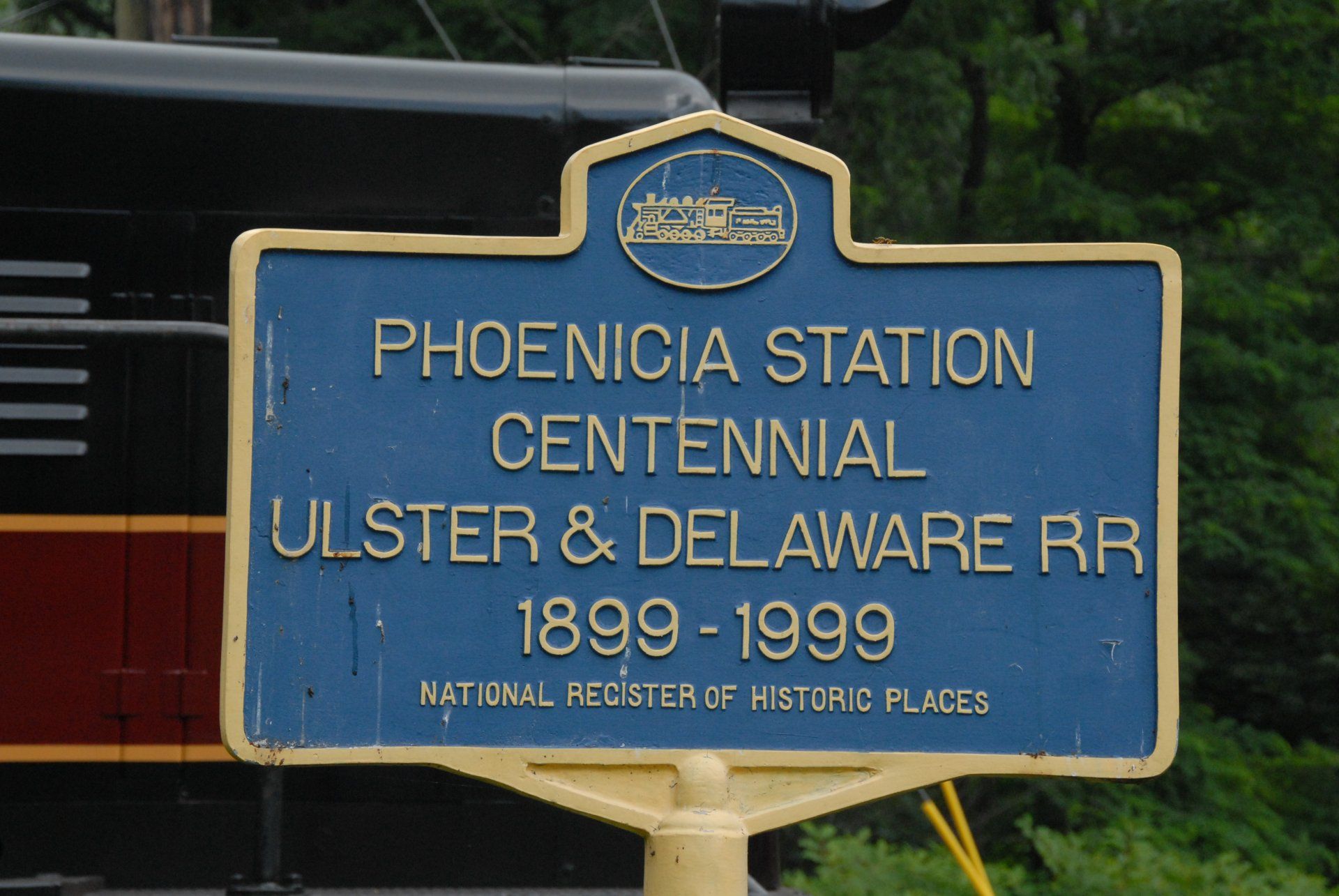
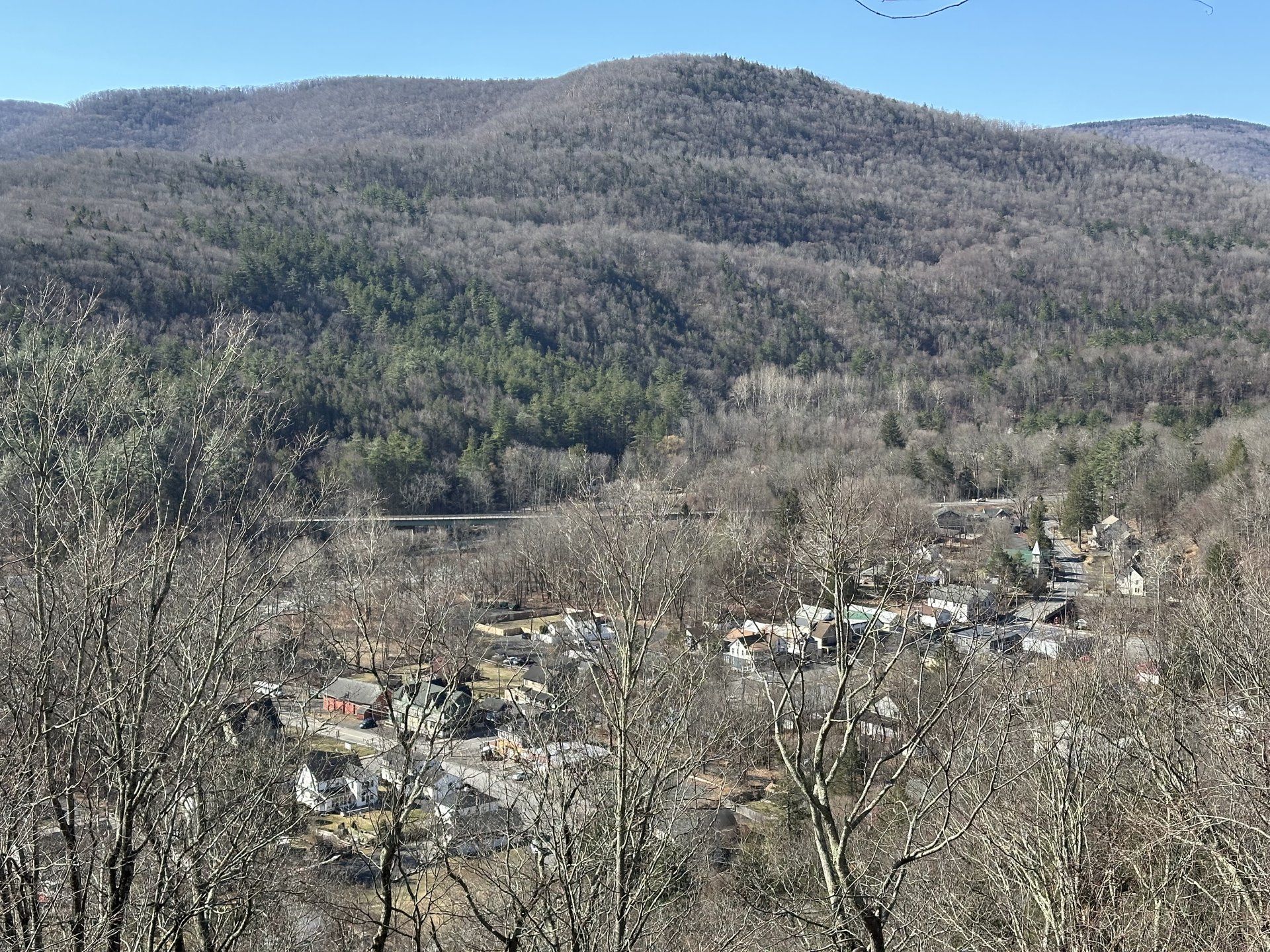
Phoenicia, New York sits at the confluence of Esopus Creek and Stony Clove Creek in Ulster County, roughly 100 miles northwest of New York City — a geographic fact that has shaped nearly every chapter of this small hamlet's history. Laid out in 1853 in anticipation of the Ulster and Delaware Railroad, Phoenicia grew into a genuine mountain hub for lumber, tannery goods, and eventually tourism, leaving behind a streetscape of 19th-century homes and landmarks like the 1899 Phoenicia Railroad Station, now home to the Empire State Railway Museum. What sets Phoenicia apart from neighboring Catskill hamlets is the rare combination of intact historic character and direct access to serious wilderness: Slide Mountain, the highest peak in the Catskills at 4,180 feet, is reachable by trail from here, and the Esopus Creek draws fly fishermen from across the region. Students in the area are served by the Onteora Central School District. For buyers who want a genuine mountain address — not a weekend-resort simulacrum — with deep roots, working farms, and wild land on the doorstep, Phoenicia represents exactly the kind of place that becomes harder to find with every passing year.
Welcome to Phoenicia
Community Profile
Tucked into the Catskill Mountains of Ulster County, this intimate hamlet of just 271 residents draws a notably seasoned and educated population that has deliberately chosen a quieter pace of life. The median age of 56.3 years — well above the national figure of 38.5 — reflects a community dominated by established adults, with nearly half of all residents falling between the ages of 50 and 59 and another 23.6% aged 65 or older. For those seeking neighbors who have settled in intentionally and put down roots, that demographic profile speaks volumes.
The community's homeownership rate of 68.4% edges above the national average of 65.5%, underscoring a strong sense of permanence and investment in place. Renters who do lease here benefit from a remarkably accessible median rent of just $741 per month — a figure that stands in sharp contrast to regional and national norms. Educational attainment is a quiet point of pride: 47.1% of residents hold a bachelor's degree or higher, well above the national college attainment rate of roughly 33%, lending the community an intellectually engaged character. A striking 74.2% of residents are married, and with an average commute of 37 minutes into the greater Kingston metro area, the rhythms of daily life here balance accessibility with genuine mountain-town seclusion. Phoenicia's diversity adds further texture, with 19.6% of residents identifying as Hispanic or Latino and 36.9% of two or more races.
Things to Do
Outdoor Recreation
Phoenicia sits at the heart of some of the finest outdoor recreation in the northeastern United States, and the surrounding Catskill Mountains deliver year-round adventure. Slide Mountain, the highest peak in the Catskills at 4,180 feet, is accessible via trails that draw serious hikers from across the region. The Phoenicia-Mt. Tobias Wild Forest and the Slide Mountain Wilderness offer miles of backcountry trails for hiking and snowshoeing. Closer to the hamlet, the Esopus Creek is legendary among fly fishers — its cold, clear waters are among the most productive trout streams in New York State, and the stretch running right through town is a beloved spot for wading and casting. Tubing on the Esopus is a beloved summertime tradition, with outfitters nearby making it easy to float downstream on a warm afternoon.
Cycling & Seasonal Events
Mountain biking enthusiasts know Phoenicia as the home of the Catskill Mountain Bike Festival, an annual event that draws riders from across the Mid-Atlantic and beyond. The surrounding terrain, with its mix of forested singletrack and valley roads, makes the area a destination for cyclists of all skill levels throughout the warmer months.
Arts, Culture & History
The Empire State Railway Museum, housed in the beautifully preserved 1899 Phoenicia Railroad Station, offers a fascinating window into the region's industrial and transportation heritage. Exhibits chronicle the Ulster and Delaware Railroad era that put Phoenicia on the map in the late 19th century. The hamlet's Main Street retains much of its original 19th-century character, with preserved architecture that rewards a leisurely stroll. A vibrant arts scene has taken root here in recent decades, with galleries and creative businesses drawn by the area's rugged charm and proximity to nature.
Dining
The Phoenicia Diner, set in a classic structure dating to 1962, is arguably the hamlet's most iconic destination — a beloved spot that elevates comfort food with locally sourced ingredients and has become something of a pilgrimage site for weekend visitors from New York City, roughly 100 miles to the southeast.
Family Activities
Families find plenty to enjoy in and around Phoenicia, from creek-side picnics along the Esopus to exploring the Railway Museum's vintage rolling stock. The intimate scale of the hamlet makes it easy to spend a relaxed day wandering between the outdoors, local shops, and a satisfying meal — all within a few blocks of each other.
Latest Properties in Phoenicia
Loading latest properties...
History
From Tannery Town to Mountain Retreat
Phoenicia's story begins not with grand ambitions but with bark — specifically, the hemlock bark that fueled the Phoenix Tannery, established around 1836 along the banks of the Esopus Creek. The tannery gave the hamlet its name and its first economic identity, processing leather from the Catskills' abundant hemlock forests. By the time the industry declined in the 1860s and the tannery closed around 1870, a new force had already arrived to reshape the community: the Ulster and Delaware Railroad, which reached Phoenicia in 1870 after lots had first been laid out in anticipation of its arrival back in 1853.
The railroad transformed Phoenicia into a genuine transportation hub, moving lumber, goods, and eventually tourists through the narrow mountain valley. A parallel story unfolded in 1863 when the Chichester family founded a factory town on the site focused on chair-making and cradle production. The operation later passed to the Schwarzwaelder family, who pivoted to fine office furniture — until the Great Depression brought everything to a halt and the village went to auction in 1939.
What the Depression couldn't erase was the physical fabric of the place. The 1899 Phoenicia Railroad Station still stands today as home to the Empire State Railway Museum, and original 19th-century homes line the hamlet's compact streets. That preserved architectural character — modest, working-class, authentically Catskill — is precisely what draws today's buyers. Phoenicia's real estate appeal is inseparable from its history: the same small scale and rugged authenticity that defined a tannery and railroad town now command premium interest from New York City residents seeking weekend retreats and permanent escapes to the mountains.
Weather
Phoenicia, New York experiences a humid continental climate, shaped profoundly by its position deep within the Catskill Mountains at roughly 827 feet in elevation. The surrounding peaks — including Slide Mountain, the highest point in the Catskills — funnel weather systems through the narrow valleys, amplifying precipitation and intensifying seasonal extremes compared to lower-lying Hudson Valley communities just to the east.
Summers are pleasantly mild, with daytime highs typically ranging from the upper 70s to the low 80s°F and overnight lows dipping into the mid-50s — a refreshing contrast to the heat that blankets New York City. Winters are cold and snowy, with average highs in the upper 20s to mid-30s°F and lows that regularly fall into the teens. Significant snowfall accumulation is common from December through March, and the mountain terrain can intensify local snow totals well above regional averages.
Precipitation is distributed fairly evenly throughout the year, though spring and late summer can bring heavy rainfall along creek corridors. The Esopus Creek's flood history is a genuine consideration for prospective buyers near the valley floor.
For real estate, the climate has meaningful implications. Heating costs are a significant budget factor for year-round residents, and homes require diligent winter maintenance — roof loads, pipe insulation, and driveway access all demand attention. On the upside, the temperate summers make outdoor living genuinely enjoyable for much of the year, and the dramatic seasonal changes are a core part of Phoenicia's enduring appeal.
Phoenicia Market Analytics
Can I Afford Phoenicia?
Weather