
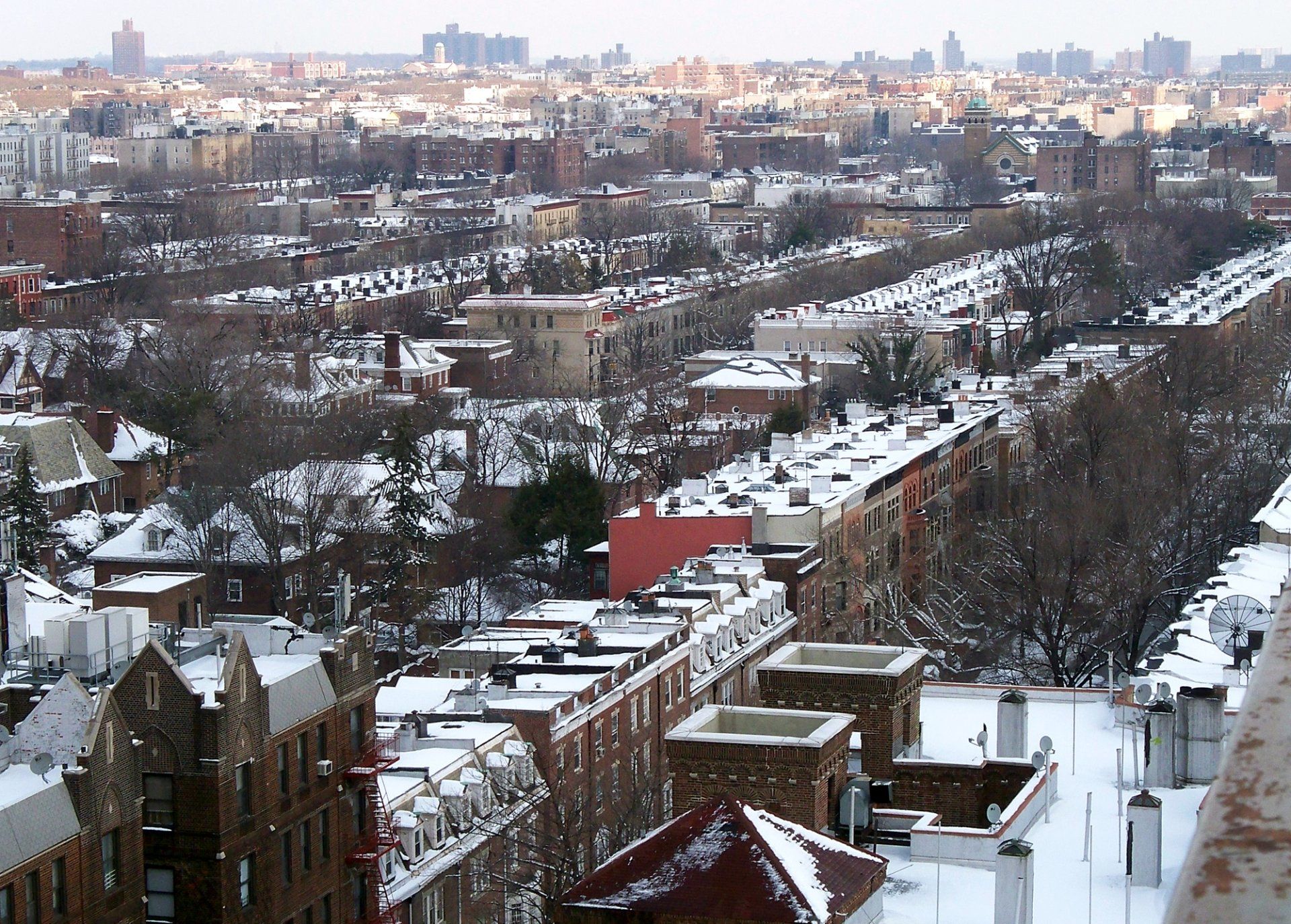
When James Lefferts subdivided his family's Brooklyn estate into 600 building lots in 1893, he attached deed restrictions requiring every home to be built of brick or stone — a decision that shaped the character of this neighborhood for well over a century. Today, Prospect Lefferts Gardens occupies 1.4 square miles in the Flatbush section of Brooklyn, bordered by Prospect Park to the west and Empire Boulevard to the north, and it carries that original architectural ambition forward in every tree-lined block. What sets it apart from neighboring Crown Heights and Flatbush is its landmarked core: the Prospect Lefferts Gardens Historic District, designated by the New York City Landmarks Preservation Commission in 1979, preserves more than 750 rowhouses in Romanesque Revival, neo-Tudor, and neo-Renaissance styles that few Brooklyn blocks can match. Residents walk to Prospect Park's 526 acres and the Brooklyn Botanic Garden, while the B and Q subway lines provide a direct connection to Manhattan. With a median home price of $865,000 and strong demand for prospect lefferts gardens ny homes for sale, this is a neighborhood where architectural integrity, green space, and transit access converge — making it a compelling place to put down lasting roots.
Welcome to Prospect Lefferts Gardens
Things to Do
Outdoor Recreation
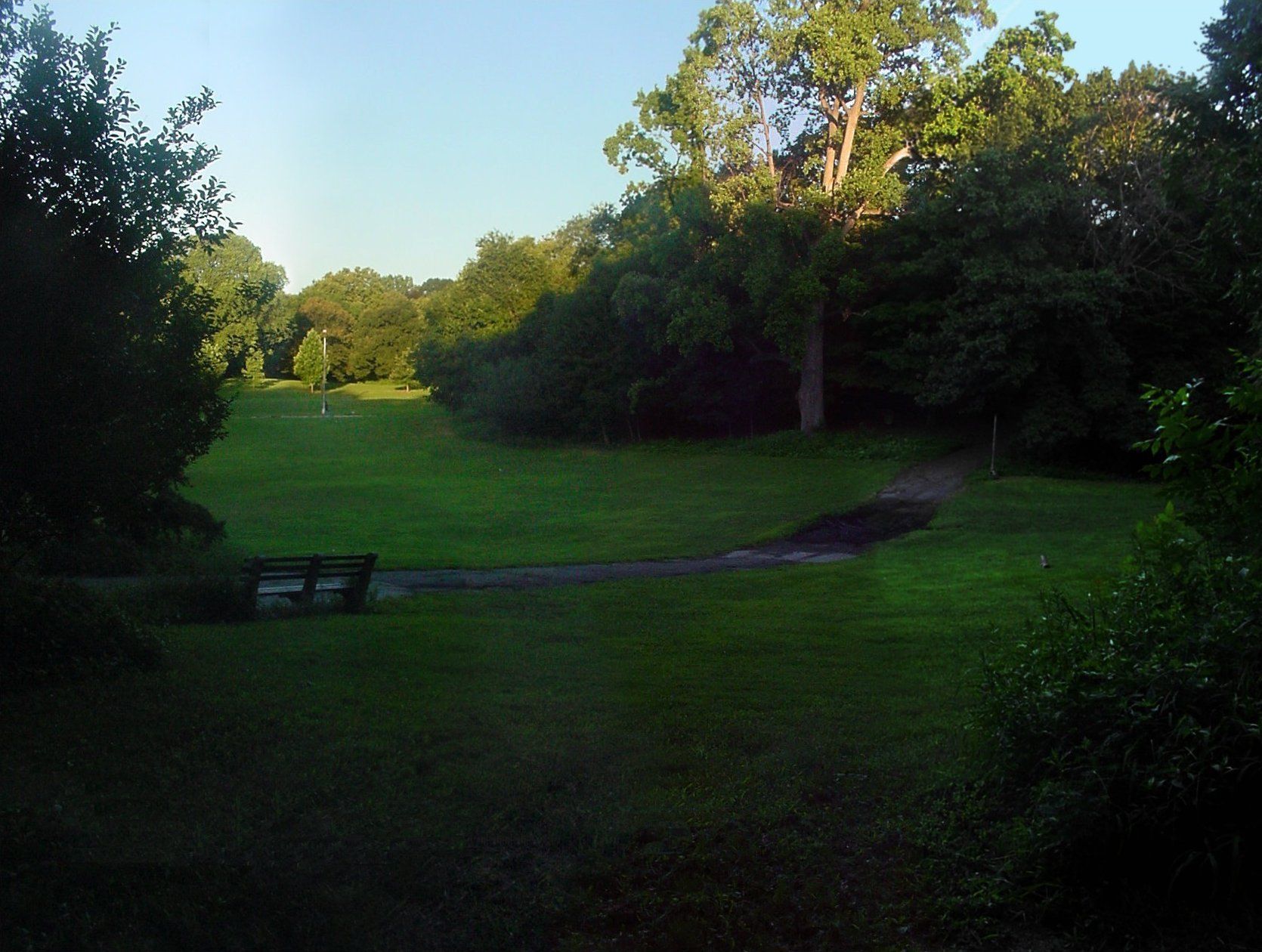
Prospect Park is the neighborhood's crown jewel — and practically its backyard. The park's southeastern entrance sits right along Ocean Avenue, giving residents immediate access to 526 acres of meadows, woodlands, the Long Meadow, the Prospect Park Lake, and miles of walking and cycling paths. The park hosts concerts, farmers markets, and seasonal events throughout the year, including free performances at the Bandshell in summer. Just across Eastern Parkway to the north, the Brooklyn Botanic Garden draws visitors year-round, with its famous Cherry Blossom Festival each spring drawing crowds from across the city. These two green anchors are a primary reason so many people searching for prospect lefferts gardens apartments for rent make the move and never look back.
Arts & Culture
The neighborhood has a vibrant creative spirit rooted in its Caribbean-American and African-American communities. Lincoln Road has become something of an outdoor gallery, with murals painted along its corridor that celebrate local artists and neighborhood identity — a tradition that began with PLG Arts in 2009. The Brooklyn Museum, one of the largest art museums in the United States, is just a short walk or bike ride north along Eastern Parkway, offering world-class exhibitions and a beloved First Saturday free night each month.
Dining & Local Flavor
Prospect Lefferts Gardens pulses with Caribbean culinary tradition. Flatbush Avenue and Rogers Avenue are lined with Haitian, Jamaican, and Trinidadian restaurants, bakeries, and specialty grocers that reflect the neighborhood's deep West Indian roots. The area's dining scene is unpretentious, flavorful, and genuinely local — a refreshing contrast to more heavily commercialized Brooklyn corridors.
Community & Family Activities
The Maple Street Community Garden at 237 Maple Street is a beloved neighborhood gathering spot — a communally managed organic garden open to the public that also runs an active composting program. Families enjoy regular programming at Prospect Park's Audubon Center and the nearby Prospect Park Zoo. The Lefferts Historic House inside Prospect Park, originally from the Lefferts family estate itself, offers hands-on history programming for children. For those considering prospect lefferts gardens brooklyn apartments 2 bedroom, the combination of park access, community gardens, and cultural richness makes this one of Brooklyn's most genuinely livable neighborhoods.
Latest Properties in Prospect Lefferts Gardens
Loading latest properties...
History
From Dutch Farmland to Landmark District
Prospect Lefferts Gardens traces its origins to 1665, when a Dutch family settled what was then part of the Town of Flatbush. The land remained tied to the Lefferts family for generations until 1893, when James Lefferts subdivided the estate into roughly 600 building lots — the area now known as Lefferts Manor — and sold them to developers. To protect the character of the emerging neighborhood, Lefferts attached deed restrictions requiring each lot to contain a single-family brick or stone residence of at least two stories. That covenant, remarkably, still governs Lefferts Manor today.
Development accelerated through the late 1890s and into the 1920s, as improved transit access made this corner of Brooklyn an attractive middle-class enclave. The rowhouses that rose along streets like Maple, Midwood, and Lefferts Avenue — in neo-Renaissance, Romanesque Revival, and neo-Tudor styles — created the cohesive, tree-lined streetscapes that define the neighborhood's appeal more than a century later. On October 9, 1979, the New York City Landmarks Preservation Commission designated the Prospect Lefferts Gardens Historic District, locking in the architectural integrity of over 750 rowhouses. The district was subsequently listed on the National Register of Historic Places in 1992.
The neighborhood's name itself dates only to 1968, coined by the Prospect Lefferts Gardens Neighborhood Association as a tribute to three anchors: Prospect Park, Lefferts Manor, and the Brooklyn Botanic Garden. Since the 2000s, the area has gentrified steadily, drawing young professionals alongside its longstanding Caribbean-American and African-American communities. That layered history — preserved architecture, deep cultural roots, and proximity to Prospect Park — is precisely what makes prospect lefferts gardens ny homes for sale so competitive today, with a median home price of $865,000 reflecting sustained demand for one of Brooklyn's most architecturally intact neighborhoods.
Weather
Prospect Lefferts Gardens experiences a humid subtropical climate — the classification that applies to much of New York City and its inner boroughs — with four distinct seasons and meaningful temperature swings throughout the year. Summers are warm and humid, with daytime highs typically reaching the mid- to upper 80s°F, occasionally pushing into the low 90s during heat waves, while overnight lows settle in the mid-60s. Winters are cold but rarely severe by northeastern standards, with average highs in the mid-30s to low 40s°F and lows that can dip into the 20s during the coldest stretches of January and February.
Brooklyn's position near the Atlantic Ocean moderates temperature extremes somewhat — summers feel slightly cooler and winters slightly milder than inland areas at the same latitude — though the ocean's proximity also contributes to notable humidity in summer and occasional nor'easters in winter. Annual precipitation is fairly evenly distributed across all four seasons, averaging around 46 to 50 inches per year, with snowfall a regular but not dominant feature of winter months.
For anyone exploring prospect lefferts gardens ny homes for sale, these climate realities carry practical weight. The neighborhood's historic brick rowhouses are well-suited to cold winters but require attention to weatherproofing, roof maintenance, and heating system upkeep. Summer humidity makes central air conditioning or efficient window units a genuine priority rather than a luxury. On the upside, the temperate spring and fall seasons — long, mild, and genuinely pleasant — make the tree-lined streets and proximity to Prospect Park a daily delight for outdoor living.