
Queens, New York

Location:
Queens, NY

Welcome to Queens

Established in 1683 as one of the original twelve counties of New York Province and named after Catherine of Braganza, the Portuguese-born queen consort of King Charles II, Queens today stands as the largest borough by land area in New York City — covering 109 square miles on the western end of Long Island. With a population of over 2.4 million, it is the most linguistically diverse place on Earth, with more than 160 languages spoken across its neighborhoods. That distinction alone separates Queens from every other borough and every other place in the country.

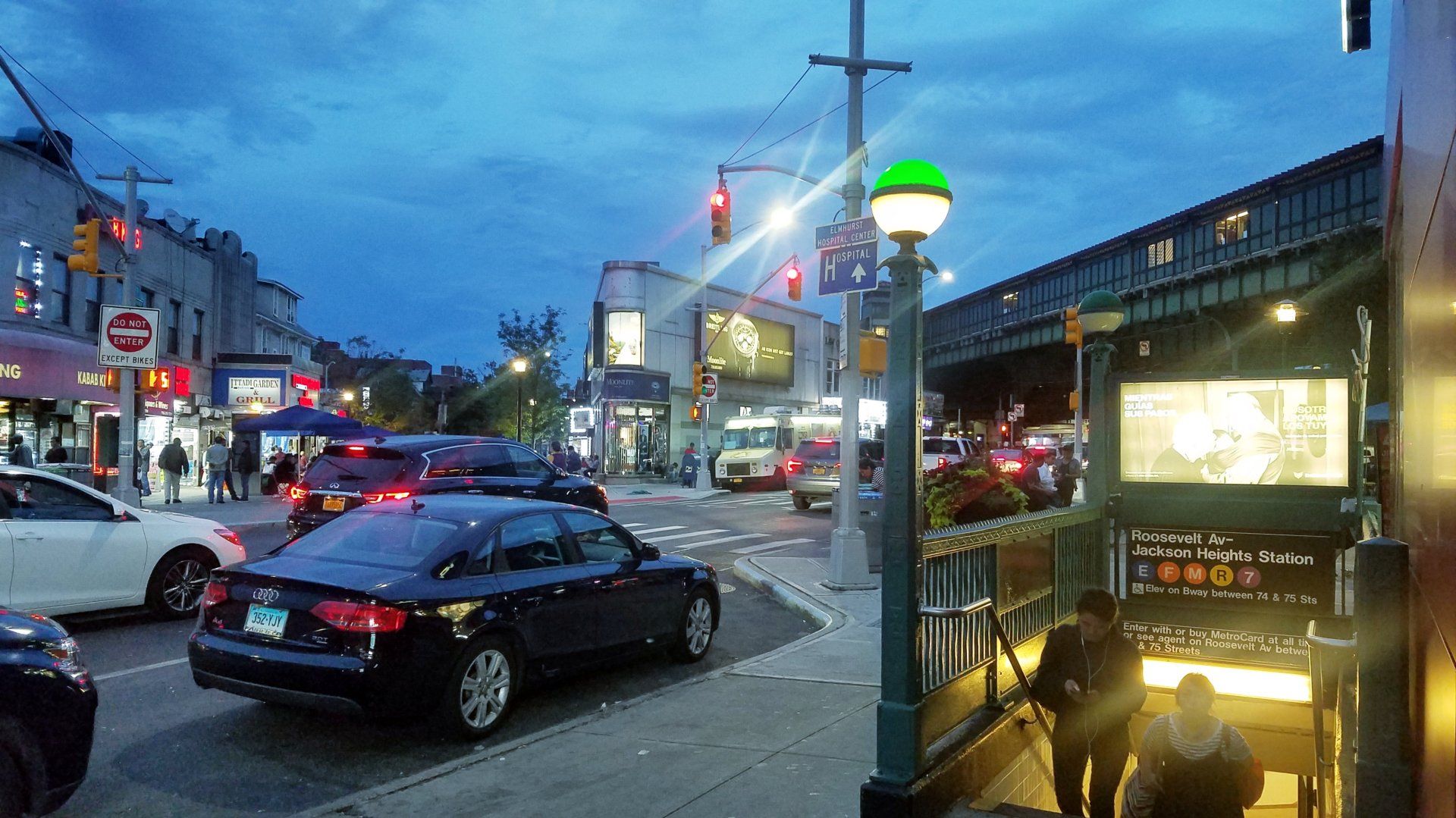
Unlike Manhattan's financial density or Brooklyn's consolidated cultural identity, Queens offers something genuinely different: a borough-wide mosaic of distinct neighborhoods, each with its own economic life and architectural character. From the South Asian and Latin American enclaves of Jackson Heights in Queens to the rapid development reshaping Long Island City just across the East River from Midtown, the borough rewards buyers willing to look beyond the obvious. Flushing Meadows-Corona Park — home to the iconic Unisphere — anchors the borough's geographic and cultural center, while the 7 train and multiple subway and bus lines connect residents directly into Manhattan. For buyers seeking scale, diversity, and long-term appreciation in one of the world's great cities, Queens makes a compelling case.


Community Profile

One of the most extraordinary places to plant roots in the entire country, Queens is home to 2,405,464 residents spread across a borough that pulses with energy and ambition. With a population density of 8,503 people per square mile, daily life here is richly communal — neighbors share sidewalks, parks, and subway platforms with people from virtually every corner of the globe, making Queens one of the most linguistically and culturally diverse urban communities on Earth. That diversity isn't just a talking point; it translates into a lived experience of world-class food, festivals, and neighborhood character that simply cannot be replicated elsewhere.

As part of the New York–Newark–Jersey City metro area — the largest in the nation — Queens offers buyers something rare: a genuine sense of neighborhood belonging within reach of one of the world's great economic engines. For those exploring homes for sale in Queens, NY, the borough rewards careful attention. Distinct neighborhoods like Astoria, Forest Hills, Jamaica, and Flushing each carry their own architectural identity and community rhythm, meaning buyers can find a setting that fits their lifestyle precisely. Whether you're drawn to tree-lined residential streets or vibrant commercial corridors, the sheer scale and variety of houses for sale in Queens, NY means opportunity is always within reach in this irreplaceable corner of New York City.

Things to Do

Outdoor Recreation

Queens offers some of New York City's most spectacular green spaces. Flushing Meadows-Corona Park — the borough's crown jewel and one of the largest urban parks in the city — is home to the iconic Unisphere, a remnant of the 1964 World's Fair that remains a beloved landmark. The park features walking trails, a boating lake, and the Queens Museum. To the west, Forest Park in Woodhaven offers dense woodland trails, a historic carousel, and some of the most peaceful hiking terrain in all of New York City. The Jamaica Bay Wildlife Refuge, part of Gateway National Recreation Area, draws birdwatchers and kayakers year-round along its salt marsh trails.

Arts & Culture

Queens punches well above its weight culturally. The Museum of the Moving Image in Astoria is one of the country's premier film and television museums, offering interactive exhibits and a serious film screening program. Nearby, Kaufman Astoria Studios — one of the oldest active studios in the nation — anchors a creative district with deep cinematic history. The Queens Museum inside Flushing Meadows-Corona Park houses a breathtaking panoramic scale model of all five boroughs. The borough's extraordinary ethnic diversity, with over 160 languages spoken, means cultural festivals happen nearly every weekend in summer, from the Lunar New Year celebrations in Flushing to the vibrant street fairs in jackson heights queens new york.

Dining & Neighborhoods

Nowhere in New York City — arguably nowhere in the world — offers a more thrilling dining landscape than Queens. Flushing's Chinatown along Main Street and the New World Mall food court delivers authentic regional Chinese cuisine rivaling anything in Asia. Jackson Heights is a legendary destination for South Asian, Colombian, Ecuadorian, and Tibetan food, with Roosevelt Avenue serving as its bustling, aromatic spine. The diversity of jackson heights in queens makes it a must-visit for serious food lovers exploring the borough.

Sports & Family Activities

Citi Field, home of the New York Mets, hosts a full Major League Baseball season from spring through fall and offers stadium tours on off-days. Just steps away, Arthur Ashe Stadium at the USTA Billie Jean King National Tennis Center is the world's largest tennis stadium and the centerpiece of the US Open each August and September — one of New York's most electric annual sporting events. Families can also enjoy the Queens Zoo inside Flushing Meadows-Corona Park, a compact and engaging wildlife experience perfect for younger visitors.

Latest Properties in Queens

Loading...

Loading latest properties...

See All Properties in Queens

History

From Dutch Farmland to Global Borough

Queens has one of the longest and most layered histories of any place in New York. The territory was home to Algonquian-speaking peoples — including the Rockaway, Merrick, and Matinecock — long before European contact. Dutch colonizers arrived in the 1630s, establishing early land grants in what is now Long Island City, followed by English settlers who founded a permanent outpost at Maspeth in 1642. The borough's formal identity took shape on November 1, 1683, when Queens County was created as one of the original twelve counties of the Province of New York, named in honor of Catherine of Braganza, queen consort of King Charles II.

For most of the next two centuries, Queens remained largely agricultural — a patchwork of farms, orchards, and nurseries surrounding village centers like Flushing and Jamaica. That changed dramatically in the mid-19th century. The New York and Flushing Railroad, operational by 1854, connected western Queens to Manhattan, triggering the first wave of planned residential communities. Developments like Richmond Hill (1869) introduced the tree-lined, single-family streetscapes that still define much of the borough's residential character today.

The decisive turning point came in 1898, when Queens was incorporated into New York City. The 20th century brought subway lines, the 1939 and 1964 World's Fairs at Flushing Meadows-Corona Park, and postwar housing construction that shaped neighborhoods across the borough. Immigration transformed Queens further — communities like Jackson Heights, Queens, New York became famously dense, diverse, and architecturally distinctive. Today, that history of layered settlement is precisely what drives real estate demand: buyers aren't just purchasing homes, they're buying into neighborhoods with genuine, irreplaceable character.

Weather

Four Seasons in Queens

Queens falls under a humid subtropical climate (Köppen Cfa), a classification it shares with the broader New York City metro area. Positioned on the western end of Long Island and surrounded on multiple sides by water — the East River, Jamaica Bay, and Long Island Sound — the borough experiences meaningful coastal moderation that softens temperature extremes compared to inland areas at the same latitude.

Summers are warm and humid, with daytime highs typically ranging from the mid-80s to low 90s°F and overnight lows settling in the upper 60s to low 70s. Winters are cold but rarely brutal, with average highs in the mid-30s to low 40s°F and lows dipping into the mid-20s. Snowfall occurs each winter, though coastal proximity means precipitation often falls as rain rather than snow, and accumulations tend to be lighter than in inland New York suburbs. Spring and fall are genuinely pleasant, with mild temperatures and vivid seasonal transitions.

Annual rainfall is fairly evenly distributed throughout the year, averaging around 46–50 inches, with the occasional nor'easter or tropical remnant bringing heavy precipitation in late summer and fall. Humidity is a persistent summer feature across the borough, from the rowhouse blocks of Jackson Heights, Queens, New York to the waterfront neighborhoods along the bay.

For real estate purposes, the climate means meaningful heating and cooling costs, a genuine need for weather-tight windows and roofing, and the opportunity to enjoy outdoor spaces — patios, gardens, and parks — for a solid six to seven months of the year.

Queens Market Analytics

The Queens real estate market is showing signs of stability and growth, with the average home value increasing by 5.1% over the past year to $739,475, according to data analyzed by Opulist. This suggests that the market is balancing out, with a sale-to-list ratio of 0.978, indicating that homes are selling for close to their listed prices. Additionally, the median days to pending is around 70 days, which is a relatively moderate pace, indicating a healthy and active market.


1-Year Home Value Change: +5.1%

Queens Home Value Index over time.

Can I Afford Queens?
$
%
$0
Est. Monthly Payment
$0/yr
Salary Required

*Principal & interest only. Salary based on 28% debt-to-income ratio.

Get Pre-Approved for Queens