
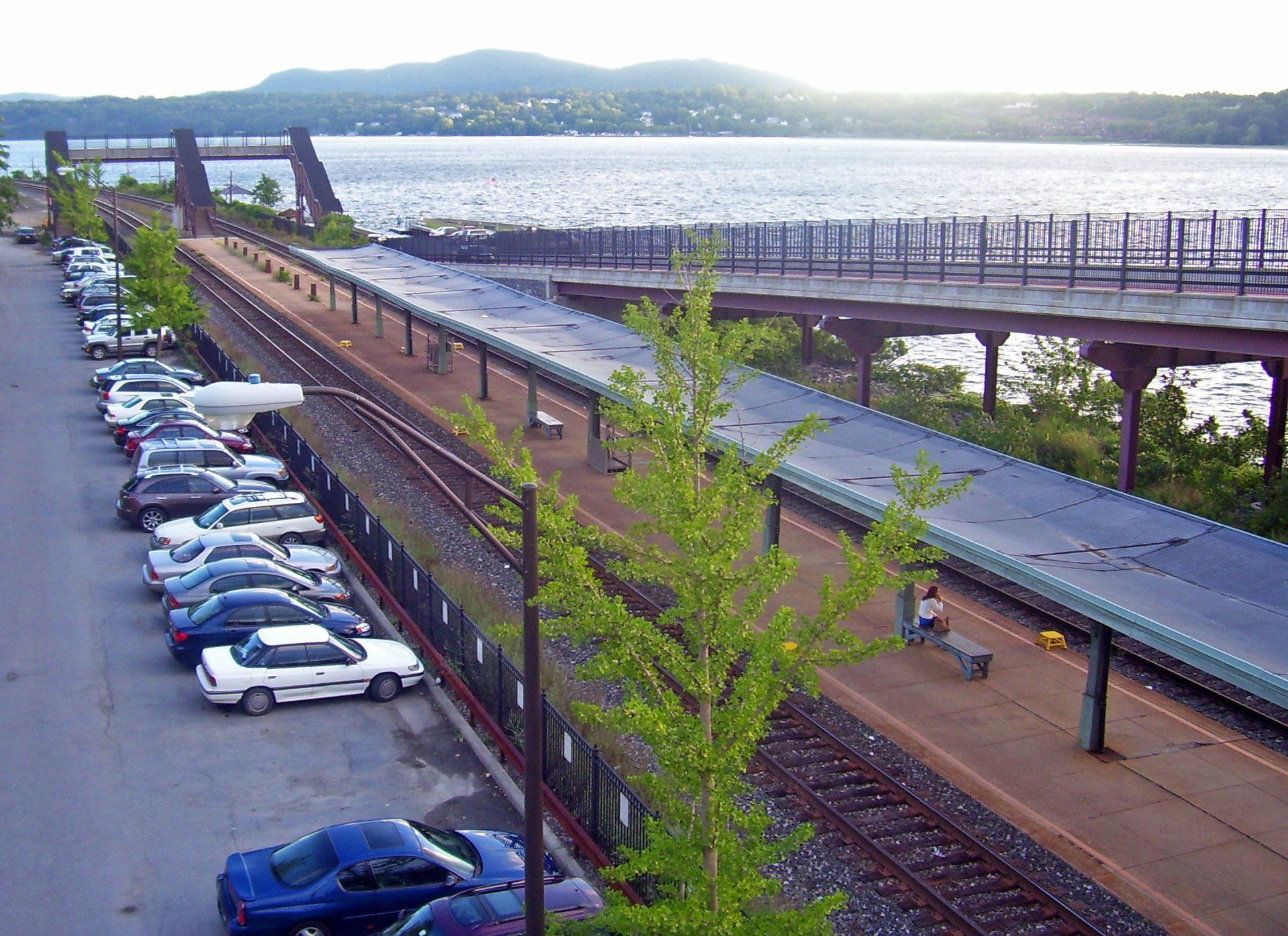
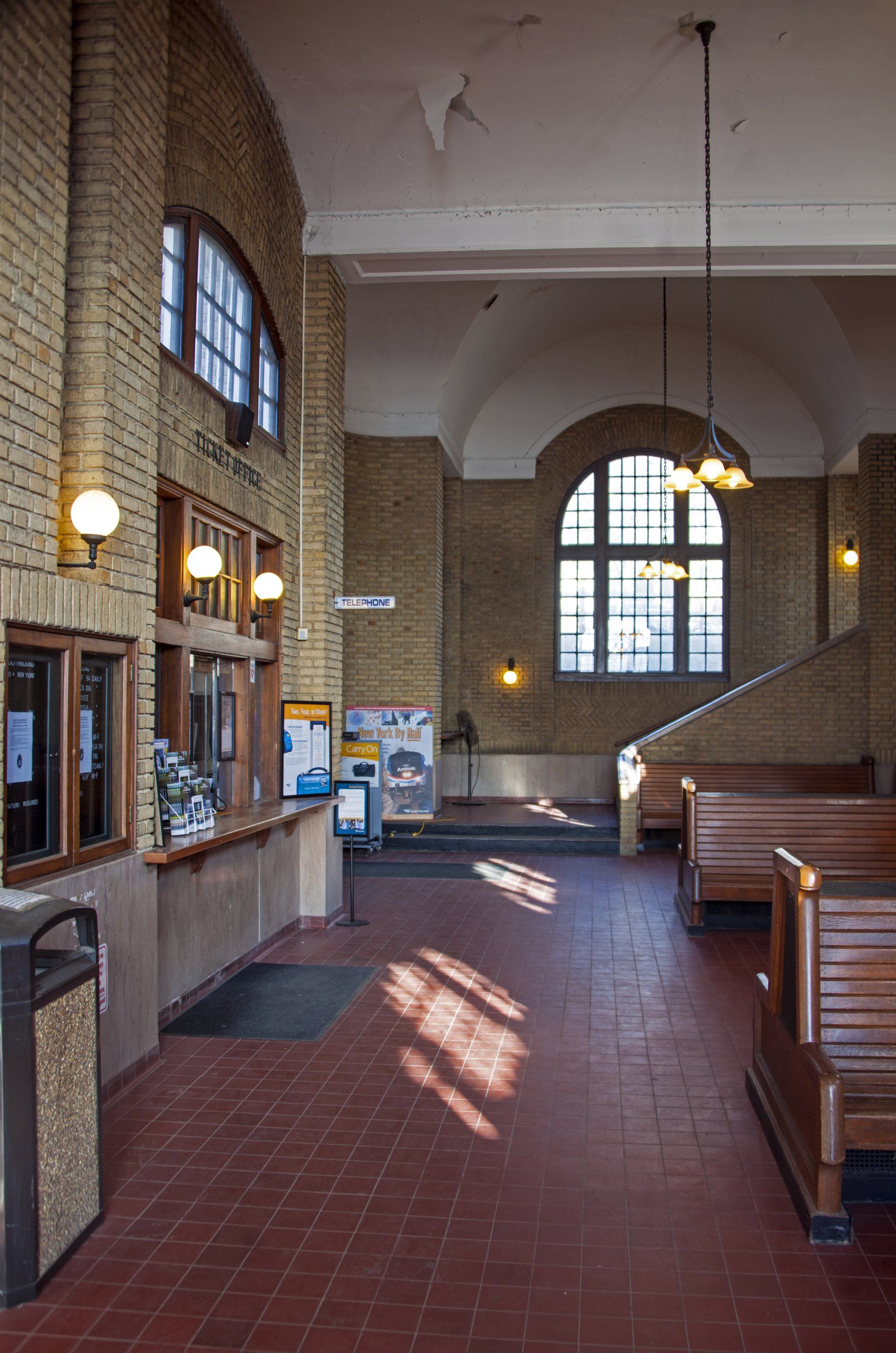
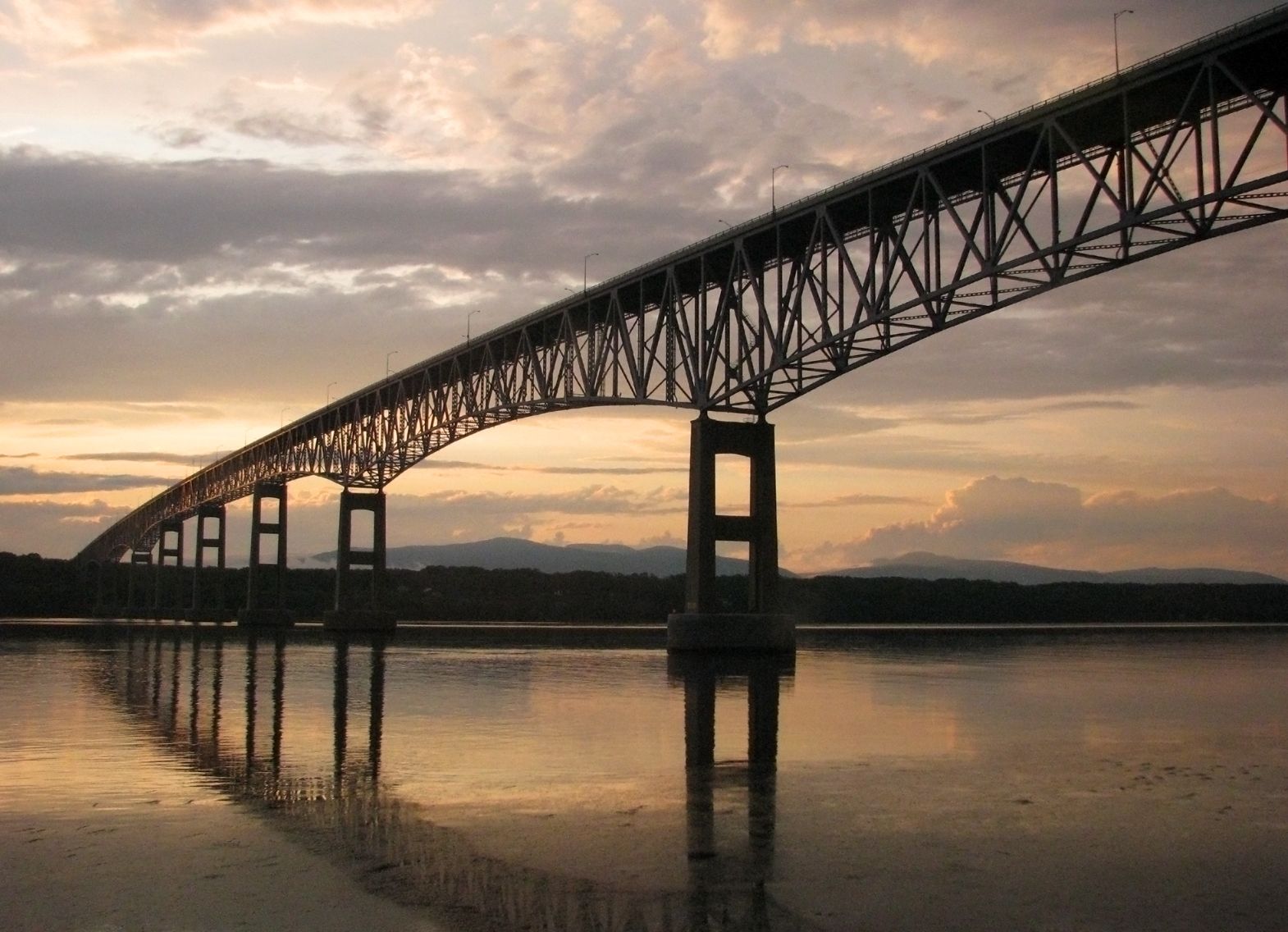
Rhinecliff is a hamlet of just 380 residents perched along the western edge of the town of Rhinebeck in northern Dutchess County — and what it lacks in size it more than compensates for in historical depth and natural drama. Founded in 1686 by Dutch settlers along the eastern bank of the Hudson River, it is one of the oldest intact hamlets on the river, and its listing as a contributor to the Hudson River National Historic Landmark District — the largest National Historic Landmark designation in the country — reflects a built environment that has remained remarkably unchanged for over a century. Unlike the more commercially developed Rhinebeck village just a mile to the east, Rhinecliff retains the quiet, unhurried character of a 19th-century river hamlet, with narrow winding roads, steep slate ridges, and modest frame houses oriented as much by topography as by any formal plan. The Rhinecliff Amtrak station provides direct rail service to New York City, and the Kingston–Rhinecliff Bridge connects the hamlet westward across the Hudson. For buyers exploring homes for sale in Rhinecliff NY, this is a place where history, landscape, and accessibility converge — and where the Hudson Valley's continued cultural and economic momentum makes the case for investing here stronger every year.
Welcome to Rhinecliff
Community Profile
Tucked along the Hudson River in Dutchess County, this intimate hamlet of just 669 residents punches well above its weight in education, affluence, and community stability. With 66.7% of adults holding a bachelor's degree or higher — more than double the national average of roughly 33% — and an impressive 42.6% carrying graduate-level credentials, Rhinecliff attracts the kind of thoughtful, accomplished residents who choose quality of place deliberately. That intellectual capital translates directly into economic strength: 55.8% of households earn six figures, and a remarkably low unemployment rate of just 1.6% reflects a community where nearly everyone who wants to work is working.
For those browsing homes for sale in Rhinecliff, NY, the ownership story is especially compelling. A 94% homeownership rate — far above the national norm of 65.5% — signals deep roots and genuine investment in the community. Median home values sit at $703,150, reflecting both the Hudson Valley's enduring desirability and the premium that comes with river views and historic character. The poverty rate of just 4.3% and a 0% uninsured rate round out a picture of a community that is not only prosperous but genuinely secure. With a median age of 35.8 years and a notable 37.5% of residents in their twenties alongside a seasoned population of retirees, Rhinecliff offers a rare generational blend — youthful energy anchored by long-established wisdom — all within a setting of quiet, riverside distinction.
Things to Do
Outdoor Recreation & Waterfront
Rhinecliff's greatest natural asset is its dramatic position along the Hudson River, where the steep slate ridges and cliffs that gave the hamlet its name create some of the most striking riverfront scenery in Dutchess County. The waterfront offers sweeping views across the water toward the Catskill Mountains — a panorama that has drawn artists, writers, and nature lovers for centuries. The Kingston–Rhinecliff Bridge, officially the George Clinton Kingston–Rhinecliff Bridge, is more than just a crossing; since 2020 it has been integrated into the Empire State Trail, a 750-mile multi-use path stretching from New York City to the Canadian border. Cyclists and pedestrians can traverse the bridge's shoulders for a truly memorable Hudson River experience.
Arts, Culture & History
Few hamlets this small carry such a rich cultural footprint. The Morton Memorial Library, built in 1908 and endowed by Levi P. Morton and his wife Anna in memory of their daughter, is a beloved community institution and a beautiful piece of local history in its own right. Rhinecliff itself is listed on the National Register of Historic Places as a contributor to the Hudson River National Historic Landmark District — at 20 miles long, the largest National Historic Landmark designation in the entire country. Simply walking the hamlet's winding, narrow roads past its 19th-century frame houses is a living history lesson. The Rhinecliff Hotel, which dates to around 1855, anchors the hamlet's historic streetscape near the river.
Day Trips & Regional Attractions
Rhinecliff sits just one mile west of Rhinebeck village, where you'll find a lively mix of restaurants, boutiques, and cultural venues. The historic Rhinecliff Amtrak station connects the hamlet to New York City in roughly two hours, making it a natural base for Hudson Valley exploration. Kingston, directly across the river, is easily reached via the bridge and offers additional dining, galleries, and the historic Stockade District. Families and outdoor enthusiasts will find the broader Hudson Valley rich with farm stands, apple orchards, and hiking trails, particularly in fall when the foliage along the river is spectacular.
Local Character
With a population of just 380, Rhinecliff rewards slow exploration. The hamlet's Scenic Area of Statewide Significance designation speaks to what residents and visitors alike already know: this is one of the Hudson Valley's most quietly beautiful places. Those browsing homes for sale in Rhinecliff NY often discover that the lifestyle here — unhurried, historically rich, and oriented toward the river — is as much of a draw as any single attraction.
Latest Properties in Rhinecliff
Loading latest properties...
History
From Kipsbergen to Rhinecliff: A History Rooted in the Hudson
The land that is now Rhinecliff has been continuously inhabited since 1686, when five Dutch settlers — among them Hendrikus and Jacobus Kip — crossed the Hudson from Kingston to establish a settlement on the eastern shore they called Kipsbergen. Though England had already absorbed the former Dutch colony of New Netherland by that point, the Dutch character of the region persisted, and the riverside location these early settlers chose proved enduringly significant.
The hamlet's modern identity took shape in the 1850s, when the Hudson River Railroad opened a station at what was then called Shatzell's Dock in 1852. Real estate developer Charles Handy Russell — who also owned the ferry service to Kingston — seized on the rail connection to build a small village around the station. His architect and builder, George Veitch, coined the name "Rhinecliff," a nod to both Rhinebeck and the dramatic cliffs lining the river. The Rhinecliff Hotel opened around 1855, and the post office officially adopted the name in 1861. This mid-nineteenth-century building boom defined the hamlet's physical form — its narrow winding roads, modest frame houses, and steep slate-ridge topography — in ways that have barely changed in over 150 years.
That extraordinary continuity is precisely what drives today's real estate market. The hamlet has been listed on the National Register of Historic Places as a contributor to the Hudson River National Historic Landmark District, and its boundaries and building density have remained essentially stable for a century. Anyone browsing homes for sale in Rhinecliff NY quickly discovers that inventory is rare, properties are deeply individual, and the 19th-century streetscape is not a backdrop — it is the neighborhood.
Weather
Four Seasons on the Hudson
Rhinecliff sits in the humid continental climate zone characteristic of the mid-Hudson Valley, where the river's presence and the surrounding Dutchess County landscape shape a full four-season experience. Summers are warm and moderately humid, with daytime highs typically ranging from the mid-80s°F and overnight lows settling into the mid-60s. Winters are genuinely cold — expect average highs in the low-to-mid 30s°F and lows that regularly dip into the teens, with the Hudson River corridor occasionally funneling sharp Arctic air down the valley.
Annual precipitation is fairly evenly distributed throughout the year, averaging roughly 45 to 50 inches, with snowfall accumulations that can reach 30 to 40 inches in a typical winter season. The river itself moderates temperatures slightly compared to inland areas, but Rhinecliff's steep slate ridges and narrow valley topography can create localized wind effects that make winters feel more biting than the numbers suggest. Spring arrives gradually, bringing reliable rainfall and the lush greenery that makes the Hudson Valley so celebrated. Autumn is spectacular — crisp, dry air and vivid foliage make this one of the most scenic seasons in the region.
For those considering a house for sale in Rhinecliff NY, the climate carries real practical weight. Older 19th-century frame homes — which define much of the hamlet's character — benefit from thoughtful weatherization and efficient heating systems to manage winter energy costs. Summer outdoor living is genuinely rewarding, with river breezes tempering the heat, though seasonal maintenance of roofs, foundations, and drainage is essential given the combination of freeze-thaw cycles and consistent precipitation year-round.
Rhinecliff Market Analytics
Can I Afford Rhinecliff?
Weather