
Sloatsburg, New York

Location:
Sloatsburg, NY

Welcome to Sloatsburg

Incorporated on October 7, 1929, Sloatsburg, New York sits at the southern gateway to Harriman State Park in Rockland County — a geographic distinction that sets it apart from every other small village in the region. While neighboring communities in Ramapo are defined primarily by suburban density, Sloatsburg backs up directly against one of the largest state parks in the country, giving residents immediate access to thousands of acres of trails, lakes, and open ridgeline. The Ramapo River runs through the village itself, and the 45-acre Eleanor Burlingham Memorial Park along its banks offers hiking, fishing, and wildlife watching just minutes from home.

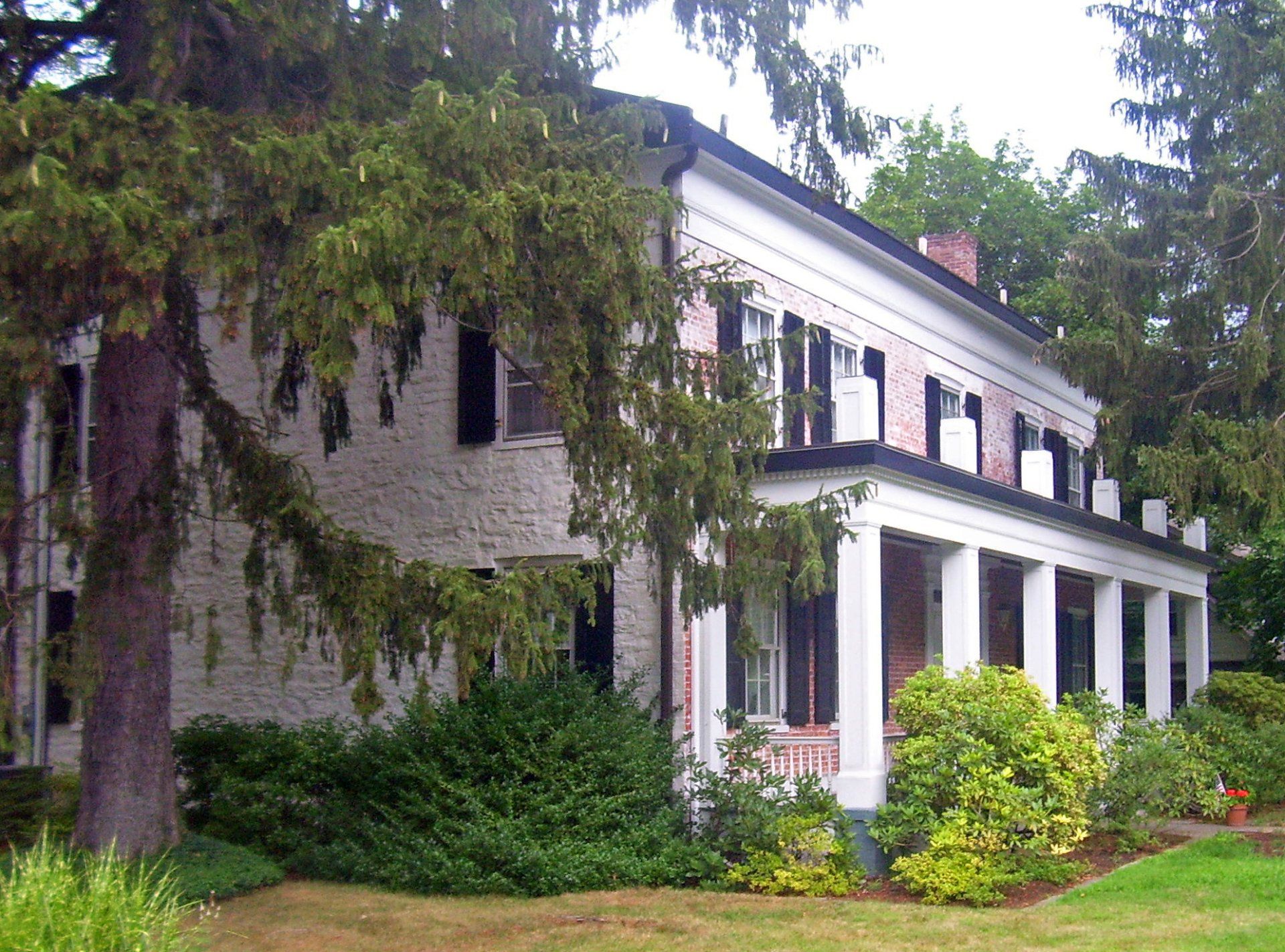
The village carries genuine history — the Sloat House, where General George Washington once set up a command post in 1779, still stands as a listed property on the National Register of Historic Places. That sense of depth and continuity is woven into the character of the place. Students here are served by the Suffern Central School District, and commuters can reach Midtown Manhattan via the nearby Port Jervis Line rail connection and quick access to the New York State Thruway. For buyers exploring homes for sale in Sloatsburg, NY, this combination of natural surroundings, historical character, and practical transit access makes the village a compelling place to put down roots as demand for livable, connected communities continues to grow.


Community Profile

Tucked into the Ramapo Mountains at the southern gateway to Harriman State Park, this small Rockland County village punches well above its weight when it comes to economic vitality. With a median household income of $108,043 — nearly 44% above the national median — and a remarkable 58.5% of households earning six figures or more, Sloatsburg attracts residents who have found a way to access New York Metro opportunity without sacrificing the quiet rhythms of small-town life. The community's homeownership rate of 87.5% is extraordinary, more than 22 points above the national average, signaling deep roots and long-term commitment to the village.

At a median age of 41.4 years, Sloatsburg skews slightly older than the national norm, reflecting a mix of established families and active empty-nesters who value stability. The average family size of 3.65 people and a strong youth cohort — with 18.2% of residents between ages 10 and 19 — speak to a community where children are very much part of the fabric. Two-thirds of families bring in dual incomes, and educational attainment is impressive: 37.5% hold a bachelor's degree or higher, with 18.2% holding a graduate degree. The poverty rate of just 5.4% and an uninsured rate of only 3.2% round out a picture of genuine economic security. For those exploring homes for sale in Sloatsburg, NY, the median home value of $429,226 represents a compelling entry point into one of the New York Metro area's most tightly held and community-minded villages.

Things to Do

Outdoor Recreation

Sloatsburg's greatest claim to fame may well be its position as the southern gateway to Harriman State Park, one of the largest state parks in the country at over 47,000 acres. Hikers, mountain bikers, and nature lovers have virtually unlimited trail access just minutes from the village center, with terrain ranging from gentle woodland walks to challenging ridge climbs with sweeping Hudson Valley views. Closer to home, the Eleanor Burlingham Memorial Park offers 45 acres of wooded floodplain along the Ramapo River, with hiking trails, fishing spots, and excellent wildlife viewing in a serene natural setting — a genuine gem for a village of just 2.5 square miles.

History & Culture

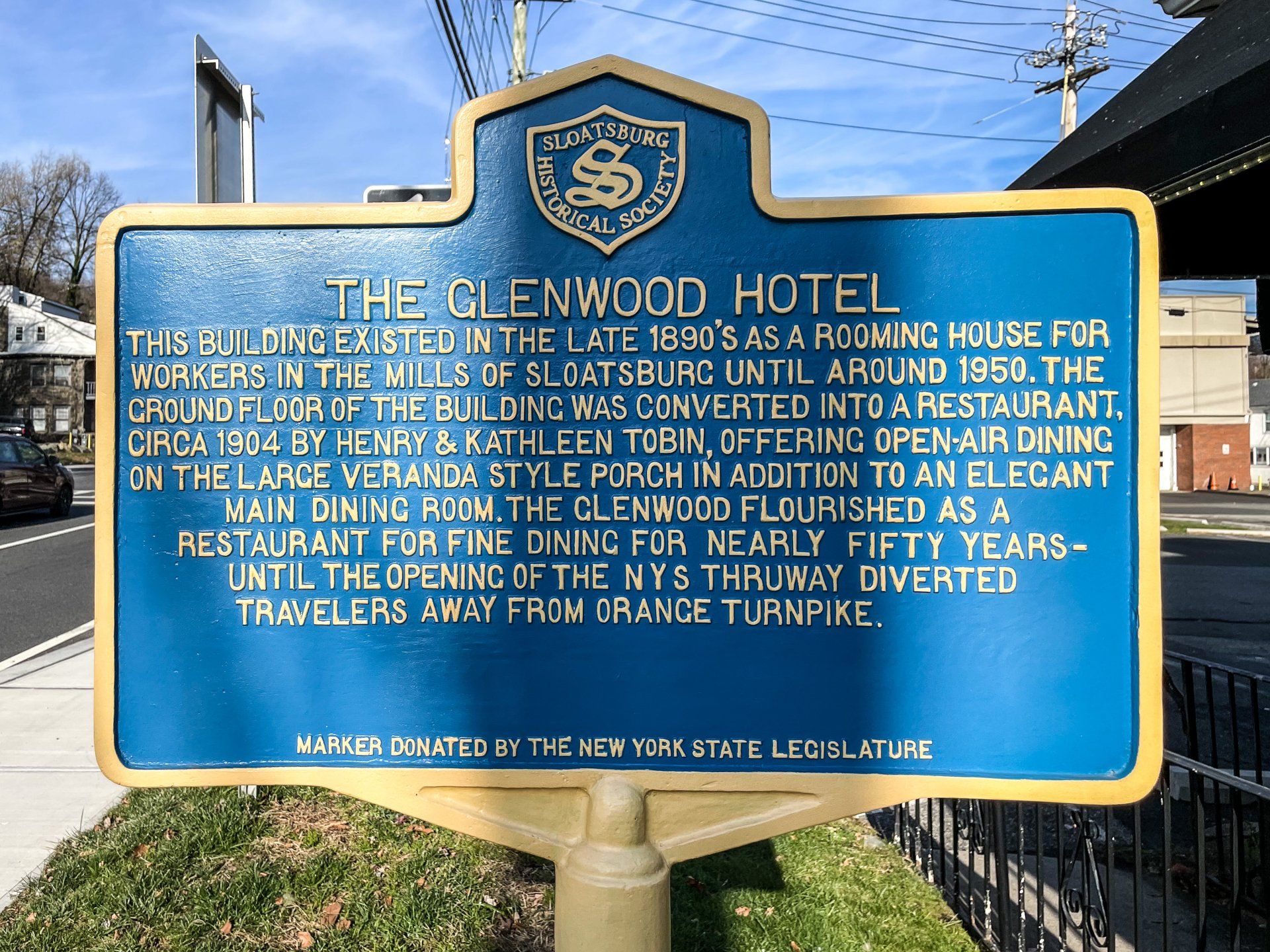
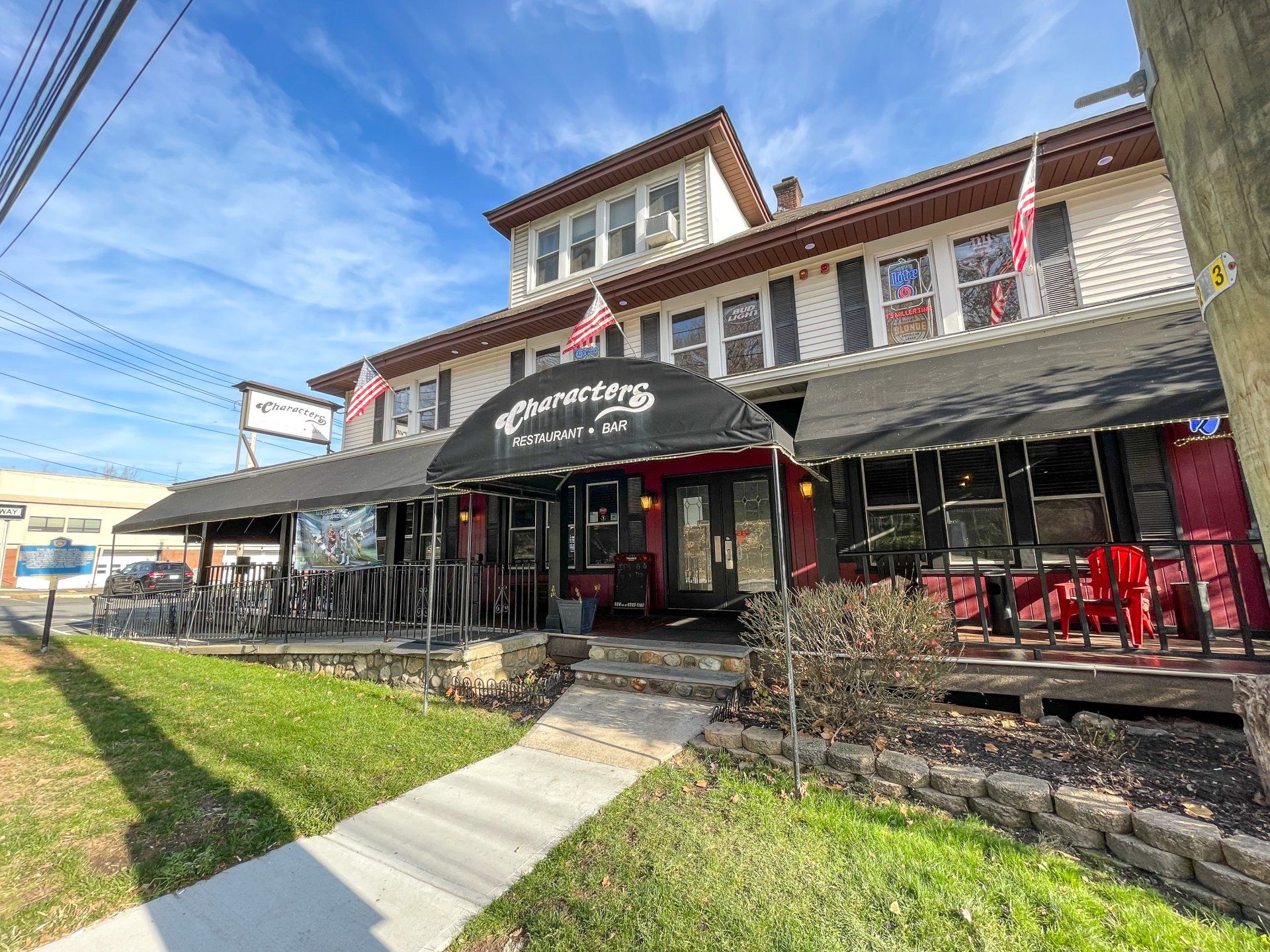
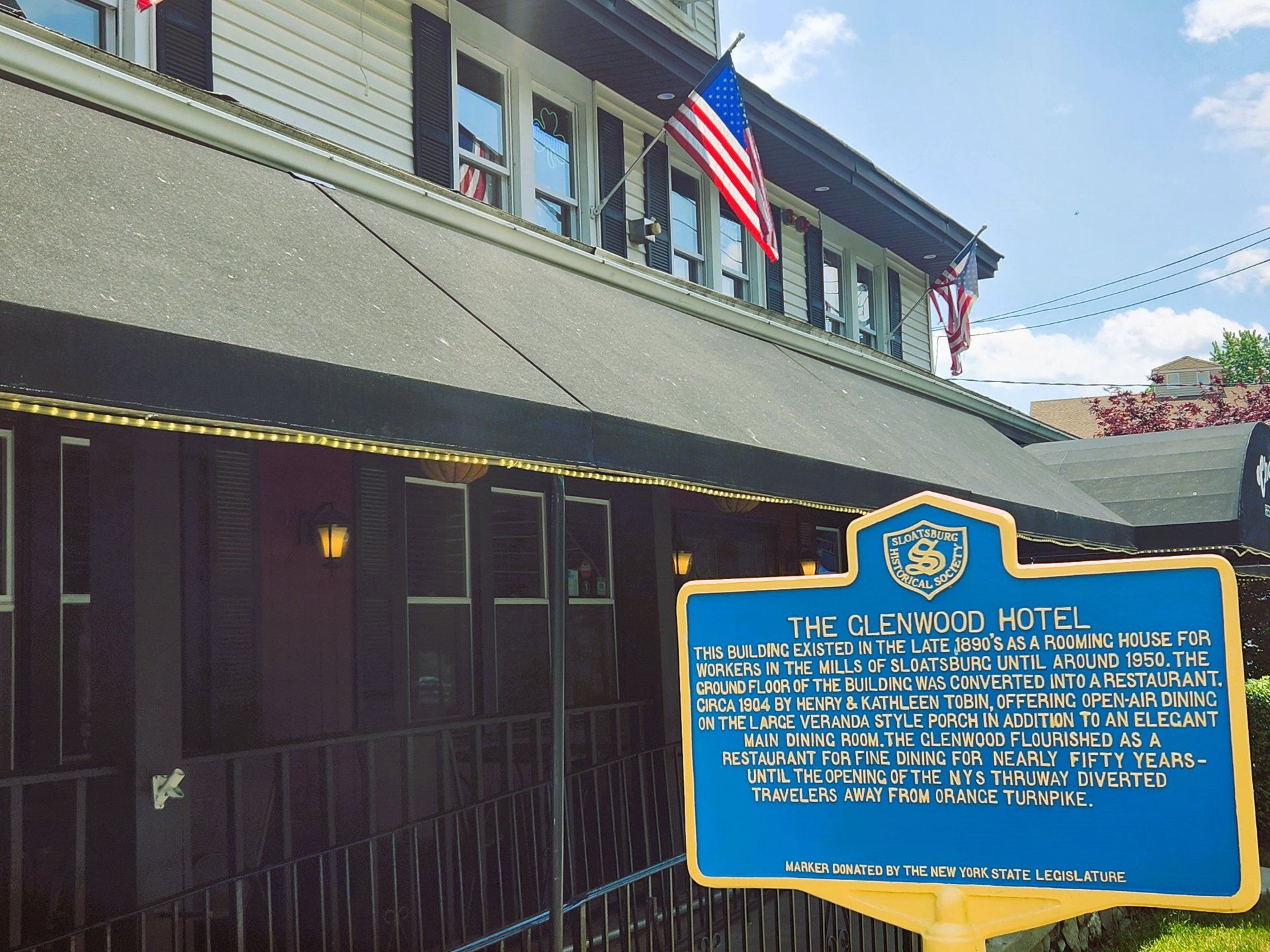
History runs deep here, and exploring it is a rewarding way to spend an afternoon. The Sloat House, a private residence listed on the National Register of Historic Places, dates to the mid-1700s and served as a Revolutionary War command post where General George Washington himself stayed in June 1779. The Old Sloatsburg Cemetery, also on the National Register, contains burials dating to the Revolutionary War era. The Glenwood Hotel, established in 1908, is another storied landmark with a colorful history as a mill workers' boarding house and, according to local lore, a Prohibition-era hotspot. The village historical society keeps this rich past alive through community events and programming throughout the year.

Dining & Local Flavor

Sloatsburg's compact village center along Route 17 offers a relaxed, small-town dining scene with casual eateries and local spots that reflect the community's unpretentious character. The area's proximity to both Rockland County's broader dining corridor and the Hudson Valley wine and farm country means that weekend culinary adventures are never far away.

Family Activities & Day Trips

Families considering homes for sale in Sloatsburg NY will appreciate how much is accessible within a short drive. Sterling Forest State Park and Ringwood State Park are both nearby, offering swimming, picnicking, and seasonal programming. New York City is roughly 35 miles southeast, reachable by NJ Transit rail or a straightforward highway run — making Sloatsburg a genuine basecamp for both wilderness weekends and urban day trips. Seasonal events organized through the village and its chamber of commerce bring neighbors together throughout the year, reinforcing the tight-knit community feel that defines life here.

Latest Properties in Sloatsburg

Loading...

Loading latest properties...

See All Properties in Sloatsburg

History

From Revolutionary Outpost to Rockland Retreat

Sloatsburg's story begins long before European contact. The Minsi band of the Leni Lenape used the Ramapo Pass as a major trail corridor for thousands of years — a route so strategically valuable that it shaped every era of the village's development. In 1738, Dutch colonist Wynant Van Gelder purchased the land from the Minsi, and by 1763 it had passed to Stephen Sloat, who built a stone house and opened a tavern along the New York-to-Albany stage route. That tavern became a Revolutionary War command post; General George Washington stayed there on June 6, 1779, using the pass to guard against British movement through the mountains.

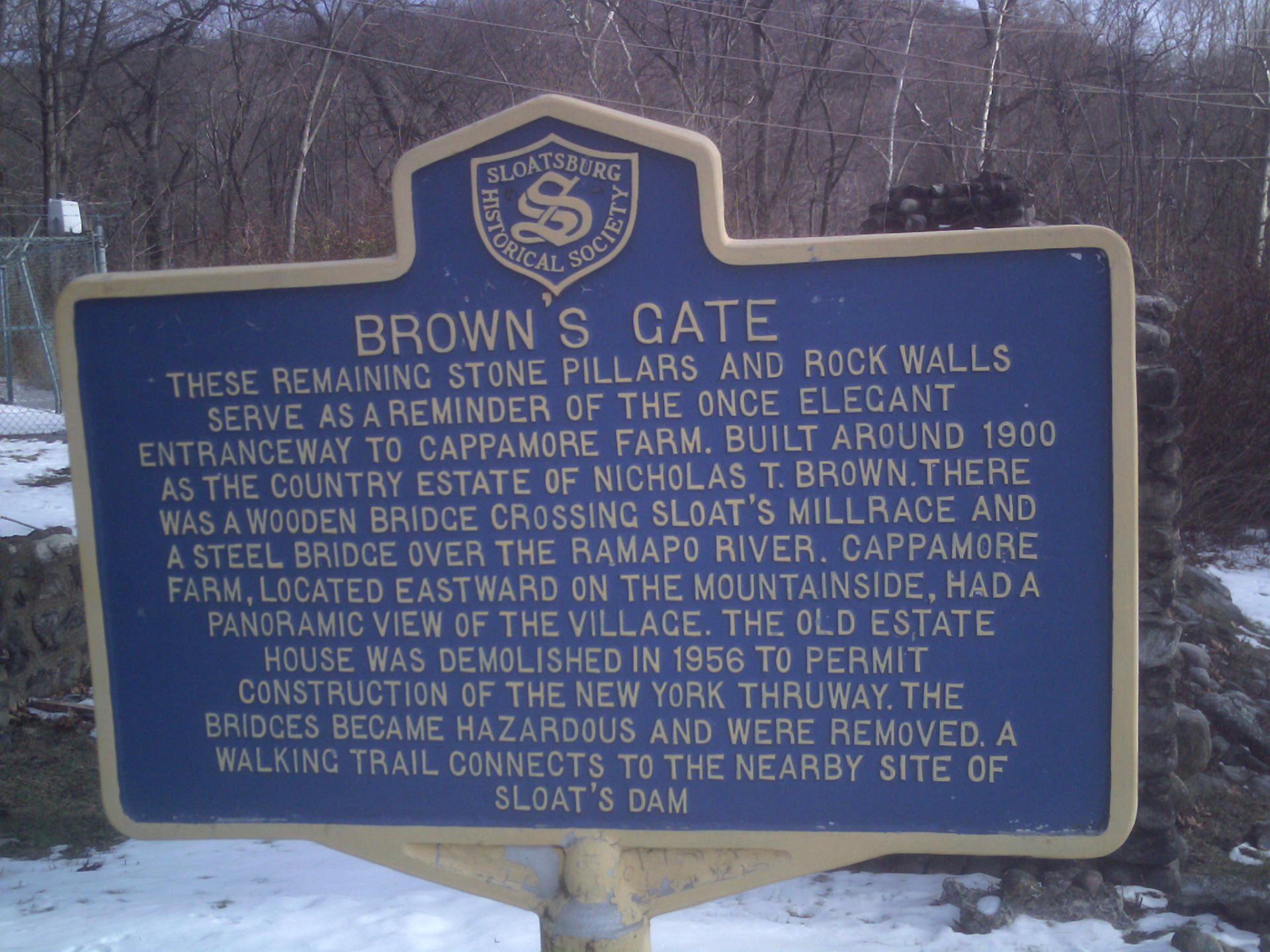
The 19th century transformed Sloatsburg into a working industrial village. The Sloat family added a tannery and, in 1815, Jacob Sloat opened a cotton mill on the Ramapo River that at its peak produced roughly 8,000 pounds of twine per week. Abram Dater added an iron forge, and between 1836 and 1841 the Erie Railroad pushed a line through town, spurring a surge in population and commerce. The catastrophic flood of October 1903 ended much of that era — the Ramapo overflowed and destroyed most of the riverside factories, many of which were never rebuilt.

The village incorporated on October 7, 1929, with David Henion as its first mayor. The construction of the New York State Thruway in the 1950s bypassed the old Orange Turnpike corridor, quieting through-traffic and cementing Sloatsburg's identity as a residential enclave rather than a commercial crossroads. That shift is still visible today: the village retains a compact, small-town character shaped by its industrial past and bounded by the protected lands of Harriman State Park. For buyers exploring homes for sale in Sloatsburg NY, that history translates into a community where 19th-century stone foundations, modest mid-century homes, and forested hillsides coexist within 2.5 square miles — a rare combination in the greater New York metro area.

Weather

Four Seasons in the Ramapo Valley

Sloatsburg, New York experiences a humid continental climate, shaped by its position in the Ramapo River valley at the foot of the Ramapo Mountains in Rockland County. This geography gives the village distinctly defined seasons with meaningful temperature swings throughout the year. Summer highs typically reach the mid-to-upper 80s°F, with overnight lows settling in the mid-60s. Winters are cold and brisk, with daytime highs generally in the low-to-mid 30s°F and lows that frequently dip into the teens and low 20s.

Precipitation is distributed fairly evenly across all four seasons, averaging roughly 45–50 inches annually. The surrounding highlands can enhance snowfall totals compared to lower elevations closer to the Hudson, and residents should expect meaningful accumulation each winter. Spring and summer bring periodic thunderstorms, while autumn is typically crisp and dry — one of the most celebrated seasons in this part of the Hudson Valley region.

For anyone exploring homes for sale in Sloatsburg, NY, the climate carries real practical implications. The cold winters mean heating costs are a genuine budget consideration, and older homes in the village benefit from thoughtful weatherization. Snow removal and roof maintenance are seasonal realities. On the upside, the warm summers and spectacular fall foliage make outdoor living genuinely rewarding, with Harriman State Park essentially at the doorstep. Sloatsburg real estate appeals strongly to buyers who embrace all four seasons rather than merely tolerate them.

Sloatsburg Market Analytics

The Sloatsburg, New York housing market is showing signs of stability, with the average home value increasing by 1.8% over the past year to $535,947, according to data analyzed by Opulist. This moderate growth suggests that the market is balancing, with neither buyers nor sellers having a significant advantage. As a result, now may be a good time to buy or sell a home in Sloatsburg, as the market is not experiencing extreme fluctuations.


1-Year Home Value Change: +1.8%

Sloatsburg Home Value Index over time.

Can I Afford Sloatsburg?
$
%
$0
Est. Monthly Payment
$0/yr
Salary Required

*Principal & interest only. Salary based on 28% debt-to-income ratio.

Get Pre-Approved for Sloatsburg