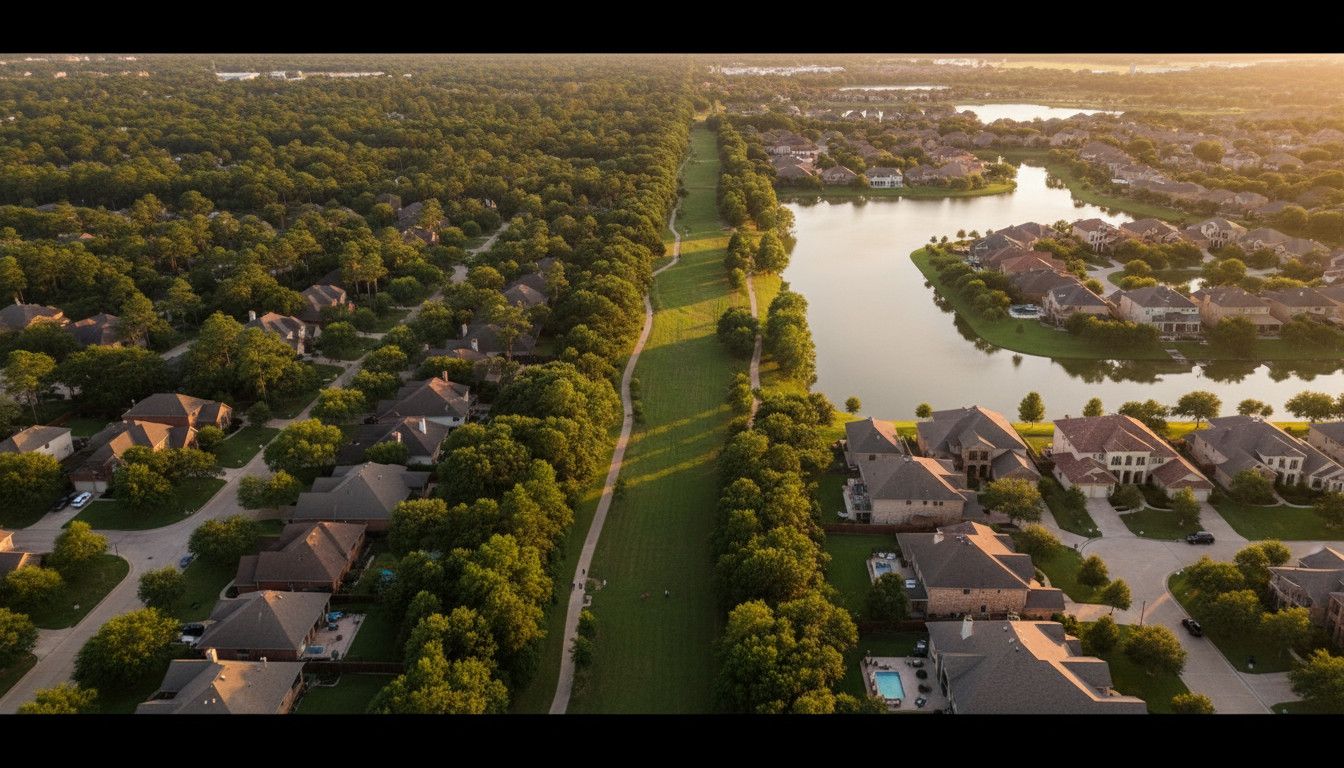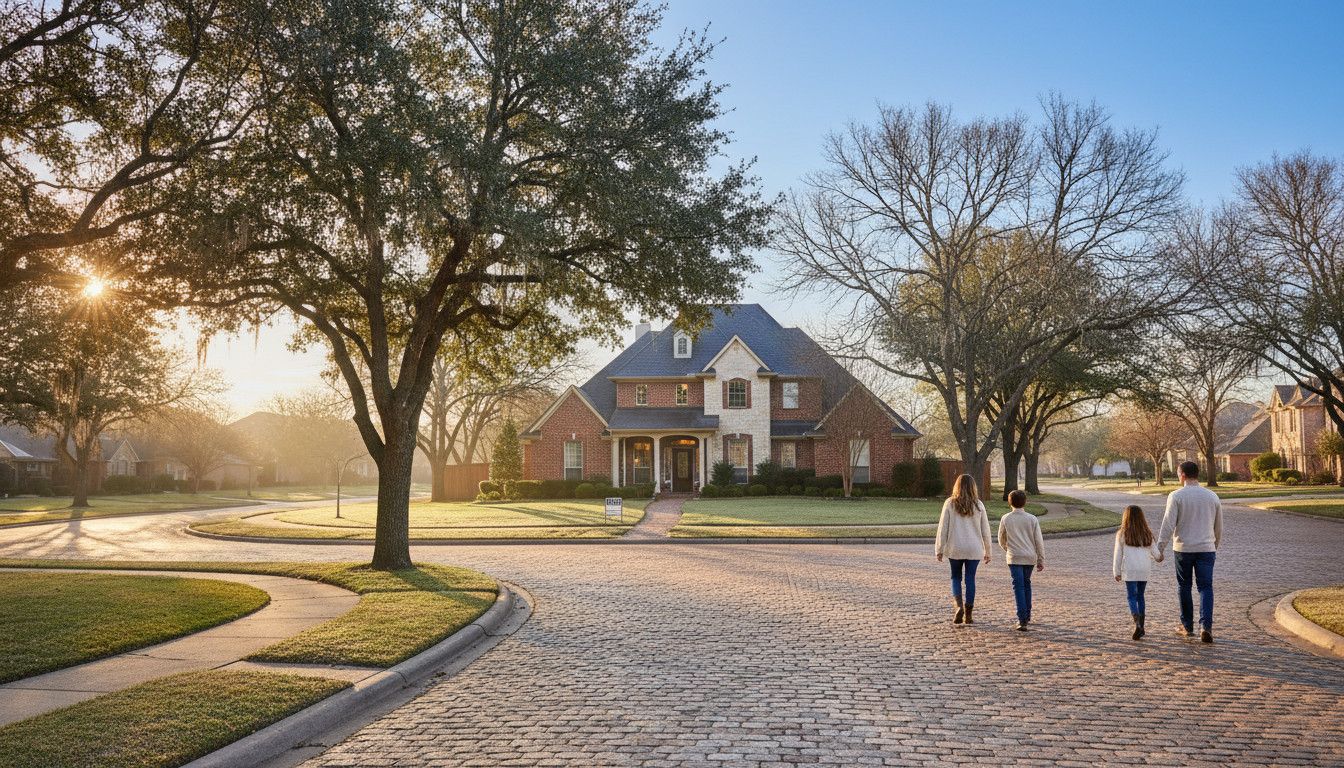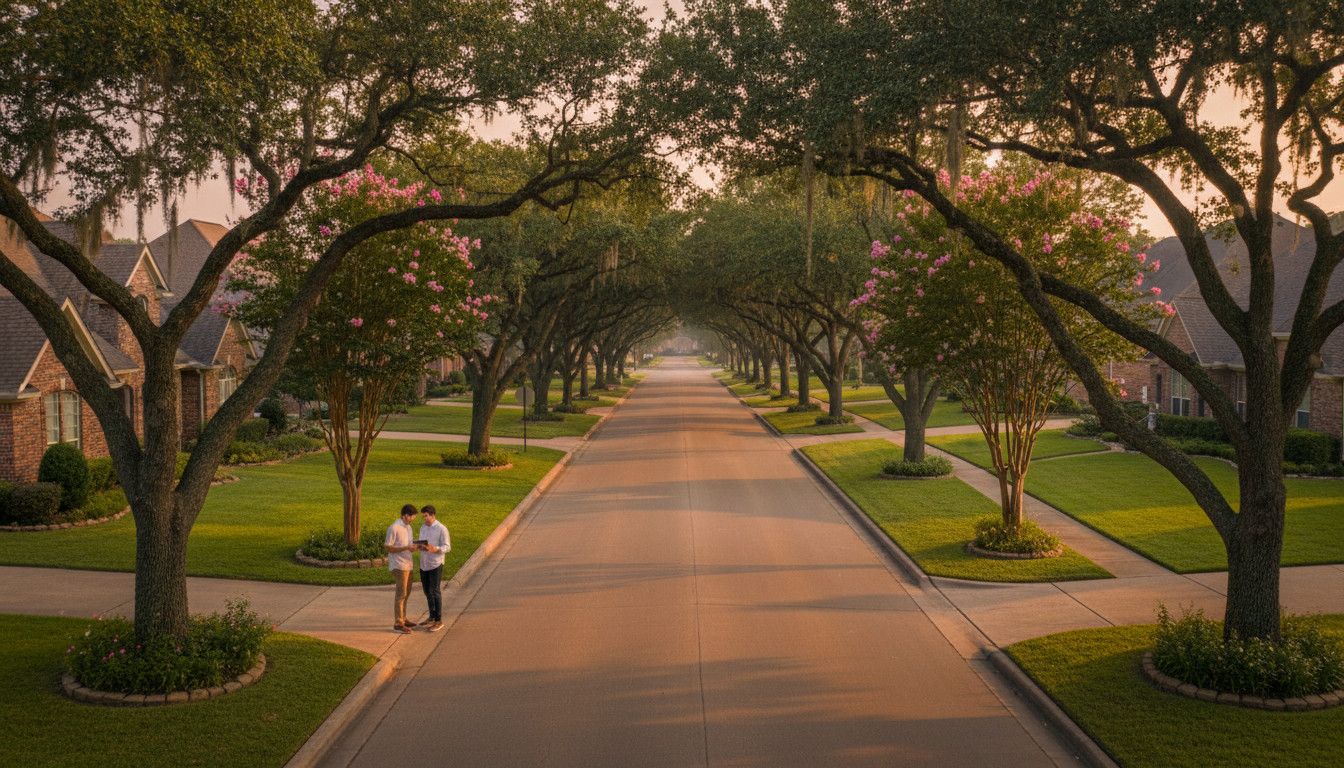
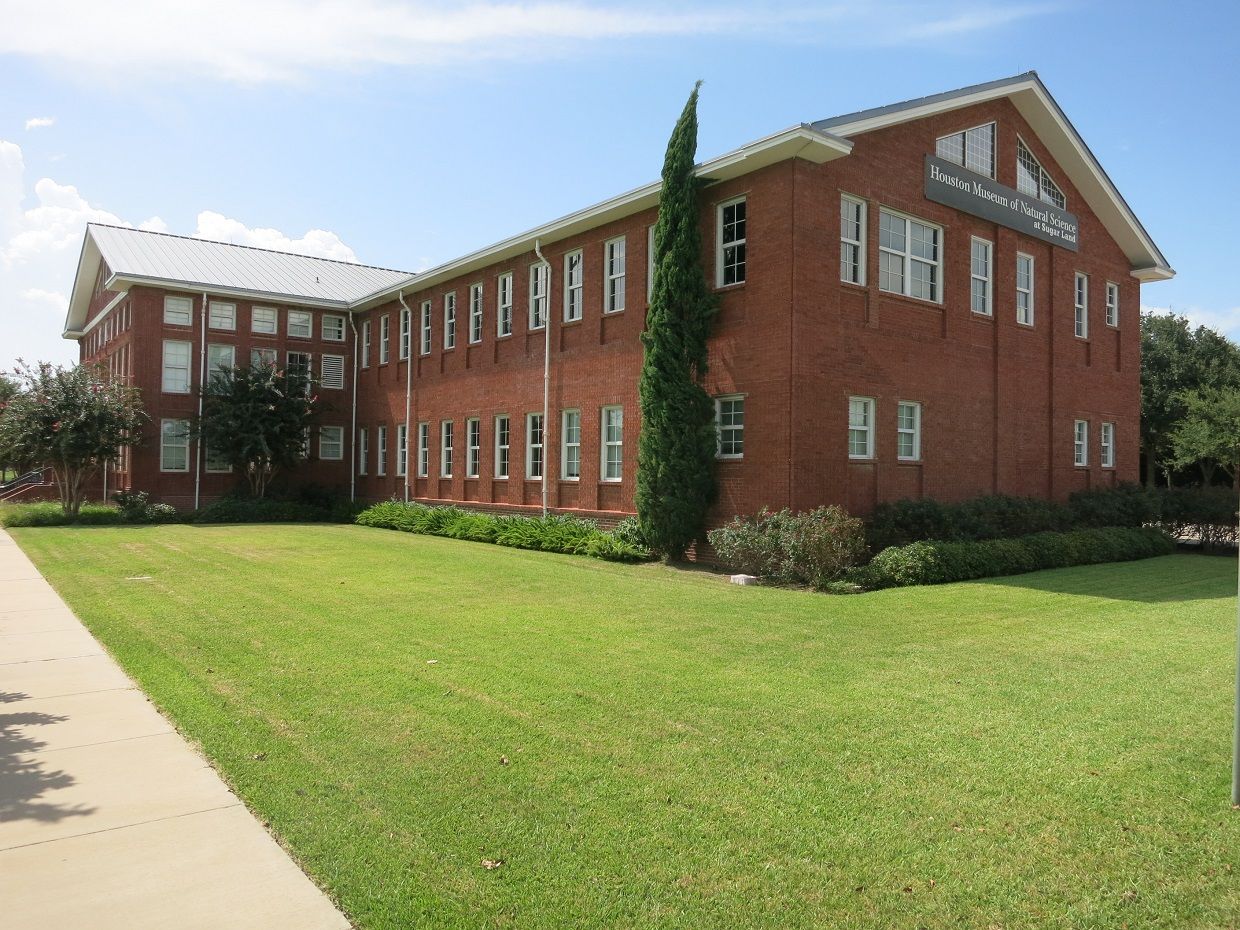
Sugar Land, the largest city in Fort Bend County, Texas, sits approximately 19 miles southwest of downtown Houston along the intersection of State Highway 6 and Interstate 69/U.S. Route 59 — a location that gives residents direct access to one of the nation's largest job markets while maintaining a distinctly suburban character. The city's story stretches back to 19th-century sugar plantations along the Brazos River, and that heritage lives on through Imperial Sugar Company, whose crown logo still appears in the city's official seal. What sets Sugar Land apart from other Houston suburbs is the depth of its planning: master-planned communities like First Colony shaped the city's development over decades, creating neighborhoods with formal landscaping, greenbelts, golf courses, and lakes built in from the start. Fort Bend ISD, which serves much of the city, consistently ranks among the most respected school districts in Texas. With a median household income exceeding $123,000 and a population of over 111,000, Sugar Land attracts buyers who want both financial stability and long-term growth potential. For those exploring homes for sale in Sugar Land, TX, this is a city that has already proven its staying power — and continues to build on it.
Welcome to Sugar Land
Community Profile
Few Houston-area suburbs can match the remarkable profile that emerges from the numbers here. With a median household income of $136,217 — nearly double the national median — and 64.1% of households earning six figures or more, Sugar Land ranks among the most affluent communities in the entire state of Texas. That prosperity is broadly shared: the poverty rate sits at just 5.5%, well below national norms, and a homeownership rate of 80.3% — versus roughly 65.5% nationally — signals a community of deeply rooted, long-term residents who have chosen to plant real stakes here.
The educational credentials of this population are equally striking. 63% of residents hold a bachelor's degree or higher, nearly double the national average of 33%, and 27.8% have earned a graduate degree. Perhaps most telling is that 54.9% of degree holders studied STEM fields — a reflection of Sugar Land's deep ties to the energy, engineering, and technology sectors that power the greater Houston economy. With a median age of 42.8 years and 64.3% of residents married, this is a community anchored by established families, many with school-age children — the 10-to-19 age bracket alone accounts for 14.4% of the population. Those browsing homes for sale in Sugar Land, TX will find a median home value of $429,649 that, given the income levels and lifestyle on offer, represents compelling value. The average commute of 28.9 minutes into the Houston metro keeps professionals connected to the city without sacrificing the spacious, suburban quality of life that makes Sugar Land so desirable. Diversity adds another dimension: with residents identifying as White (39.6%), Asian (38.7%), and Hispanic/Latino (13.3%), among others, Sugar Land is one of the most genuinely multicultural communities in Fort Bend County.
Things to Do
Outdoor Recreation
Sugar Land's natural setting along the Brazos River corridor gives residents and visitors plenty of reasons to get outside. Brazos River Park is one of the city's most beloved green spaces, offering trails, picnic areas, and sweeping views of the river. The city's extensive network of hike-and-bike trails winds through neighborhoods and connects major parks, making it easy to explore on foot or by bike. Oyster Creek Park threads through the heart of the city, offering a peaceful linear greenway popular with joggers and cyclists year-round. Sugar Land's mild winters mean outdoor recreation is genuinely a four-season pursuit.
Arts & Culture
The city's deep roots in the sugar industry give it a fascinating cultural identity. The historic Imperial Sugar refinery site has been reimagined as a mixed-use destination, and the surrounding area reflects Sugar Land's evolution from a company town into a modern suburban city. The Sugar Land Heritage Museum tells that story with exhibits on the plantation era, the convict leasing period, and the rise of Imperial Sugar Company. For performing arts, the Smart Financial Centre at Sugar Land is a major regional venue hosting national touring concerts, comedy acts, and live events throughout the year.
Dining & Shopping
Sugar Land Town Square is the social and commercial heart of the city — a walkable, mixed-use district lined with restaurants, boutiques, and a lively calendar of community events. The area reflects Sugar Land's remarkably diverse population, and the local dining scene spans an impressive range of cuisines, from authentic Indian and Chinese restaurants to Texas barbecue and upscale American fare. The nearby First Colony Mall offers traditional retail anchored by major department stores, while smaller shopping centers throughout the city cater to everyday needs.
Family Activities & Annual Events
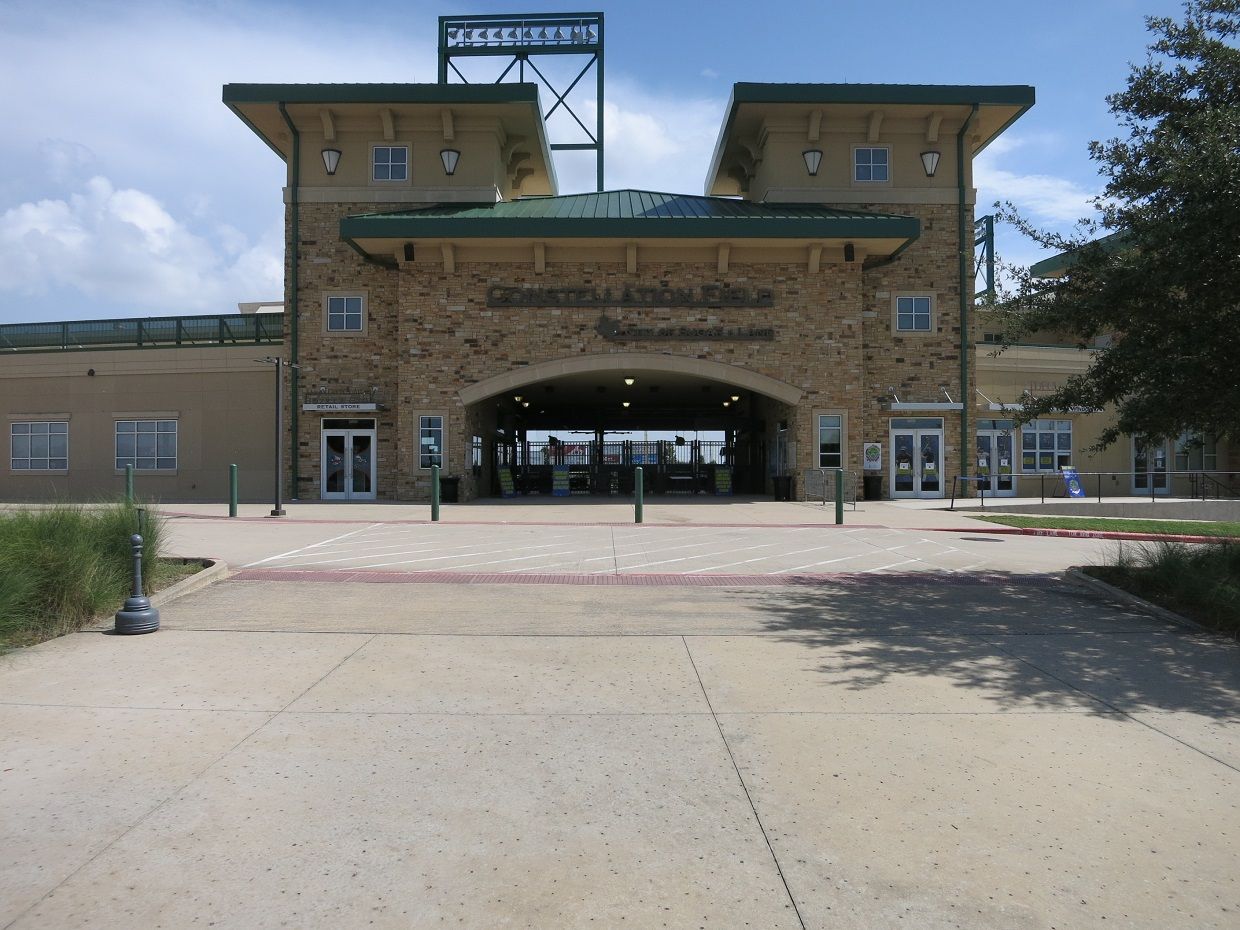
Families considering homes for sale in Sugar Land TX will find no shortage of things to keep everyone engaged. The Sugar Land Skeeters — now the Space Cowboys, the Triple-A affiliate of the Houston Astros — play at Constellation Field, a modern ballpark that draws fans for affordable, family-friendly baseball all summer long. Annual community events include the Sugar Land Wine & Food Affair and the Sugar Land International Festival, which celebrates the city's extraordinary cultural diversity. With downtown Houston just 19 miles northeast, residents also enjoy easy access to world-class museums, professional sports, and the Texas Medical Center.
Latest Properties in Sugar Land
Loading latest properties...
History
From Sugar Plantation to Suburban Powerhouse
Sugar Land's story begins with a Mexican land grant to Stephen F. Austin, one of the foundational moments in Texas history. Nathaniel Williams purchased the land in 1838, establishing Oakland Plantation along the fertile Brazos River floodplain. The plantation changed hands several times before Colonel E. H. Cunningham built a sugar-refining plant here in 1879, laying the physical groundwork for the city that would follow.
The pivotal transformation came in 1906, when Isaac H. Kempner of Galveston purchased the Ellis Plantation, and by 1908 had consolidated neighboring holdings into Imperial Sugar Company. For the next five decades, Sugar Land functioned as a self-contained company town — Imperial built worker housing, schools, and a hospital. Many of those original company-built homes survive today in the The Hill and Mayfield Park neighborhoods, giving those areas a distinct historic character that still attracts buyers browsing homes for sale in Sugar Land, TX.
Sugar Land incorporated as a city in 1959, and development accelerated quickly. The 1968 launch of Sugar Creek introduced master-planned country club living, and in 1977, Gerald Hines began First Colony — a 10,000-acre planned community that shaped the city's residential identity for the next three decades. The annexation of Greatwood and New Territory in 2017 pushed the population past 111,000, cementing Sugar Land's status as Fort Bend County's largest city.
That layered history — plantation land, company town, planned communities — explains why sugarland houses for sale span such a range of eras and styles, from mid-century bungalows near the old refinery to sprawling estates in master-planned enclaves along manicured lakes and golf courses.
Weather
Sugar Land, Texas, sits squarely within a humid subtropical climate zone — the same broad weather pattern that defines much of the Gulf Coast region. Positioned just 19 miles southwest of downtown Houston in the flat coastal plain of Fort Bend County, the city experiences long, intensely hot summers, mild winters, and generous rainfall spread throughout the year.
Summer is the dominant season here. From June through September, afternoon highs routinely climb into the mid-90s °F, occasionally brushing 100°F, while overnight lows settle in the mid-70s — offering little relief from the heat. Humidity is a constant companion, pushed inland by proximity to the Gulf of Mexico, and it makes the heat feel noticeably more intense than the thermometer alone suggests. Winters are short and generally mild, with daytime highs typically in the mid-50s to low 60s °F and lows occasionally dipping into the 30s. Hard freezes are infrequent but not unheard of, and ice storms can periodically disrupt the region.
Annual rainfall averages around 50 to 55 inches, with no true dry season. Spring and fall bring the heaviest precipitation, sometimes in the form of intense thunderstorms. The city's position within the Brazos River floodplain also makes it susceptible to flooding during major rain events — a factor that directly influences real estate decisions around flood zone designations and insurance requirements.
For those browsing homes for sale in Sugar Land TX, the climate shapes everyday living in practical ways: energy bills lean heavily toward cooling rather than heating, covered outdoor living spaces are a prized amenity, and proper drainage and roof maintenance are ongoing priorities for homeowners.
Sugar Land Market Analytics
Can I Afford Sugar Land?
Weather