
Syracuse, New York

Location:
Syracuse, NY

Welcome to Syracuse

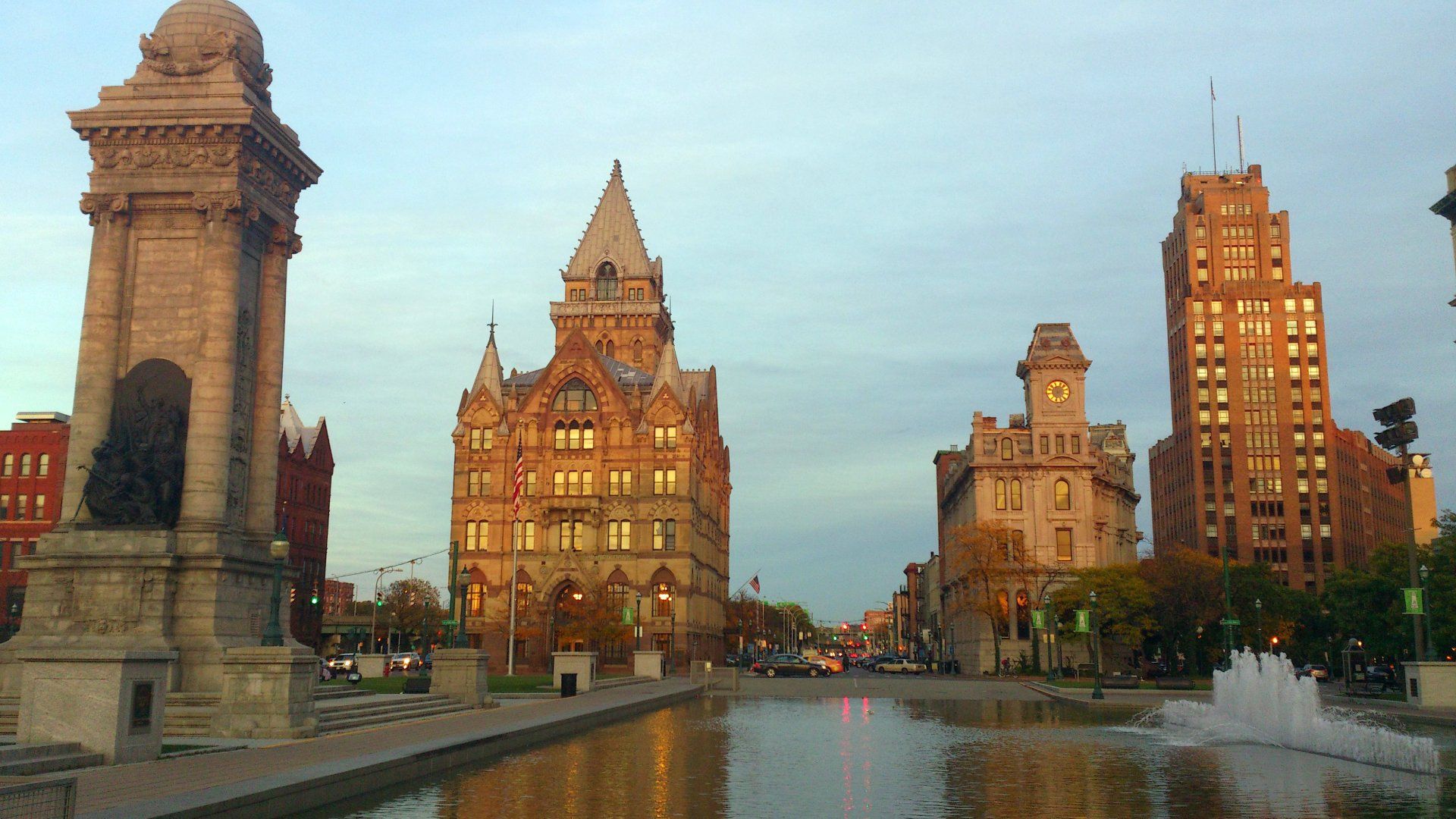
Situated at the geographic center of New York State in Onondaga County, Syracuse has been a crossroads city since its founding in the early 19th century — first as a salt-producing hub, then as a manufacturing powerhouse, and today as a growing university city anchored by Syracuse University and its storied athletic and academic traditions. Unlike neighboring Utica or Rochester, Syracuse sits at the intersection of two major interstate highways, I-90 and I-81, giving residents and businesses direct access to the entire Northeast corridor. Onondaga Lake Park, one of the most extensively restored urban waterfronts in the region, offers miles of trails and waterfront recreation right within the city limits.

The city's winters are famously snowy — Syracuse regularly ranks among the snowiest cities in the country — but that same climate draws a resilient, tight-knit population that takes pride in year-round outdoor life. For buyers exploring homes for sale in Syracuse NY, the market offers a rare combination of affordability and architectural character, from stately Craftsman bungalows to grand Victorian-era homes. With ongoing downtown investment, a growing healthcare and education sector, and direct rail and air connections through Syracuse Hancock International Airport, this city rewards those who look closely at what it's becoming.


Community Profile

One of the most striking things about this Central New York city is just how young and energetic its population skews. With a median age of just 31.8 years — well below the national median of 38.5 — Syracuse pulses with the energy of students, young professionals, and growing families. Nearly a third of residents are under 20, reflecting a community where schools, parks, and family-oriented neighborhoods are woven into everyday life. The average family size of 3.05 people reinforces that picture of a city where roots are being put down.

For buyers exploring houses for sale in Syracuse, NY, the affordability story is genuinely compelling. The median home value of $135,992 is less than half the national median of roughly $330,000, meaning buyers can access real homeownership — with space, character, and history — at a fraction of what comparable square footage would cost in larger metros. That value proposition is amplified by an average commute of just 18 minutes, keeping time and transportation costs low. The city's intellectual depth adds another layer of appeal: 31.2% of residents hold a bachelor's degree or higher, and a remarkable 47.4% of degree holders studied STEM fields, reflecting the influence of Syracuse University and a broader culture of innovation and learning. With a diverse, majority-minority-approaching population spanning more than a dozen backgrounds, and only 5.0% of residents uninsured, Syracuse offers a community that is both accessible and genuinely inclusive — a strong foundation for anyone ready to buy a house in Syracuse, NY.

Things to Do

Arts & Culture

Syracuse punches well above its weight for a mid-sized city when it comes to arts and culture. The Everson Museum of Art on Harrison Street is one of the finest regional art museums in the Northeast, housed in a striking I.M. Pei–designed building and home to an exceptional ceramics collection. The Landmark Theatre downtown is a beautifully restored 1928 movie palace that now hosts Broadway touring productions, concerts, and special events — a genuine architectural gem worth visiting even if you're not catching a show.

Sports & Live Events

Syracuse is a passionate college basketball town, and attending a Syracuse Orange game at the JMA Wireless Dome on the Syracuse University campus is an experience unlike any other in college sports. With a basketball capacity of roughly 31,000, the atmosphere during a big ACC matchup is electric. The Syracuse Mets, the Triple-A affiliate of the New York Mets, play at NBT Bank Stadium downtown — an affordable, family-friendly way to spend a summer evening.

Outdoor Recreation

Onondaga Lake Parkway offers miles of trails along the shoreline of Onondaga Lake, perfect for cycling, jogging, and birdwatching. Green Lakes State Park, just a short drive east of the city, features two stunning glacial lakes with remarkably clear turquoise water, swimming, hiking trails, and a golf course. In winter, Rosamond Gifford Zoo and nearby ski areas give residents plenty of cold-weather options.

Dining & Local Flavor

The Armory Square neighborhood is the heart of Syracuse's dining and nightlife scene, with a walkable cluster of restaurants, craft cocktail bars, and coffee shops set among 19th-century warehouse buildings. The city has a proud tradition of salt potatoes — a uniquely Central New York dish born from the region's salt-producing heritage — and you'll find them at local events and diners throughout the area. The CNY Regional Market on Park Street is one of the largest public markets in the state, running year-round on Thursdays and Saturdays.

Family Activities & Annual Events

The Rosamond Gifford Zoo at Burnet Park is a beloved institution with a strong conservation mission and popular exhibits for all ages. Each summer, the New York State Fair draws over a million visitors to the fairgrounds on the city's west side — it's one of the oldest and largest state fairs in the country, running for 13 days leading up to Labor Day. For anyone exploring homes for sale in Syracuse NY, experiencing the Fair firsthand offers an unbeatable introduction to the community spirit that defines this city.

Latest Properties in Syracuse

Loading...

Loading latest properties...

See All Properties in Syracuse

History

From Salt to Silicon: A Brief History of Syracuse, NY

Syracuse's story begins with salt. Long before European settlement, the Onondaga Nation — one of the six nations of the Haudenosaunee Confederacy — recognized the value of the brine springs around Onondaga Lake. By the early 19th century, those same salt deposits fueled the city's founding and industrial identity. The Village of Syracuse was incorporated in 1825, the same year the Erie Canal opened, and the timing was no accident: the canal transformed Syracuse into a critical commercial hub connecting the Atlantic seaboard to the Great Lakes.

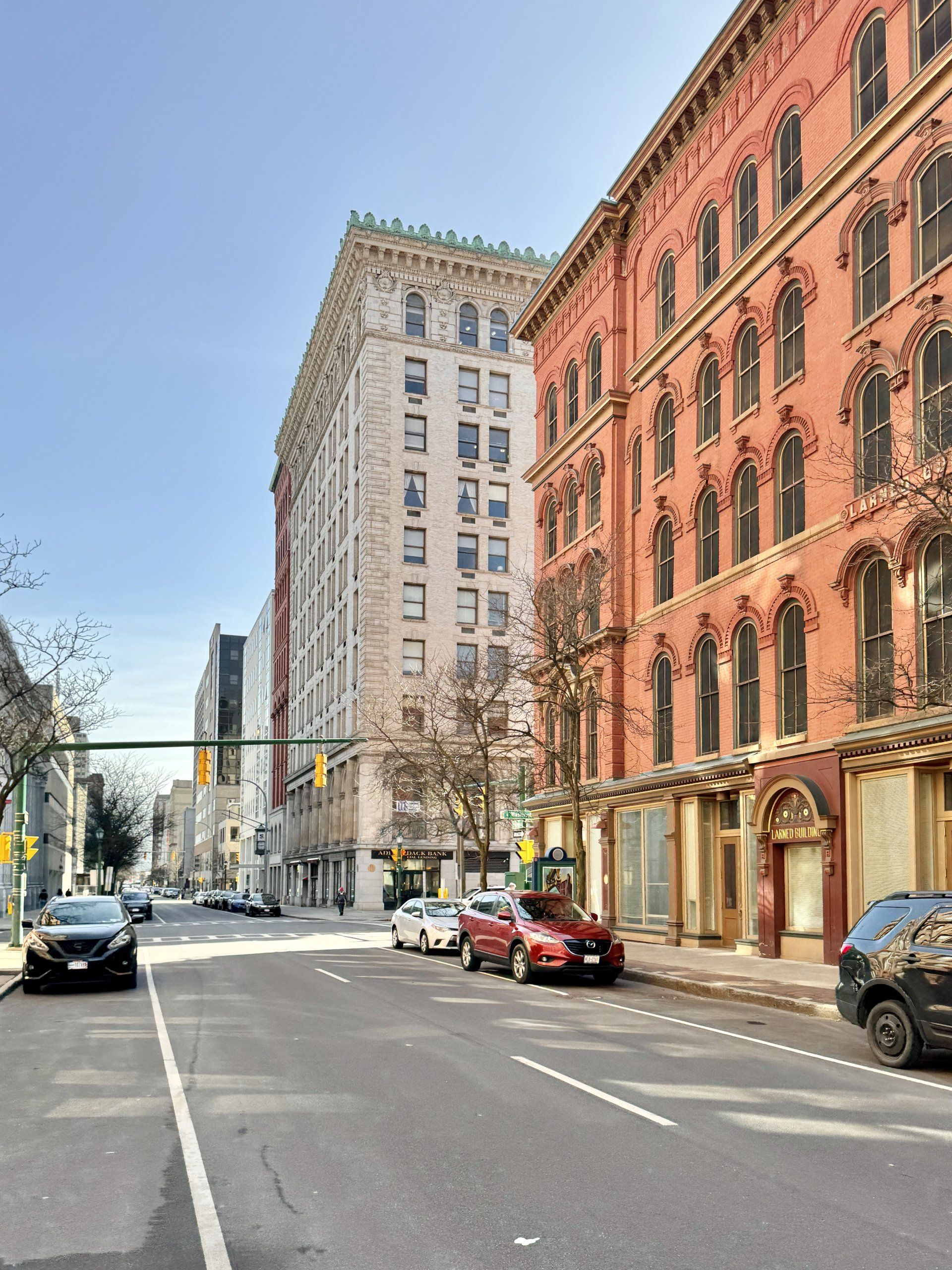
Through the mid-1800s, Syracuse grew rapidly as a manufacturing and trade center, attracting waves of Irish, German, Italian, and Eastern European immigrants whose neighborhoods still shape the city's residential geography today. The near-east side, the north side, and Tipperary Hill each carry the architectural and cultural imprint of those communities — and many of the double-decker homes and brick rowhouses built during that era remain part of the housing stock available to buyers exploring homes for sale in Syracuse NY today.

The 20th century brought both expansion and contraction. Postwar prosperity in the 1940s and 1950s extended development outward into neighborhoods like Strathmore and Eastwood, producing the tree-lined streets and well-built single-family homes that remain among the city's most sought-after residential areas. The latter decades of the century saw deindustrialization hit hard, as it did across Upstate New York, leading to population loss and depressed property values in some inner-city corridors.

Today, Syracuse is in a measured but genuine period of reinvestment. Syracuse University anchors the city's institutional economy, while infrastructure projects and neighborhood revitalization efforts are drawing renewed attention from buyers looking to buy a house in Syracuse NY at prices that remain well below national averages — making the city's layered history feel less like a burden and more like an opportunity.

Weather

A City Built for Four Seasons — and Then Some

Syracuse, New York experiences a humid continental climate, marked by four distinct seasons and some of the most dramatic weather swings in the northeastern United States. Summers are warm and relatively brief, with daytime highs typically reaching the mid-to-upper 80s°F and overnight lows settling in the comfortable 60s. Winters, by contrast, are long, cold, and famously snowy — afternoon temperatures often hover in the upper 20s to low 30s°F, with overnight lows regularly dipping into the teens.

What truly sets Syracuse apart is its extraordinary snowfall. Positioned at the eastern end of Lake Ontario, the city sits directly in the path of lake-effect snow systems that barrel off the lake from late autumn through early spring. Annual snowfall totals frequently exceed 120 inches, consistently ranking Syracuse among the snowiest major cities in the entire country. Spring arrives gradually, with temperatures climbing through the 40s and 50s before warming fully by May, while autumn brings crisp, colorful conditions that many residents consider the city's most beautiful season.

For anyone looking at homes for sale in Syracuse NY, weather is a genuine practical consideration. Heating costs are a meaningful budget line given the extended winters, and buyers should evaluate roof integrity, insulation quality, and driveway configuration with snowfall in mind. On the warmer end, central air conditioning is a comfort rather than a luxury during July and August. The short but pleasant summer season does support outdoor living — porches, decks, and yards get enthusiastic use — making those features worth weighing when you buy a house in Syracuse NY.

Syracuse Market Analytics

The Syracuse real estate market is experiencing a period of growth, with the average home value increasing by 4.7% over the past year to $204,630, according to data analyzed by Opulist. This suggests the market is balancing in favor of sellers, with nearly 60% of homes selling above list price. Additionally, the median days to pending is just 13 days, indicating a relatively fast-paced market.


1-Year Home Value Change: +4.7%

Syracuse Home Value Index over time.

Can I Afford Syracuse?
$
%
$0
Est. Monthly Payment
$0/yr
Salary Required

*Principal & interest only. Salary based on 28% debt-to-income ratio.

Get Pre-Approved for Syracuse