
Washington Depot, Connecticut

Location:
Washington Depot, CT

Welcome to Washington Depot

Incorporated in 1779 and named directly for George Washington — who passed through the area multiple times during the American Revolution — Washington Depot is the commercial village center of the Town of Washington, set among the rolling hills of Litchfield County at an elevation of nearly 500 feet. With just 3,646 residents spread across 38.6 square miles, this is a place where low density is a deliberate choice, not an accident of geography.

What separates Washington Depot from neighboring Litchfield or New Milford is its particular combination of deep civic seriousness and quiet cultural sophistication. The Steep Rock Association, founded in 1925, now protects more than 2,700 acres of land along the Shepaug River, giving residents trail access and open space that most Connecticut towns cannot match. The iconic Hickory Stick Bookshop has anchored the village for decades, and the region's school system draws from a community with a median household income of over $80,000 and a long tradition of engagement with the arts and land conservation.

For those exploring rentals in Washington Depot CT or considering a permanent move, the appeal is straightforward: this is one of the few places in Litchfield County where authentic New England character, preserved landscape, and proximity to New York City arrive in the same package — and where that combination shows no signs of fading.


Things to Do

Outdoor Recreation

Washington Depot sits at the heart of some of northwestern Connecticut's most rewarding outdoor terrain. The Steep Rock Reservation, managed by the Steep Rock Association, protects more than 2,700 acres of forests, meadows, and riverfront land along the Shepaug River — a legacy that traces back to 1925, when architect Ehrick Rossiter donated the original 100 acres. Hikers and trail runners explore miles of well-maintained paths through dramatic river gorges and rolling woodland, while the Shepaug itself draws fly fishermen and paddlers throughout the warmer months. The surrounding Litchfield Hills offer equally compelling terrain, with Lake Waramaug State Park just a short drive away in New Preston, providing swimming, kayaking, and some of the most scenic lakeside picnicking in the state.

Dining & Local Flavor

The village center punches well above its weight for such a small community. Washington Depot's compact main street hosts a handful of well-regarded restaurants and cafés that draw visitors from across Litchfield County and weekend arrivals from New York City. The dining scene reflects the town's character — understated, quality-conscious, and rooted in seasonal ingredients. Whether you're stopping in for a casual lunch after a morning on the trails or settling in for a leisurely dinner, the options feel genuinely local rather than generic.

Arts, Culture & Shopping

The Hickory Stick Bookshop is one of Washington Depot's most beloved institutions — an independent bookstore with deep roots in the community and a carefully curated selection that reflects the literary tastes of a town long associated with writers, artists, and intellectuals. It's the kind of place where browsing turns into an afternoon. The broader Washington area is also home to the Institute for American Indian Studies, a museum and research center that brings the region's 10,000-year human history to life through thoughtful exhibits and educational programming — well worth the short drive from the Depot.

Family Activities & Seasonal Events

Washington Depot's village green and surrounding countryside come alive through the seasons. Fall foliage transforms the Litchfield Hills into one of New England's most photographed landscapes, drawing leaf-peepers from across the region. Farmers markets, community gatherings, and local fairs give the calendar a distinctly New England rhythm. Families relocating here — whether exploring rentals in Washington Depot CT or considering a longer-term move — will find a community that takes outdoor education, conservation, and civic participation seriously, making it an especially rewarding place to put down roots.

Latest Properties in Washington Depot

Loading...

Loading latest properties...

See All Properties in Washington Depot

History

From Factory Hollow to Coveted Countryside

Washington Depot's story begins long before its incorporation. Archaeological evidence places Native American settlement along the Shepaug River as far back as 10,000 years ago, and the Wyantenock tribe inhabited these lands until European colonists arrived in the early 18th century. In 1734, Joseph Hurlbut established the first colonial homestead in the eastern section of what would become Washington, in an area known as Judea Parish. The town was formally incorporated in 1779, carved from portions of Woodbury, Litchfield, Kent, and New Milford, and named in honor of George Washington, who passed through the area multiple times during the Revolution.

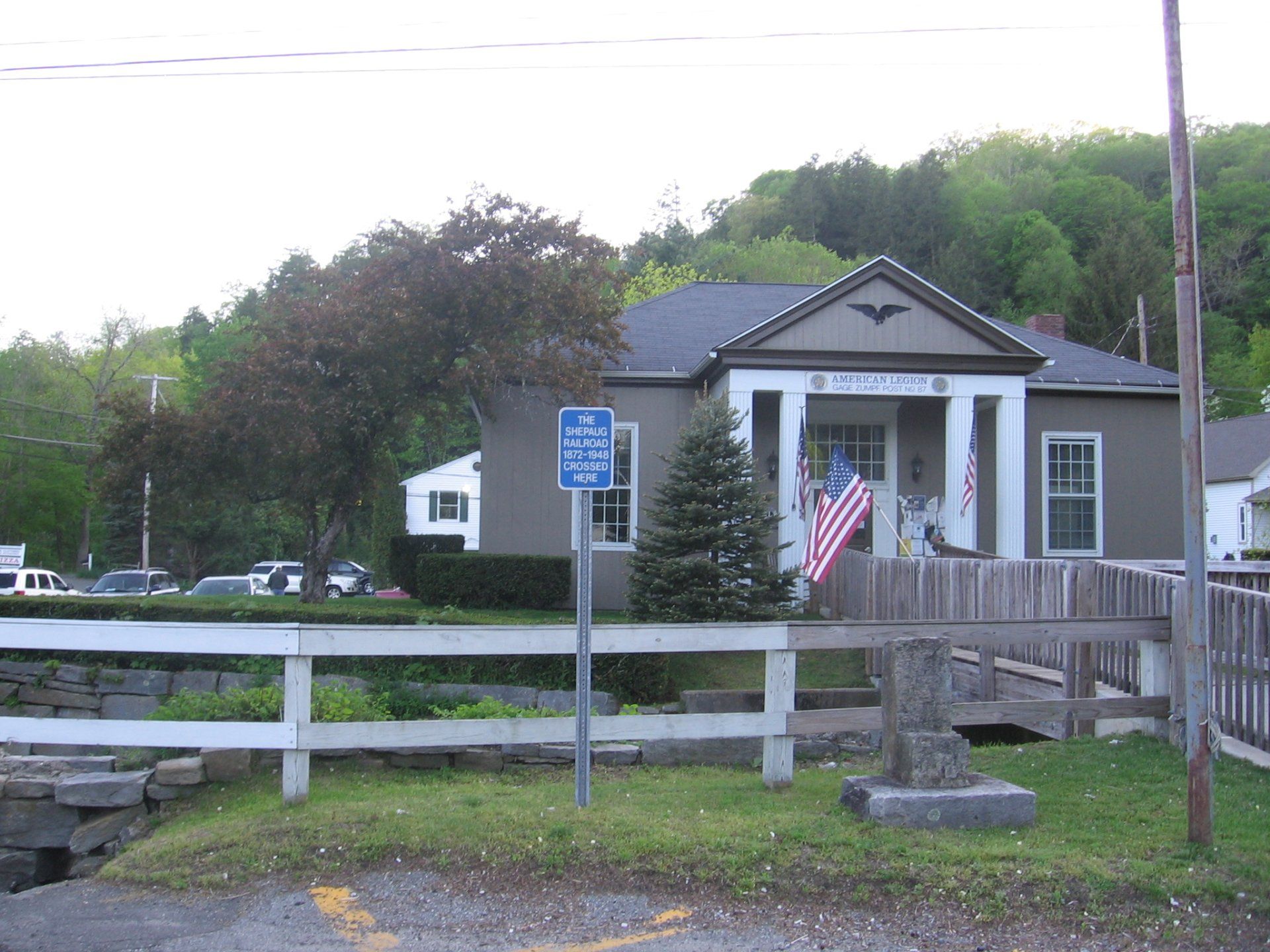
By the early 19th century, small mills and factories had taken root along the Shepaug River in what is now Washington Depot — a district locals called Factory Hollow. That industrial character was gradually eclipsed in the 1870s when the arrival of the Shepaug Railroad connected the town to New York City. Architect Ehrick Rossiter seized the moment, collaborating with wealthy Manhattan patrons to remake the Washington Green area into a refined summer colony — an understated counterpoint to the ostentation of Newport and Greenwich. The elegant homes and preserved village green he helped shape still define the town's architectural identity today.

The catastrophic flood of August 1955 reshaped Washington Depot most dramatically. Two storms in quick succession sent a wall of water through the village center, destroying homes, businesses, and historic structures. A reconstruction effort followed, but the Depot never fully recovered its pre-flood density — a fact that quietly shapes the real estate market to this day. The village center's relatively modest scale and mixed building stock reflect that mid-century reset. Meanwhile, the Steep Rock Association, founded in 1925 when Rossiter donated 100 acres along the Shepaug, now protects more than 2,700 acres of open land — a conservation legacy that places a natural ceiling on development and sustains property values across the township.

Weather

Four Seasons in the Litchfield Hills

Washington Depot sits in the Litchfield Hills of northwestern Connecticut at roughly 500 feet of elevation, giving it a humid continental climate that delivers four genuinely distinct seasons. Summers are warm and pleasant, with daytime highs typically ranging from the mid-70s to the low 80s°F and overnight lows settling comfortably into the 50s and 60s. Winters are cold and snowy, with average highs in the 30s°F and lows that frequently dip into the teens and single digits during the coldest stretches of January and February. The surrounding hills can intensify snowfall totals compared to coastal Connecticut, and residents should expect to manage a meaningful snow season every year.

Annual precipitation is well distributed across all four seasons, averaging around 45 to 50 inches, with additional snowfall accumulation in winter. Spring arrives gradually, bringing rain and the kind of dramatic green transformation that makes the Shepaug River valley particularly beautiful. Autumn is arguably the region's most celebrated season — crisp air, brilliant foliage, and low humidity make October in the Litchfield Hills genuinely spectacular.

For anyone evaluating homes or rentals in Washington Depot CT, the climate carries real practical weight. Heating costs are a meaningful budget line, and homes with well-insulated envelopes and efficient systems command a premium. Outdoor living spaces — porches, stone patios, fire pits — are highly valued given the long, gorgeous shoulder seasons. Buyers and renters alike should also plan for regular seasonal maintenance: roof inspections, driveway upkeep after frost heaves, and gutter clearing after leaf fall.

Washington Depot Market Analytics

The Washington Depot market is showing signs of stability and growth, with the average home value increasing by 5.2% over the past year to $987,816, according to data analyzed by Opulist. This steady appreciation in home values suggests that the market is balancing, with neither buyers nor sellers having a significant advantage. As a buyer or seller, it's essential to work with a knowledgeable real estate partner like Opulist to navigate the current market conditions and make informed decisions.


1-Year Home Value Change: +5.2%

Washington Depot Home Value Index over time.

Can I Afford Washington Depot?
$
%
$0
Est. Monthly Payment
$0/yr
Salary Required

*Principal & interest only. Salary based on 28% debt-to-income ratio.

Get Pre-Approved for Washington Depot