
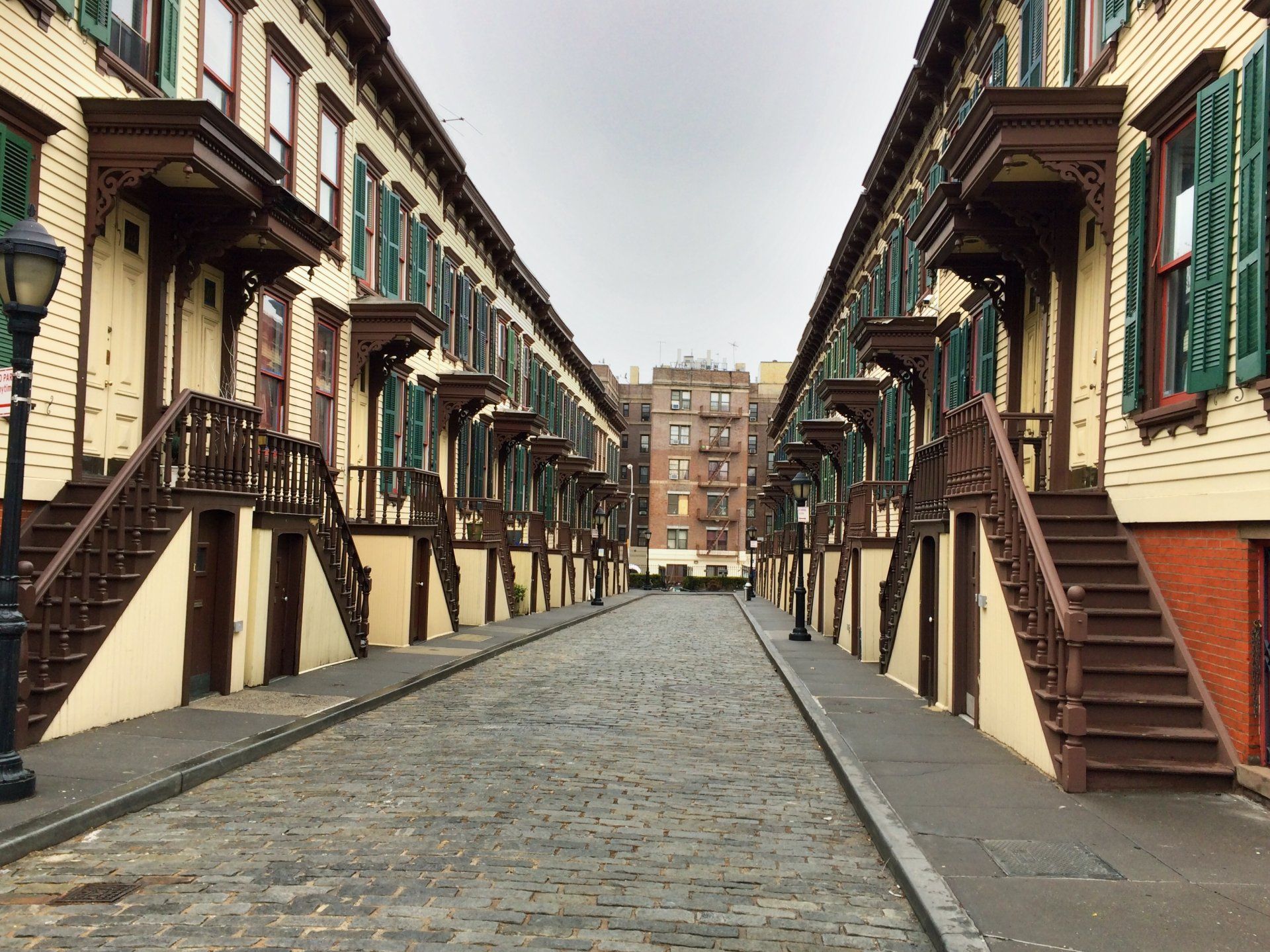
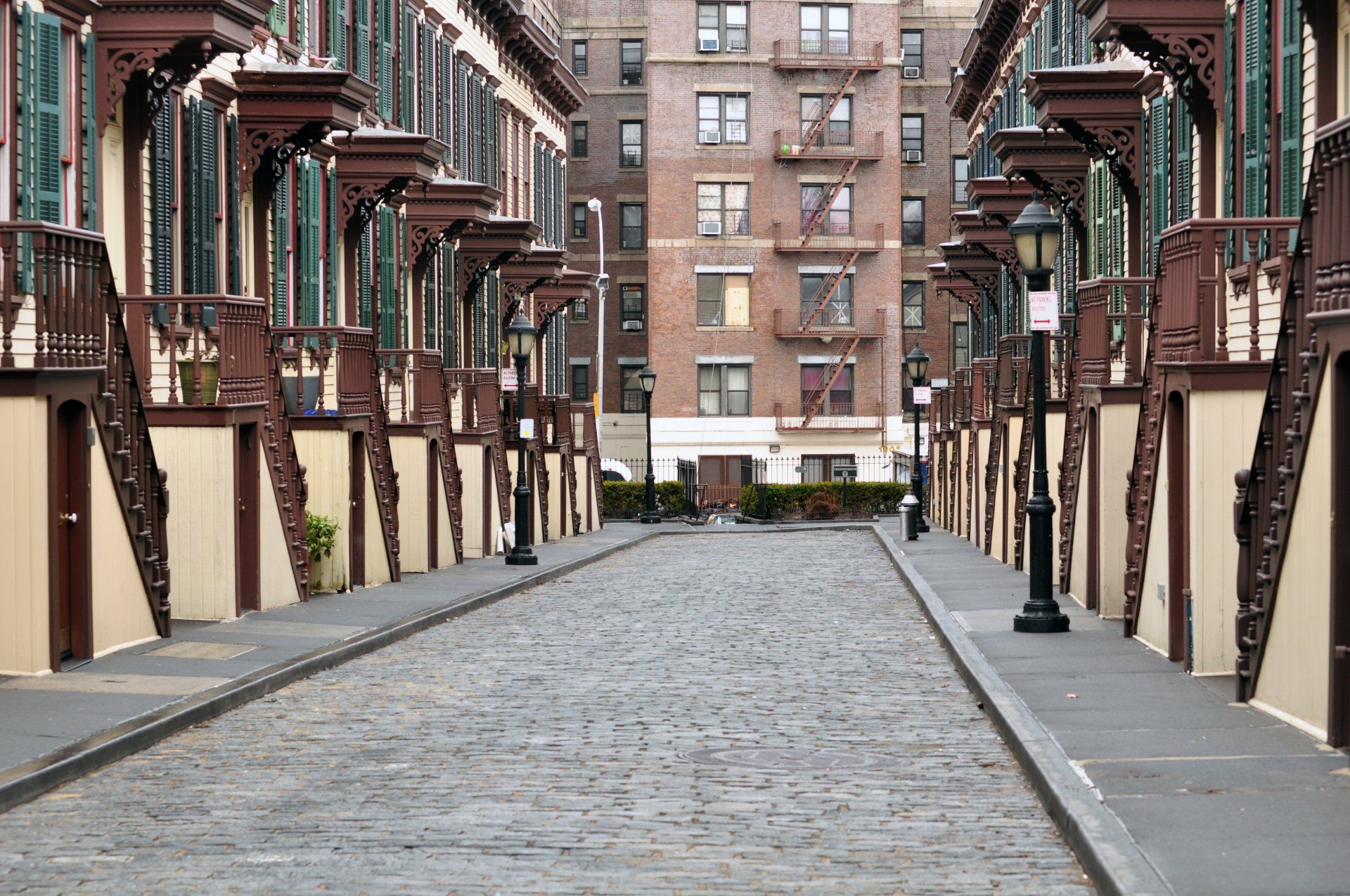
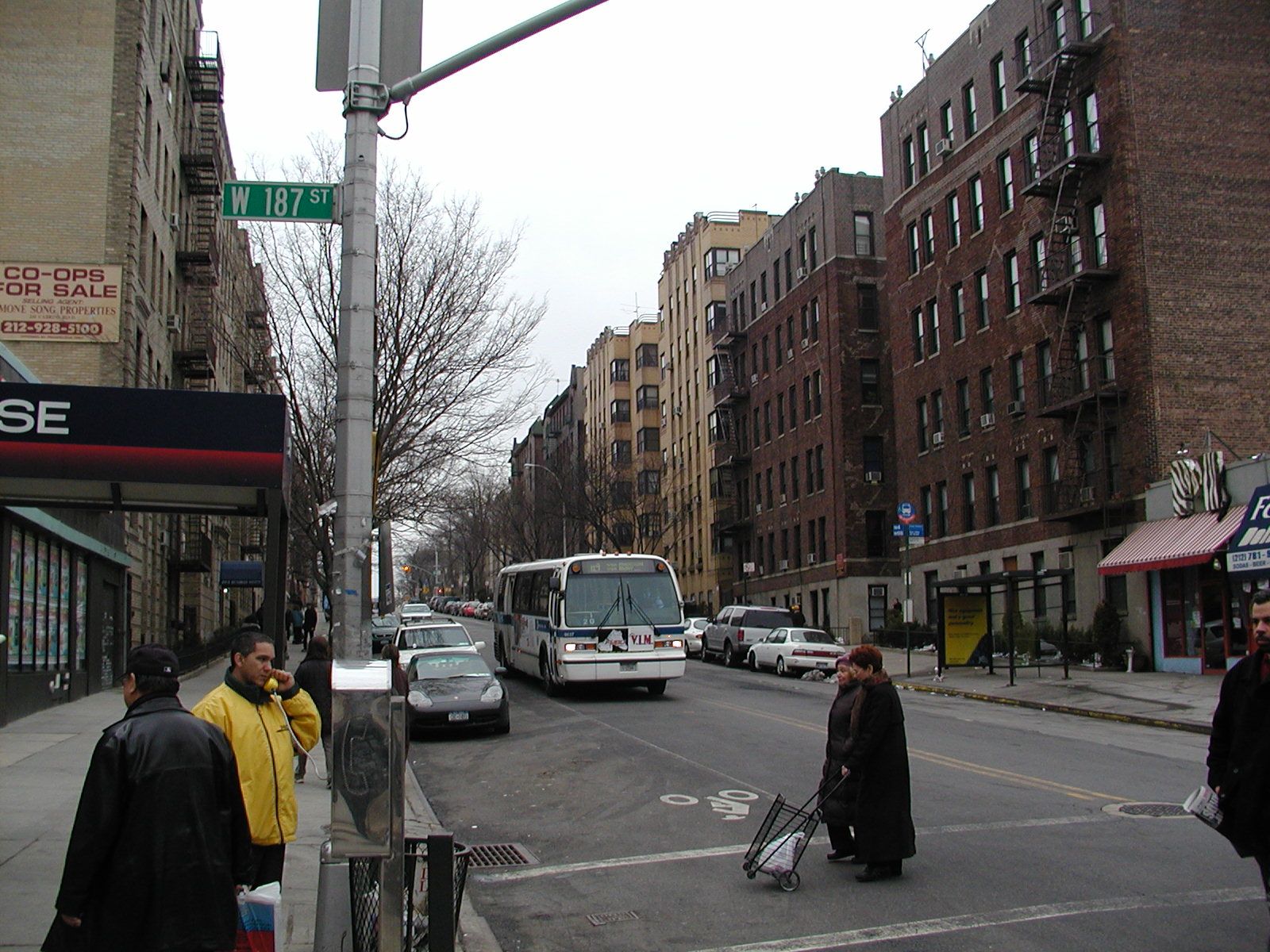
Perched on the rocky schist ridges of northern Manhattan, Washington Heights rises above the Hudson River between West 155th Street and Dyckman Street — a neighborhood whose very name traces back to a Revolutionary War fortification built at the highest natural point on the island. That history runs deep here: the Morris-Jumel Mansion, Manhattan's oldest surviving house, still stands as a reminder of George Washington's wartime presence, while Fort Tryon Park offers sweeping views of the Hudson and the Palisades that feel worlds away from Midtown. What sets Washington Heights apart from neighboring Harlem to the south and Inwood to the north is its dramatic topography, its dense Dominican-American cultural identity, and its direct access to the A train — one of the fastest subway connections to Midtown and Lower Manhattan in the entire borough. With a median age of just 34 and a median home price around $600,000, washington heights new york real estate draws buyers who want authentic urban character without the price tags of neighborhoods further south. For investors and families alike, this is a neighborhood whose next chapter is already being written.
Welcome to Washington Heights
Community Profile
Tucked into Orange County within the Poughkeepsie-Newburgh metro area, this small but spirited community of 2,383 residents punches well above its weight when it comes to economic vitality and neighborhood stability. The median household income here stands at $81,686 — meaningfully above the national median of roughly $75,000 — and a striking 43.1% of households bring in six figures or more, signaling a financially resilient base that bodes well for long-term property values. For anyone exploring real estate in Washington Heights, NY, that economic foundation is an encouraging starting point.
The community skews notably young and family-oriented, with a median age of just 34.6 years — well below the national median of 38.5 — and a robust 22.9% of residents in their prime 30s. Nearly 16.8% of the population is under 10, and the average family size of 3.54 reflects a neighborhood actively raising the next generation. Homeownership is a genuine point of pride here: at 71.7%, it surpasses the national rate of 65.5%, and the median home value of $360,913 remains accessible relative to broader metro New York benchmarks. The workforce is notably STEM-driven, with 72% of degree holders concentrated in science, technology, engineering, and math fields — a detail that speaks to a highly skilled, forward-looking resident base. Diversity adds further texture, with Black, Hispanic, and multiracial residents collectively comprising a majority of the population, creating the kind of rich, layered community character that makes Washington Heights genuinely distinctive.
Things to Do
Outdoor Recreation
Washington Heights is remarkably well-endowed with green space for a densely populated Manhattan neighborhood. Fort Tryon Park, a sweeping 67-acre hilltop escape designed with input from the Olmsted Brothers, delivers some of the most breathtaking Hudson River views in all of New York City. Its winding paths, manicured gardens, and dramatic cliffs make it a favorite year-round destination for joggers, picnickers, and anyone who needs a genuine escape from city noise. Just to the east, Highbridge Park stretches along the Harlem River and connects to the historic High Bridge, Manhattan's oldest standing bridge, offering a scenic walkway between Manhattan and the Bronx. J. Hood Wright Park is a beloved neighborhood gathering spot where exposed Manhattan schist outcroppings meet playgrounds and open lawns — a perfect snapshot of the Heights' rugged, geological character.
Arts & Culture
Few neighborhoods in New York City pack as much cultural weight into so few square miles. The Met Cloisters, perched dramatically at the northern end of Fort Tryon Park, houses the Metropolitan Museum of Art's extraordinary collection of medieval European art and architecture — a genuinely world-class institution that many New Yorkers outside the neighborhood overlook. The Morris-Jumel Mansion, Manhattan's oldest surviving house, offers a direct window into Revolutionary War history and the life of George Washington himself. The United Palace on Broadway is a magnificently restored 1930s theater that hosts concerts, community events, and cultural programming throughout the year. The Audubon Terrace Historic District is home to the Hispanic Society Museum & Library, one of the finest collections of Spanish and Latin American art outside of Europe.
Dining & Street Life
The neighborhood's Dominican heritage infuses its commercial strips with an infectious energy. Broadway and St. Nicholas Avenue are lined with panaderías, comedores, and restaurants serving authentic Dominican cuisine — from slow-roasted pernil to rich sancocho. Outdoor domino games, street vendors selling fresh fruit, and the rhythms of merengue and bachata drifting from storefronts give the neighborhood a street-level vitality that is entirely its own.
Family Activities
Families exploring Washington Heights, New York will find plenty to keep all ages engaged. The Cloisters alone can anchor an entire afternoon, while Fort Tryon Park's playgrounds and open meadows are ideal for younger children. The Little Red Lighthouse, tucked beneath the George Washington Bridge along the Hudson River in Fort Washington Park, is a storybook landmark that has charmed generations of New York City kids — and the annual Little Red Lighthouse Festival each fall draws families from across the city for a festive riverside celebration.
Latest Properties in Washington Heights
Loading latest properties...
History
From Revolutionary Fortifications to a Dominican Capital
Washington Heights takes its name from Fort Washington, the Continental Army fortification built in 1776 at the highest natural point on Manhattan Island. George Washington established his headquarters here during the Revolutionary War, and the Morris-Jumel Mansion — Manhattan's oldest surviving house — dates to the same era, still standing today as a museum on Edgecomb Avenue. These landmarks give the neighborhood a historical depth that few New York communities can match.
For most of the 19th century, the area remained sparsely populated, dotted with mansions and single-family homes on rocky, elevated terrain. That changed decisively in the early 1900s when the Broadway–Seventh Avenue and Eighth Avenue subway lines connected Washington Heights to the rest of Manhattan. Within a generation, the neighborhood transformed from a semi-rural retreat into a dense residential district, attracting waves of Irish, Eastern European, and German Jewish immigrants seeking affordable apartments close to transit. The prewar and postwar apartment buildings they filled — sturdy, mid-rise structures on the Manhattan schist bedrock — form the backbone of the housing stock that defines washington heights real estate today.
By the 1980s, Dominican Americans had become the neighborhood's dominant community, reshaping its culture, commerce, and street life into what is now recognized as the most prominent Dominican enclave in the United States. The crack epidemic of the late 1980s and 1990s brought serious hardship, but community activism and reinvestment drove a sustained revival through the 2000s. That arc — immigrant resilience, cultural identity, and gradual upward mobility — is precisely what draws buyers exploring homes for sale in Washington Heights New York today, where a median home price of $600,000 reflects both rising demand and the neighborhood's enduring character.
Weather
Washington Heights Climate and Weather Patterns
Washington Heights experiences a humid subtropical climate (Köppen Cfa), the classification shared by New York City as a whole, though the neighborhood's dramatic topography adds a layer of nuance to that broad designation. Perched on schist ridges rising up to 250 feet above sea level, Washington Heights sits noticeably higher than most of Manhattan, and residents often notice slightly stronger winds and marginally cooler temperatures compared to lower-lying parts of the borough.
Summers are warm and humid, with daytime highs typically ranging from the mid-80s°F and overnight lows settling in the upper 60s to low 70s. Winters are cold but rarely severe by northeastern standards, with average highs in the mid-30s to low 40s°F and lows that can dip into the 20s during cold snaps. Spring and autumn are genuinely pleasant seasons, offering mild temperatures and colorful transitions that make outdoor life in Fort Tryon Park particularly enjoyable.
Annual precipitation is fairly evenly distributed throughout the year, averaging around 46–50 inches, with occasional nor'easters bringing significant snowfall in winter. The Hudson River to the west moderates temperatures somewhat, tempering the most extreme heat and cold. For anyone evaluating Washington Heights New York real estate, these patterns translate into real considerations: central heating is essential, summer cooling costs can be meaningful during humid stretches, and older building stock — which dominates the neighborhood — requires attentive seasonal maintenance, particularly around roofing, masonry, and windows.
Washington Heights Market Analytics
Can I Afford Washington Heights?
Weather