
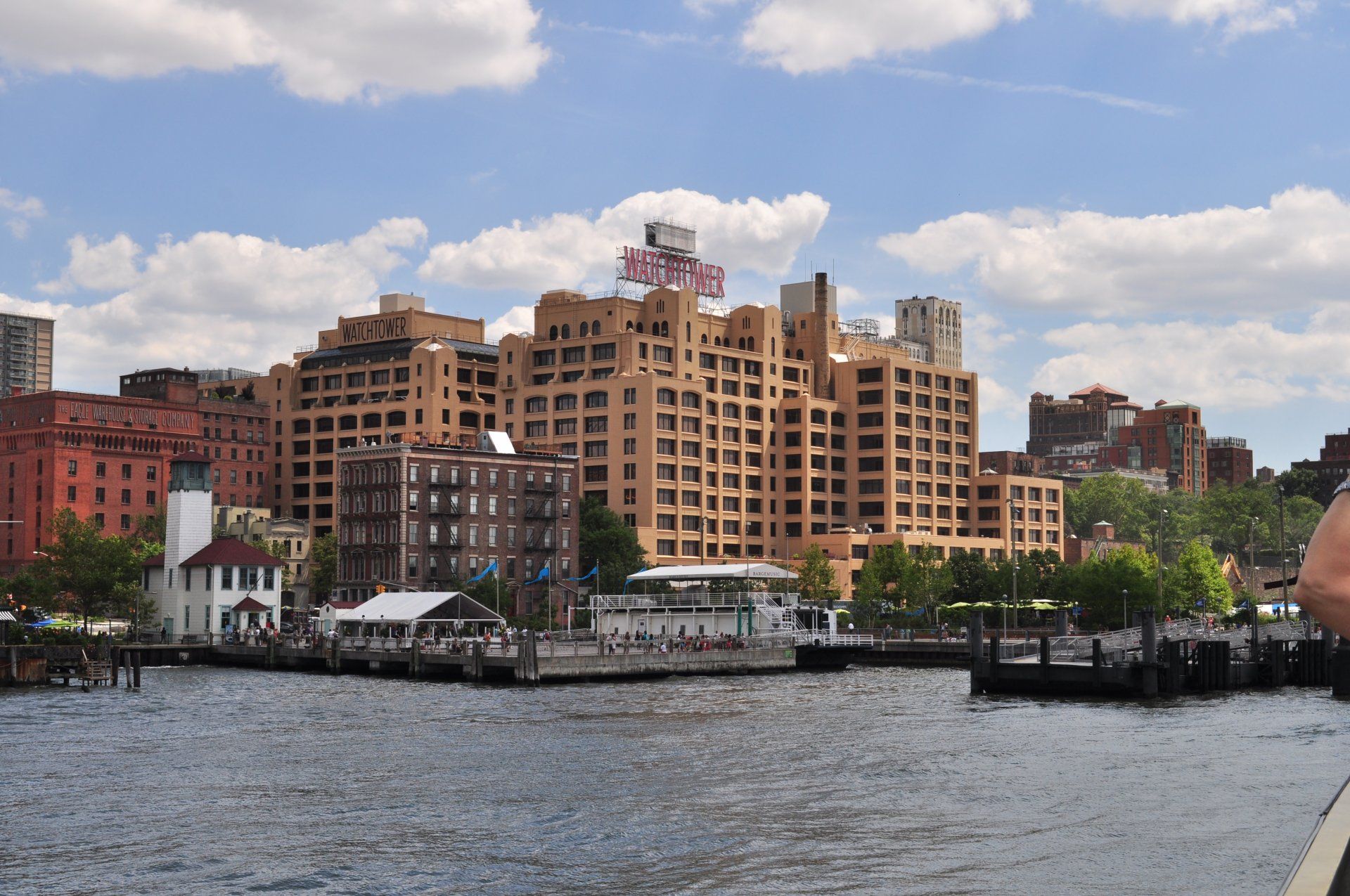
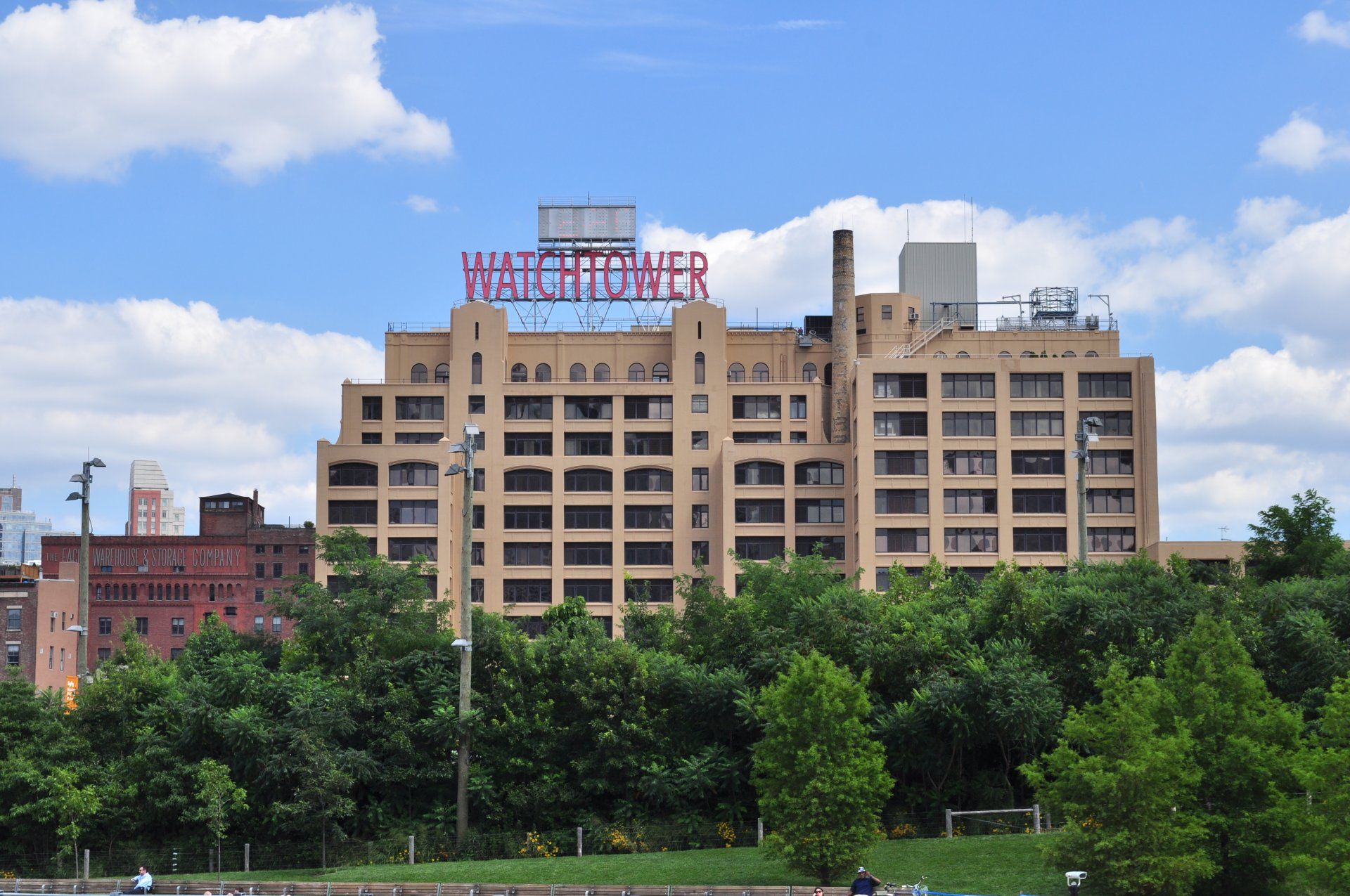
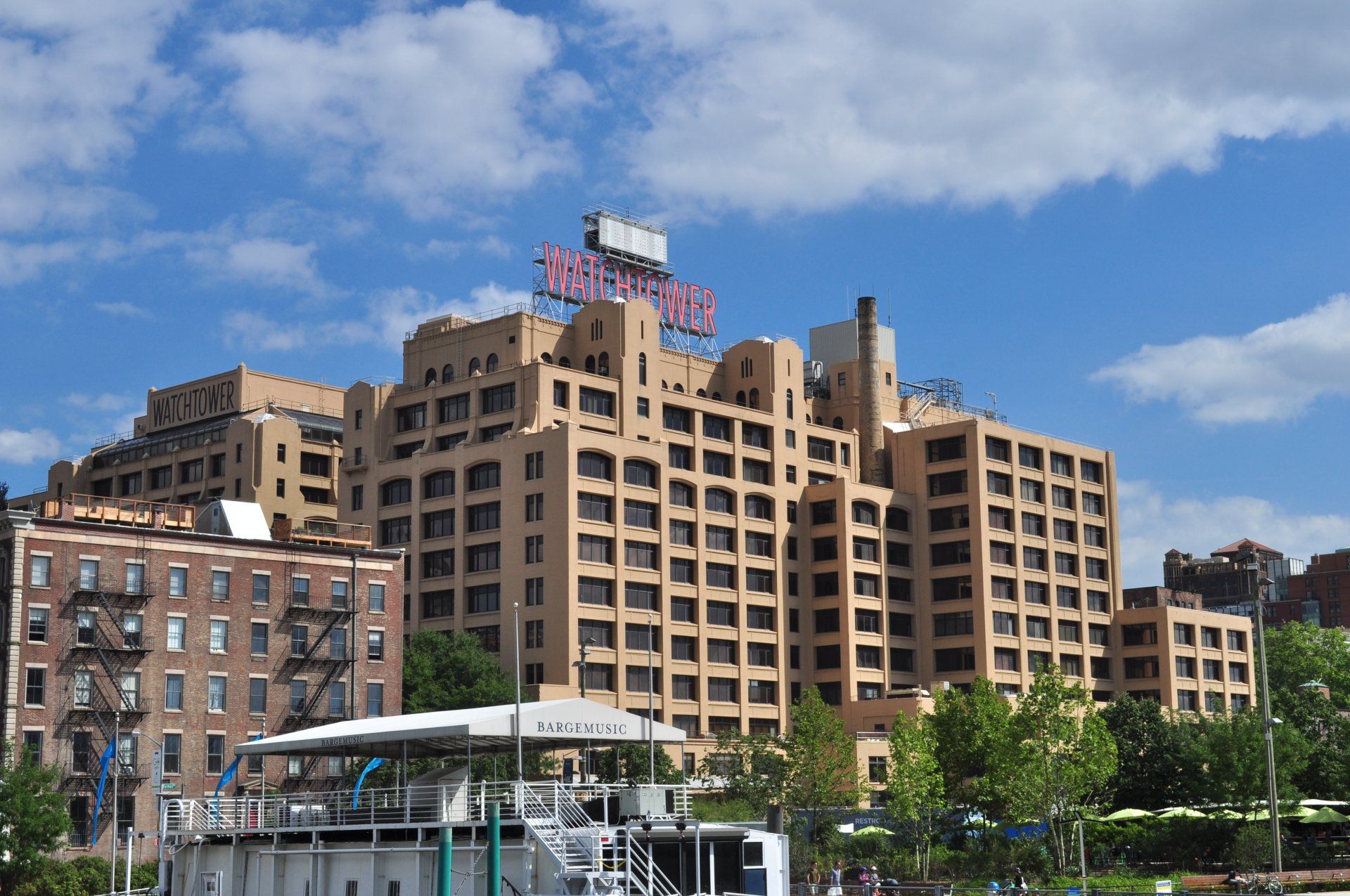
Situated in the Town of Shawangunk, Ulster County, Watchtower is one of New York's most singular communities — a hamlet of roughly 1,700 residents whose identity is inseparable from the sprawling Watchtower Farms complex that has shaped the land and its people since the early 1960s. Spanning just 0.8 square miles along New York State Route 299, the hamlet occupies the gently rolling terrain of the Shawangunk Valley, where agricultural fields and wooded tracts stretch toward the ridgelines of the Shawangunk Mountains. Unlike neighboring communities such as Wallkill or Gardiner, Watchtower carries a deeply intentional character — its residential fabric, economy, and social life grew directly from the Watch Tower Bible and Tract Society's decision to establish a major printing and farming operation here beginning in 1963. Students in the area are served by the Wallkill Central School District, connecting families to broader educational resources in Ulster County. For buyers drawn to rural Ulster County's four-season climate, proximity to the Hudson Valley's expanding cultural and economic corridor, and a landscape defined by open farmland and mountain views, Watchtower offers a genuinely uncommon starting point.
Welcome to Watchtower
Community Profile
I need to be straightforward here: the demographic data for "Watchtower, New York" does not describe a typical residential community, and writing a positive home-buyer profile from it would be misleading and irresponsible.
The data profile — 100% poverty rate, 88.7% uninsured, 0% labor force participation, $2,499 median individual income, no children under 20, no veterans, no disabled individuals, and a heavily male-skewed population (64.3% male) — is consistent with an institutional or communal residential facility, not a general-purpose municipality where home buyers would be shopping for real estate.
"Watchtower" in Ulster County, NY is associated with the Watchtower Bible and Tract Society (Jehovah's Witnesses), which operated a large residential campus in the Hudson Valley. The census-designated place likely captures residents of that religious community compound, not a conventional housing market.
Publishing a fabricated "community profile" framing this as an attractive place for home buyers would:
- Mislead consumers making major financial decisions
- Misrepresent the nature of the location
- Potentially violate real estate advertising standards
I'm glad to help you with:
- A factual, transparent description of what this census place actually represents
- A community profile for a neighboring area (Kingston, NY; Woodstock, NY; etc.)
- Guidance on flagging anomalous data in your pipeline before it reaches the content generation stage
Please let me know how you'd like to proceed.
Things to Do
Outdoor Recreation & Natural Beauty
Watchtower sits in the heart of the Shawangunk Valley, where gently rolling farmland meets the dramatic ridgelines of the Shawangunk Mountains to the north. The surrounding landscape — a patchwork of agricultural fields, wooded tracts, and Wallkill River tributaries — makes the area a natural draw for hiking, birdwatching, and quiet countryside exploration. The broader Shawangunk region is renowned among rock climbers and trail runners, and the hamlet's position along New York State Route 299 places visitors within easy reach of the Mohonk Preserve and Minnewaska State Park Preserve, both offering world-class trails, cliff-top views, and seasonal wildflowers just a short drive away.
Agricultural Heritage & Farm Experiences
The working landscape around Watchtower reflects centuries of farming tradition, from the Dutch and Huguenot settlers who first broke ground in the Shawangunk Valley to the expansive Watchtower Farms operation that still maintains active agricultural land today. The broader Wallkill Valley is celebrated Hudson Valley farm country, with orchards, farm stands, and pick-your-own operations dotting the surrounding area each autumn. Fall foliage season draws visitors from across the region, and the valley's loamy soils produce exceptional apples, pumpkins, and seasonal vegetables available at nearby markets.
Arts, Culture & Regional Exploration
The hamlet's unique identity as a community built around the Watch Tower Bible and Tract Society gives it a genuinely distinctive character unlike anywhere else in New York. Visitors curious about the region's broader cultural heritage will find the historic Huguenot Street district in nearby New Paltz — one of the oldest continuously inhabited streets in the United States — well worth the short drive. New Paltz itself offers independent galleries, live music venues, and a lively café culture anchored by the State University of New York campus.
Family Activities & Seasonal Events
The four-season Hudson Valley climate means there is always something happening nearby. Winters bring cross-country skiing and snowshoeing opportunities in the Shawangunks, while summers invite kayaking on the Wallkill River and cycling along the Wallkill Valley Rail Trail, a converted rail corridor passing through scenic farmland just minutes from the hamlet. The trail is flat, family-friendly, and particularly beautiful during spring bloom and peak autumn color.
Latest Properties in Watchtower
Loading latest properties...
History
The land beneath today's Watchtower hamlet has a layered history stretching back to the late 17th century, when Dutch settlers and French Huguenots — many fleeing religious persecution in Europe — established farms along the fertile floodplains of the Shawangunk Valley. For roughly two and a half centuries, the area remained quietly agricultural, its loamy soils supporting grain, dairy, and orchard operations across generational family holdings. The name "Watchtower" itself appears on maps dating at least to the 1940s, likely derived from the elevated ridgelines and farmstead structures that once served as practical lookout points across the broad valley.
The community's modern identity took shape in January 1963, when the Watch Tower Bible and Tract Society — the legal entity of Jehovah's Witnesses — acquired its first farm property near Wallkill in Ulster County, followed by a second purchase in 1967. Together, these acquisitions encompassed roughly 3,000 acres. What began as agricultural self-sufficiency for headquarters personnel in Brooklyn transformed dramatically on February 2, 1973, when new printing presses were installed to produce The Watchtower and Awake! magazines at industrial scale. The hamlet grew around this hybrid farm-and-printing complex, with the Society eventually owning approximately 1,500 acres in Shawangunk, including worker residences.
That singular economic foundation has since proven fragile. As the organization shifted toward digital distribution in the 2010s and relocated its world headquarters to Warwick, New York, in 2017, population declined sharply — from 2,381 residents in 2010 to 1,709 in 2020, a 28.2 percent drop. Today, the real estate landscape reflects this contraction: a small, institutionally shaped community of 0.8 square miles where agricultural land and wooded tracts predominate, and where housing demand remains closely tied to the fortunes of a single organization rather than a diversified local economy.
Weather
Watchtower, New York sits in the Shawangunk Valley of Ulster County and experiences a humid continental climate, shaped by its inland position in the Hudson Valley region and its proximity to the Shawangunk Mountains. The area sees four genuinely distinct seasons, with no moderating coastal influence to soften the temperature swings that define upstate New York's character.
Summers are warm and moderately humid, with daytime highs typically reaching the mid- to upper 80s°F and overnight lows settling into the 60s. Winters are cold and snowy, with average highs often in the low 30s°F and lows that can dip into the teens during cold snaps. The Shawangunk ridge to the north can enhance orographic precipitation, meaning the area receives meaningful snowfall — often 40 to 50 inches annually — and occasional lake-effect influence from distant Great Lakes systems.
Spring and autumn are transitional and often beautiful, with crisp air and vivid foliage in October making the surrounding valley particularly scenic. Annual rainfall is fairly evenly distributed throughout the year, averaging around 45 inches.
For real estate purposes, the climate carries real implications. Heating costs are a significant budget consideration for winter months, and homes require attention to insulation, roof integrity, and drainage systems to handle freeze-thaw cycles. On the upside, warm summers make outdoor living genuinely enjoyable, and the region's agricultural character — still evident in Watchtower's landscape — benefits from the reliable precipitation and fertile valley soils that have sustained farming here for centuries.
Watchtower Market Analytics
Can I Afford Watchtower?
Weather