
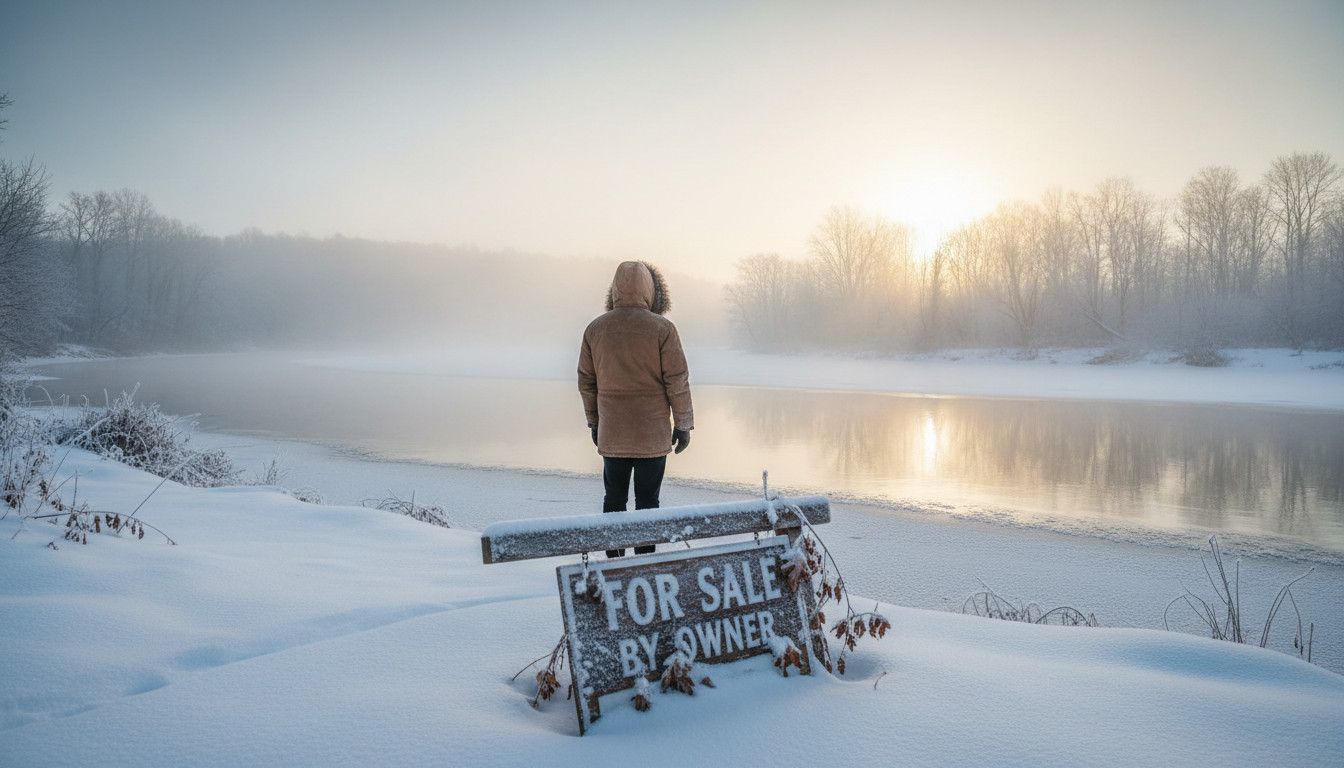
The thermos is still warm. The paddle rests across your knees. Somewhere behind the ridge, the sun is just beginning to separate from the treeline, and the Delaware River is doing what it always does at this hour — moving quietly, unhurried, like it has nowhere to be and nothing to prove. You've been on the water for twenty minutes and you've already stopped checking your phone. This is what living in Lumberland, NY feels like — not a vacation from your life, but a version of it you didn't know was available.
Lumberland is a town in Sullivan County, tucked into the southwestern corner of New York State where the Delaware River forms the border with Pennsylvania. It's not a place most people stumble into. You come here because someone told you about it, or because you followed a river road past Port Jervis and kept driving, or because you typed 'waterfront' and 'New York' into a search bar and found something that didn't look like the Hudson Valley listings you'd already scrolled past a dozen times. However you arrive, the pattern tends to repeat: you plan a weekend, you stay two nights, and you spend the drive home doing math you weren't expecting to do.
Why the Delaware River Keeps Pulling People Back
There's a particular quality to rivers that lakes and coastlines don't quite replicate — a sense of direction, of water going somewhere, of landscape unfolding rather than sitting still. The Delaware here is wide and clear, running through a valley that the Upper Delaware Scenic and Recreational River designation has kept largely undeveloped since 1978. That federal protection means the ridgelines you see from the water look almost exactly as they did a century ago. No condos on the bluffs. No jet ski rentals at every bend. Just herons, riffles, and the occasional canoe rounding a curve ahead of you.
The four-season rhythm of this stretch of river is one of the things that converts weekend visitors into serious buyers. Spring brings high water and the shad run — one of the East Coast's most celebrated freshwater fishing events. Summer is slow and golden, the kind of heat that makes a river feel like a necessity rather than a luxury. Fall turns the surrounding Catskill foothills into something that stops traffic on Route 97, the two-lane road that hugs the New York side of the river and is widely considered one of the most scenic drives in the Northeast. Winter quiets everything down to wood smoke and frozen ground, and the people who stay through it tend to say it's their favorite season of all.
Living in Lumberland, NY means building your calendar around these rhythms rather than around a commute. It's a different kind of time management — one that a growing number of remote and hybrid workers are finding they prefer.
On the Water: Kayaking, Fishing, and River Life
The Delaware River is the backbone of Lumberland's recreational identity, and it earns that status across every season. The Upper Delaware — the stretch running from Hancock, NY down through Lumberland and past Port Jervis — is one of the finest flatwater and mild-whitewater paddling corridors in the Mid-Atlantic region. Kayakers and canoeists can put in at Narrowsburg, just upriver, and take out hours later having seen nothing but forest, farmland, and the occasional bald eagle overhead. The river's Class I and II riffles are approachable for beginners without boring experienced paddlers, which makes it genuinely family-friendly in a way that more dramatic whitewater destinations are not.
Fishing on the Delaware is serious business. The river supports wild brown trout and rainbow trout populations in its upper reaches, and the shad migration each spring draws fly fishermen from across the region. Bass fishing is productive through the warmer months, and the river's clarity — a direct result of its protected watershed — makes sight fishing possible in ways that murkier rivers simply don't allow. For buyers considering Delaware River homes in New York, river access isn't just a lifestyle amenity; it's a daily relationship with one of the cleanest major rivers in the eastern United States.
Waterfront properties along this corridor tend to sit on generous lots, often with private river frontage, small docks, and the kind of natural buffer that makes neighbors feel theoretical rather than immediate. The homes themselves range from classic Catskill-era camps and cottages to more substantial year-round residences, many of which have been thoughtfully updated while preserving the materials and proportions that make them feel rooted in the landscape rather than dropped onto it.
Off the Water: Trails, Farms, and Small-Town Texture
Hiking and Land Access
The Catskill Mountains proper begin just to the north and east of Lumberland, and the trail network that radiates through Sullivan and Ulster counties gives residents access to serious hiking without requiring a long drive. The Mongaup Valley Wildlife Management Area, which lies within and around Lumberland, covers thousands of acres of mixed forest and wetland managed for wildlife habitat — it's one of the better spots in the region for spotting bald eagles, which nest along the Delaware and Mongaup Rivers in numbers that would have seemed impossible thirty years ago. The Mongaup Falls Reservoir and Rio Reservoir, both within the wildlife management area, add additional water-based recreation in the form of fishing and wildlife observation.
For those who want more structured trail systems, the Catskill Center's network of preserved lands and the Delaware & Hudson Rail Trail — which runs through portions of Sullivan County — provide additional options for hiking, mountain biking, and cross-country skiing in winter.
Local Community and Seasonal Life
Lumberland's nearest commercial center is Narrowsburg, a small village about ten miles upriver that has developed a quietly impressive cultural identity over the past two decades. The Narrowsburg Union Arts Center hosts film screenings, gallery shows, and live performances in a restored historic building. The Delaware Valley Arts Alliance has been anchoring the creative community here since 1974. There are good restaurants — notably Heron, which draws destination diners from well outside the region — and the kind of independent shops and farm stands that signal a community with actual roots rather than one assembled for weekenders.
Seasonal events give the calendar its texture: the Narrowsburg Summerfest, fall harvest markets, and the quiet rituals of a community that knows how to use a river and a forest across twelve months rather than just three. The year-round population is small — Lumberland's town population hovers around 3,000 — which means that when you show up to the same farmers market three weekends in a row, people start to remember your name.
The NYC Connection: Distance That Actually Works
Lumberland sits approximately 90 miles from Midtown Manhattan — a distance that sounds manageable on paper and, in practice, genuinely is. The drive via Route 17 and Interstate 84 runs between one hour and forty-five minutes and two hours and fifteen minutes depending on traffic and the specific day, which puts it in the same range as many outer-borough commutes during peak hours. For buyers working hybrid schedules — two or three days in the city, the rest remote — this math works in a way that felt impossible to justify even five years ago.
Port Jervis, the nearest city to Lumberland, sits at the confluence of the Delaware, Neversink, and Mongaup Rivers and serves as a practical logistics hub for the area. The Port Jervis Metro-North station offers direct rail service to Penn Station, with a journey time of roughly two hours — slower than driving on a clear day, but useful for buyers who want the option of leaving the car behind. The presence of rail access at this distance from the city is a genuine differentiator; many comparable rural markets in the region require a car for every trip.
This connectivity has not gone unnoticed by the market. The same buyers who spent 2020 and 2021 competing for Hudson Valley properties have been moving their search parameters westward, and Lumberland — with its river access, lower price points, and functional NYC connection — has been a consistent beneficiary of that shift.
What the Market Looks Like Right Now
Lumberland, NY real estate occupies a particular position in the current market: it offers genuine waterfront and rural lifestyle value at price points that remain meaningfully lower than comparable properties in the Hudson Valley or the more heavily marketed Catskills towns like Woodstock, Rhinebeck, or Narrowsburg's own increasingly competitive micro-market. Inventory along the Delaware corridor is limited — the combination of federal river protections, large lot sizes, and a relatively small total housing stock means that well-positioned properties don't sit long when they're priced correctly.
Demand from metro buyers has been rising steadily, driven by the same remote-work flexibility that reshaped rural real estate markets across the Northeast after 2020. What's different about Lumberland is that the buyers arriving here tend to be more intentional than opportunistic — they've already looked at the Catskills, already toured properties in the Hudson Valley, and made a deliberate decision to prioritize river access and land over proximity to a particular town's restaurant scene. That buyer profile tends to produce more serious offers and fewer contingency-heavy contracts.
The mix of property types in Lumberland NY real estate reflects the area's history as both a working rural community and a seasonal destination. You'll find everything from modest camps on the river that need work to fully renovated four-season homes with private docks, outbuildings, and acreage. Lot sizes tend to be generous by regional standards, and properties with direct Delaware River frontage command a premium that has been appreciating consistently as inventory tightens.
For buyers considering financing, the range of property types here — including some seasonal structures and rural parcels — means that mortgage strategy matters. At Opulist, our in-house lending team at Opulence Home Equity works alongside our buyer's agents at Opulence Realty Group to make sure financing is structured correctly from the first conversation, whether that means a conventional purchase loan, a jumbo product for higher-value waterfront properties, or a construction loan for buyers looking to build on raw land. Having both sides of the transaction under one roof tends to compress timelines and reduce the friction that derails rural property deals more often than urban ones.
Finding Your Place Along the River
The buyers who end up in Lumberland almost always describe the same sequence: they came to look, they stayed to feel, and then they started doing the practical work of figuring out how to make it real. That practical work — filtering by lot size, waterfront access, commute proximity, and price — is exactly what good search tools are built for.
Buyers exploring this market often start with Opulist's AI-powered search for Lumberland, NY to filter listings by the criteria that actually matter for river property: frontage, acreage, year-round accessibility, and distance to Port Jervis for rail access. It's a faster way to separate the properties worth visiting from the ones that look right in photos but don't hold up against your actual requirements.
The Delaware River doesn't advertise itself. It doesn't need to. The people who find Lumberland tend to find it the way you find anything worth keeping — by paying attention, following a road a little further than you planned, and arriving somewhere that feels, against all reasonable expectation, exactly like where you were supposed to be. The thermos is still warm. The river is still moving. The question is whether you're ready to stop visiting and start staying.