
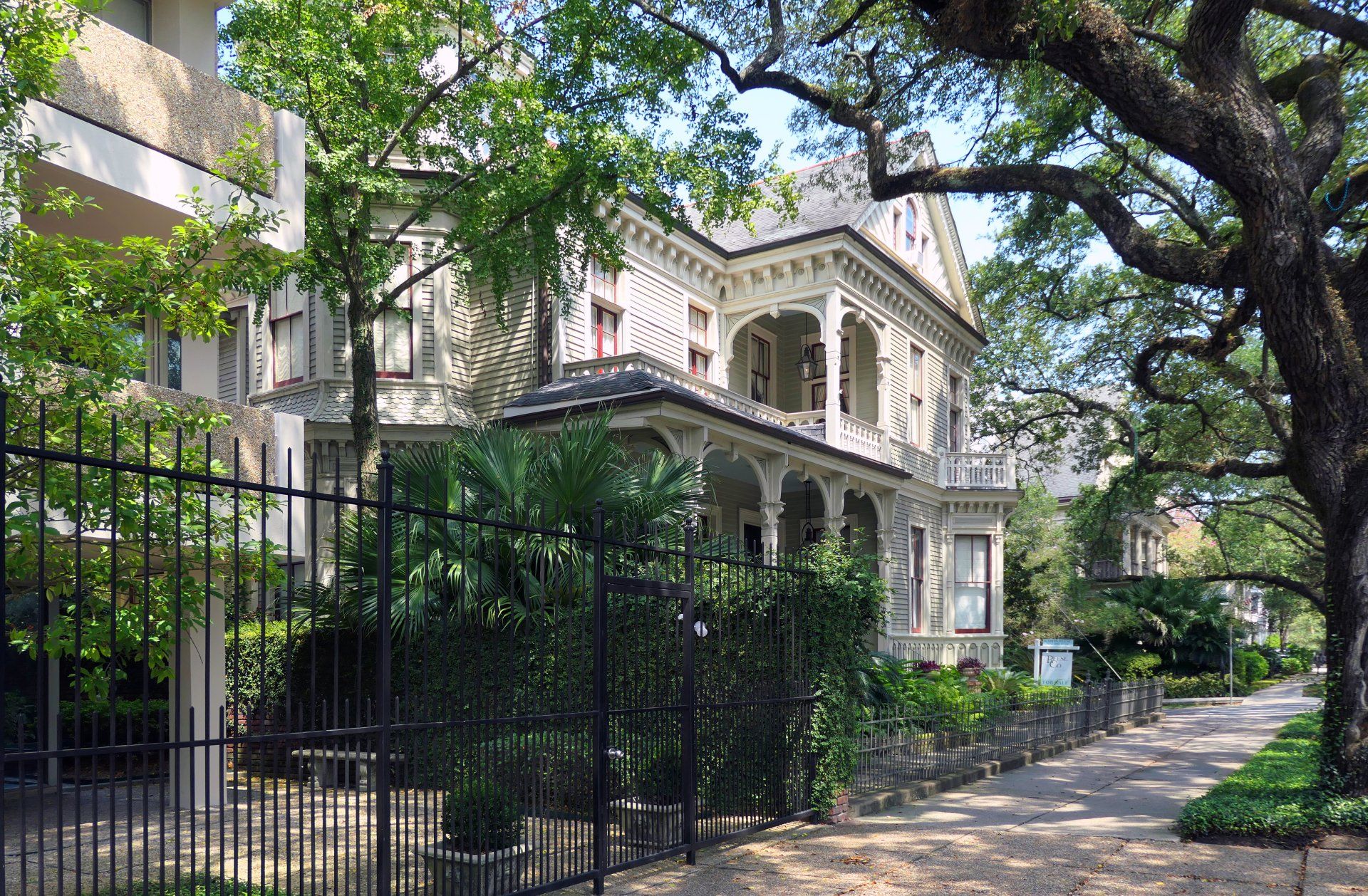
A Neighborhood Shaped by Ambition and Architecture
The Garden District emerged in the early nineteenth century as a statement of wealth and independence. When New Orleans was divided between the Creole-dominated French Quarter and the rapidly growing American sector, prosperous Anglo-American merchants and planters who arrived after the Louisiana Purchase of 1803 chose to build their grand estates upriver from the old city. Incorporated into the City of Lafayette in 1833 before being annexed by New Orleans in 1852, this enclave became a showcase for Greek Revival, Italianate, and Queen Anne architecture — styles that still define the streetscape today.
Unlike the dense, courtyard-centered homes of the French Quarter, Garden District mansions were designed to be seen. Set back on generous lots and surrounded by lush, subtropical gardens, they projected prosperity onto wide, oak-canopied streets like Prytania and Coliseum. The neighborhood's name itself derives from these ornate grounds, which became as celebrated as the houses they framed.
The Garden District weathered the Civil War, Reconstruction, and the economic upheavals of the twentieth century with its architectural fabric remarkably intact. That resilience is a large part of what makes Garden District New Orleans real estate so coveted today. The neighborhood remains one of the most photographed and visited in the American South — a living museum where history is not preserved behind glass but woven into the fabric of everyday life.